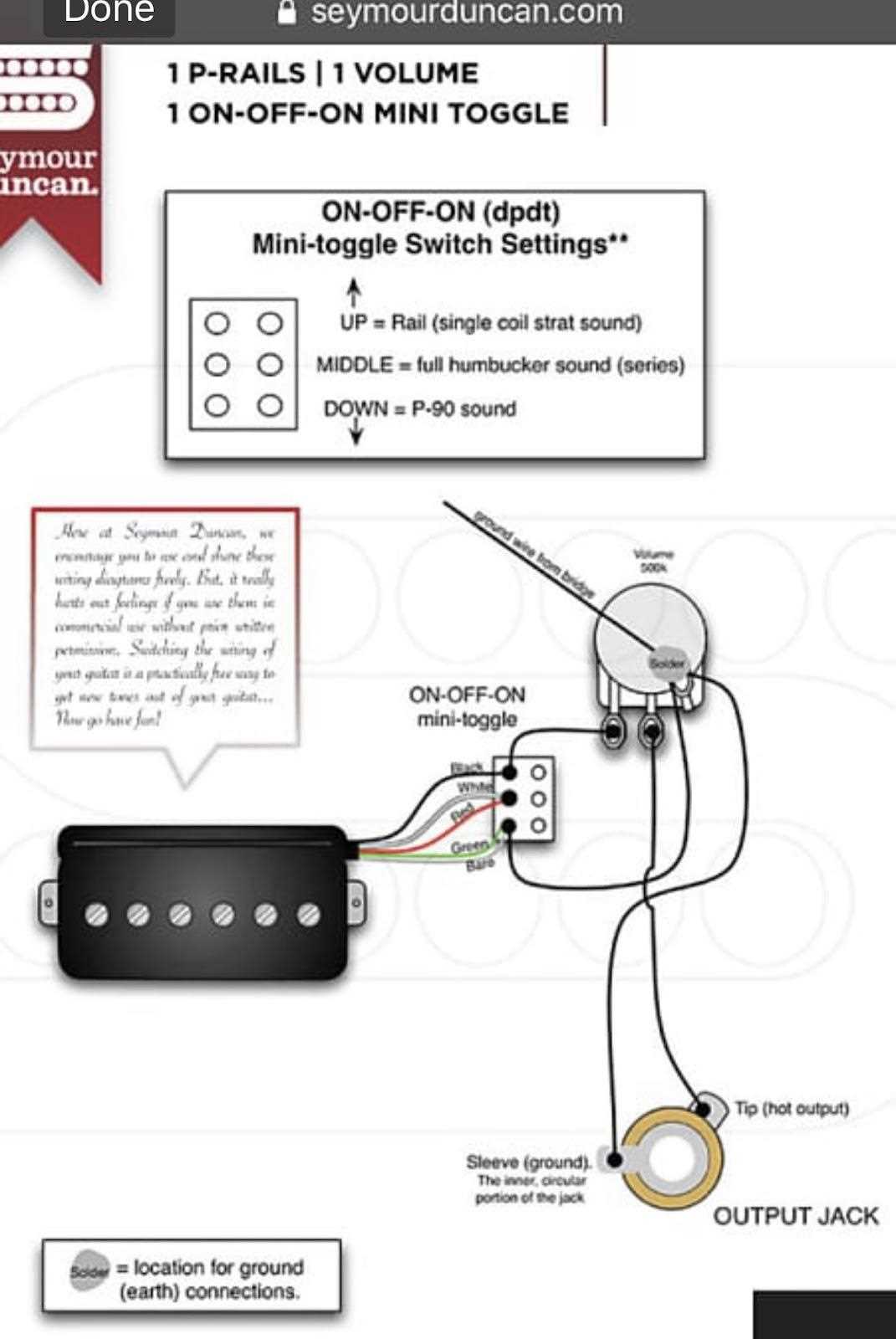
Use a one-pickup, one-volume, one-tone circuit layout with a short signal path: hot lead from the bridge pickup goes directly to the first lug of the volume potentiometer (typically 500k audio taper), the center lug routes the signal to the output jack tip, and the remaining lug connects to ground on the pot casing. This compact arrangement reduces resistance in the path and keeps the raw character of the pickup intact.
The tone control connects through a 0.022 µF capacitor placed between the middle lug of the tone potentiometer and the grounded pot shell. A short jumper from the volume pot’s input lug feeds the tone control. This configuration allows gradual high-frequency reduction while preserving midrange punch, a trait associated with Junior-style instruments from the mid-1950s.
Grounding must be centralized: solder the pickup ground lead, bridge ground wire, tone pot casing, and output jack sleeve to the back of the volume potentiometer. Keeping all ground points on one metal surface lowers hum and avoids ground loops. Use shielded cable between the volume output and the jack when the control cavity sits close to noisy electronics such as stage lighting dimmers.
For accurate assembly, position components so that the pickup lead length stays under 15–20 cm. Excess cable can add capacitance that slightly darkens the signal. Vintage-style builds often rely on cloth-covered push-back conductors and CTS or similar potentiometers rated at 500kΩ, which maintain brightness and match the response expected from a Junior-type instrument.
Single-Pickup Junior Guitar Control Layout
Use a short signal path with one volume control (500k audio taper), one tone control (500k audio taper), and a 0.022 µF capacitor connected between the tone potentiometer and ground. The pickup hot lead should run directly to the first lug of the volume pot, the middle lug should feed the output jack tip, and the third lug must connect to ground. This arrangement keeps resistance low and preserves the aggressive midrange typical for a single-pickup slab-body instrument.
Grounding must be centralized. Solder the bridge ground wire to the back of the volume potentiometer, then link the backs of both potentiometers with a short bare conductor. From that same point, connect the sleeve terminal of the output jack. Avoid multiple scattered ground points; a single grounding cluster reduces hum and prevents ground loops inside the control cavity.
Capacitor and Tone Control Behavior
Install the capacitor between the outer lug of the tone potentiometer and the pot casing. With a 0.022 µF value, the high-frequency roll-off begins gradually around the upper presence range, producing a controlled treble reduction rather than a muddy cutoff. Some players substitute 0.015 µF for brighter response or 0.033 µF for deeper high-end attenuation. Lead length should stay under 3–4 cm to avoid extra capacitance.
For cleaner output response, rotate the volume control orientation so the input signal arrives at lug 1 and the output leaves from lug 2. Lug 3 connects to ground. This orientation allows the instrument to retain clarity while lowering the volume rather than producing a dull tone. Adding a 150 kΩ resistor in parallel with a 1 nF capacitor between lugs 1 and 2 can maintain treble when rolling the control down.
Cavity Layout and Practical Assembly
Place both potentiometers about 35–40 mm apart to allow short conductor runs and easy solder access. Use shielded wire from the volume output to the jack tip if the cavity lacks conductive paint or copper foil. Secure components with star washers so rotation cannot loosen ground connections. After soldering, measure continuity between bridge, pot casings, and jack sleeve; resistance should read near 0 Ω, confirming a stable ground network.
Understanding the Standard Single-Pickup Junior-Style Guitar Circuit Layout and Component Connections
Connect the single soapbar pickup directly to the volume potentiometer input lug, then route the middle lug of that control to the tone control and output jack tip. This minimal circuit uses only three electrical components: one pickup, one volume control (typically 500 kΩ audio taper), and one tone control paired with a capacitor commonly rated between 0.022 µF and 0.047 µF. The pickup hot lead enters the first lug of the volume pot, while the pickup ground wire is soldered to the back of the same pot casing, forming the main grounding point for the instrument.
Signal Flow Through the Controls
The audio path moves in a simple sequence from pickup coil to output jack. The layout reduces resistance points and preserves the aggressive midrange response associated with this junior-style instrument.
- Pickup hot lead → outer lug of volume potentiometer
- Volume center lug → output jack tip connection
- Tone control connected to volume input lug
- Tone capacitor bridging tone pot outer lug to ground
- All ground points joined at the volume pot casing
Grounding and Component Placement
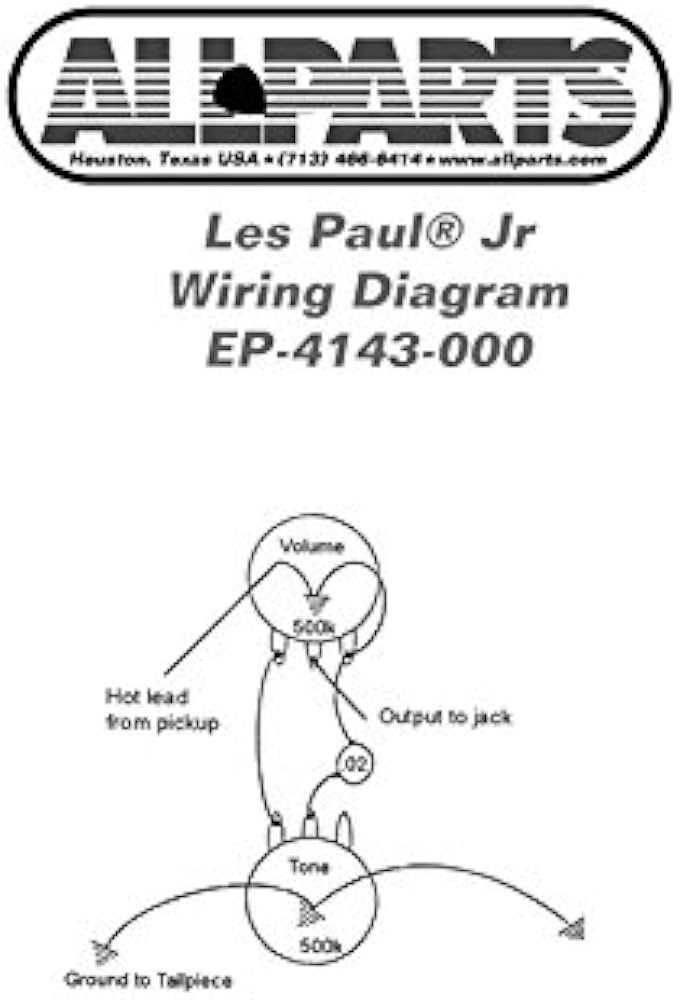
Maintain a short ground path by soldering bridge ground wire, pickup shield, tone capacitor ground, and jack sleeve to the back shell of the volume control. Poor grounding increases hum, especially with a high-output P-90 coil. Keep leads under 5–6 cm inside the cavity and avoid parallel runs with the pickup signal lead to reduce noise pickup. Typical parts used in this layout include:
- 500 kΩ audio taper volume control
- 500 kΩ tone control
- 0.022 µF polyester or paper-in-oil capacitor
- Mono 1/4″ output jack
- Single soapbar pickup with braided or two-conductor cable