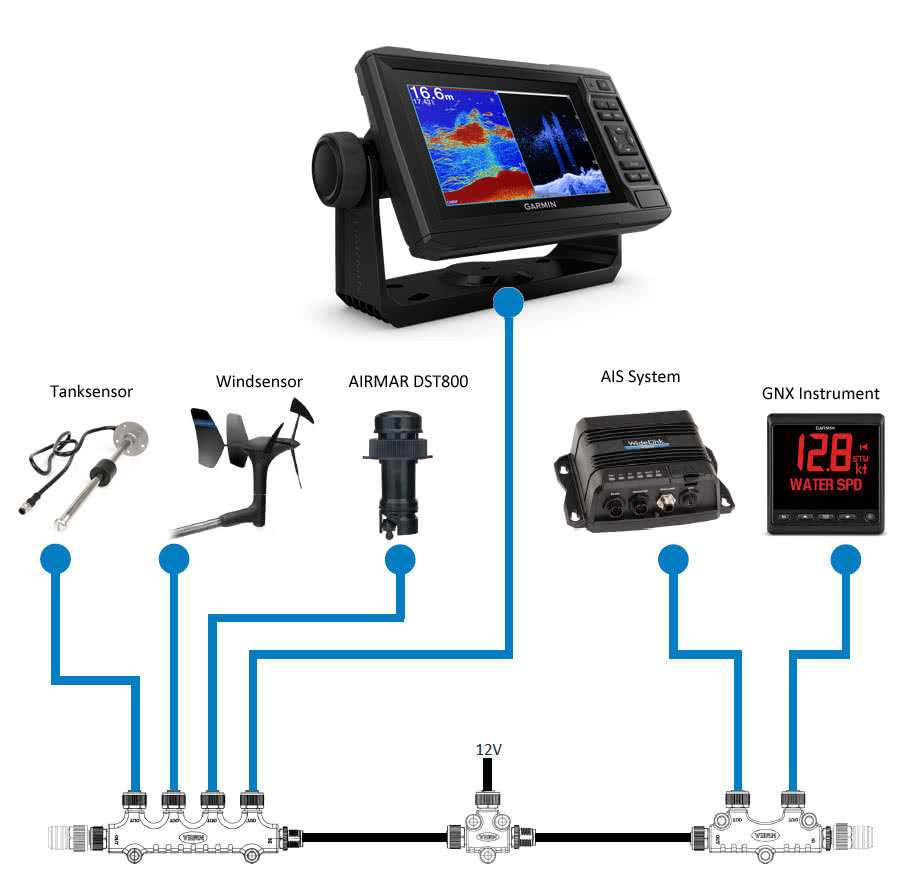
Connect the unit directly to a dedicated 12V power source using properly rated cables and inline fuses. This prevents voltage drops and protects the electronics from short circuits during operation.
Route data and sensor cables separately from high-current lines to reduce interference. Keep twisted pairs intact and avoid sharp bends, which can degrade signal quality for sonar and chart plotting functions.
Secure all connectors with marine-grade terminals to maintain a corrosion-free link in wet environments. Use dielectric grease on exposed pins to prevent oxidation and intermittent connections over time.
Label and document each cable before final installation. Identifying power, network, and transducer leads simplifies maintenance and future upgrades while ensuring consistent performance on the water.
Connection Guide for Power Data and Transducer Layouts
Connect the main display to a dedicated 12V power source using marine-grade cables with an inline fuse rated at 3A to 5A depending on the unit. Ensure the positive and negative leads are clearly marked and tightened to prevent voltage drops and intermittent operation during navigation.
Route transducer and sensor lines separately from high-current power cables to minimize interference with sonar signals. Maintain twists in paired wires and avoid sharp bends near connectors, as signal degradation can reduce depth reading accuracy and chart refresh rates.
Secure all network and accessory connections with corrosion-resistant terminals or plugs. Label each line for power, NMEA, and transducer inputs to simplify maintenance, upgrades, and troubleshooting, ensuring reliable operation in marine environments.
Power and Ground Connections for Stable Operation
Use a dedicated 12V power source with properly rated cables and an inline fuse between 3A and 5A. Connect the positive lead to the battery or bus bar and the negative to a solid ground point on the vessel to prevent voltage drops and intermittent shutdowns.
Ensure clean and secure connections by using marine-grade terminals and corrosion-resistant fasteners. Route power lines away from high-current devices and maintain proper separation from sensor and transducer cables to reduce electrical noise and maintain accurate signal transmission.