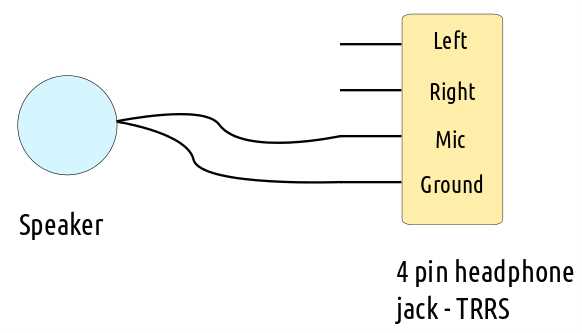
Ensure the tip, ring, and sleeve contacts are correctly assigned before attaching any cable to avoid signal interference. Use color-coded insulation to distinguish left, right, and ground lines for quick identification and reduce cross-talk.
Trim the conductors carefully to prevent stray strands from shorting adjacent terminals. A small amount of solder applied evenly to each contact will improve conductivity and mechanical stability, especially for unshielded cables.
Test connections with a multimeter for continuity before inserting the plug into devices. Confirm that left and right channels match their respective outputs to prevent reversed audio channels and maintain proper stereo imaging.
Use heat shrink tubing or insulating sleeves to reinforce the joint between the connector and cable, protecting against bending stress that could degrade signal quality over time.
When dealing with balanced or TRS configurations, verify that the ring connects to the return path and that the sleeve is grounded properly. Incorrect placement can introduce hum or phase cancellation in the output.
Audio Jack Connection Guide for Stereo and Mono Applications
Match the tip, ring, and sleeve contacts precisely for stereo and mono plugs to ensure correct signal paths. For stereo use, the tip carries the left channel, the ring carries the right, and the sleeve is the ground. For mono plugs, the tip is the signal and the sleeve is ground.
Check conductor integrity before soldering. Strip insulation carefully and twist strands tightly to avoid shorts. Apply a small amount of solder to each terminal to secure mechanical and electrical connection. Use heat shrink tubing to protect joints from stress and maintain long-term reliability.
Verify connections with a continuity tester or multimeter before connecting to devices.
- Left and right channels must align with their intended outputs
- Ground paths should be consistent to avoid hum
- Balanced configurations must have ring terminals correctly assigned
Proper alignment preserves signal clarity and channel separation.
Identifying Tip Ring and Sleeve Contacts for Accurate Signal Transmission
Connect the tip, ring, and sleeve terminals according to the signal layout. The tip typically carries the primary signal, the ring handles the secondary channel in dual-channel setups, and the sleeve serves as the ground path. Misidentifying these contacts can result in reversed channels or signal loss.
Visual and Electrical Inspection
Inspect each contact physically for separation and proper metal exposure. Use a continuity tester to confirm which conductor corresponds to each terminal.
- Tip should show continuity only to the intended signal conductor
- Ring should match the secondary channel
- Sleeve should connect to ground or shield
Correct identification ensures clear stereo or mono operation.
Practical Tips for Connection
Trim insulation precisely and avoid frayed strands. Solder each contact individually and check polarity before final assembly. Double-check alignment after soldering, and test with a small signal source to verify channel clarity and ground stability. Proper handling preserves signal fidelity and prevents hum or crosstalk.