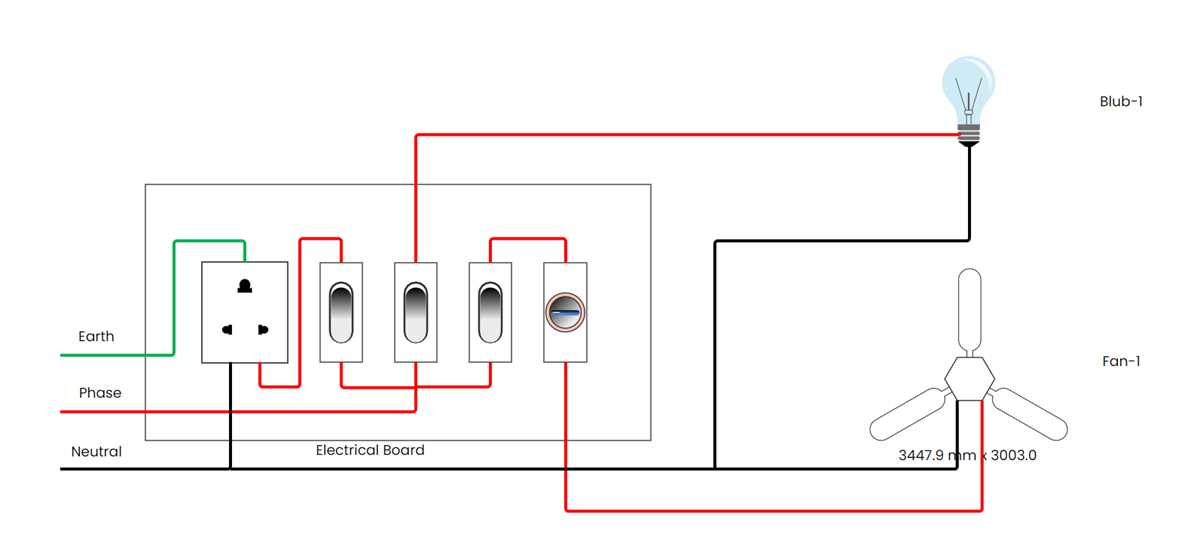
Start by identifying the symbols that represent key elements in a schematic. Each component, whether a resistor, capacitor, or transistor, has its own unique representation, which makes it easier to understand the functionality of the system. Focus on learning how these symbols connect to one another, as this shows the flow of electricity or signal throughout the system.
Next, pay attention to the layout and how the components are placed. For instance, components that are located close to each other are often connected in a certain sequence or pattern. Take note of the power source, grounding, and connections between different sections, as they are the foundation of how the design functions in practice.
When you start designing or reading a schematic, use color-coding or layering techniques to distinguish between various types of connections. For example, signal pathways might be shown with one color, while power lines use another. This not only helps you visualize the system but also makes troubleshooting much easier. Keep practicing, and these schematics will soon become more intuitive and understandable.
Designing a Functional Electrical Schematic
When creating an electrical design, focus on clearly illustrating how each element is connected. Begin by placing the power source and ground connections, as they serve as the foundation. This helps in understanding the flow and ensuring there are no missing links. Proper placement of components is key for making the design both functional and easy to read.
Next, use standardized symbols for each component, such as resistors, capacitors, or transistors. This ensures that anyone reviewing the design will immediately recognize the function of each part without confusion. Avoid unnecessary complexity by keeping symbols simple and well-organized.
As you lay out your connections, make sure they are logically arranged. For instance, power lines should flow from the power source and distribute to components in a sequence that makes sense based on the design’s function. Use clear lines or arrows to indicate the direction of energy flow.
Consider grouping related elements together. For example, components that work in tandem or share common connections should be placed near each other. This minimizes clutter and reduces the chance of errors. Color coding can also be useful for separating different types of connections, such as signal and power lines.
- Always verify that each component is correctly placed according to its function.
- Test your design with simulations to catch any mistakes before physical implementation.
- Label all components clearly to avoid ambiguity, especially for complex designs.
After completing your design, take time to review it thoroughly. Look for any unnecessary elements that can be simplified or removed. Ensure all connections are solid and that there are no loose ends. This final check can save a lot of time during the actual build phase and prevent costly errors later on.
How to Read an Electrical Schematic for Beginners
Start by familiarizing yourself with the standard symbols used to represent different components. A resistor looks like a jagged line, while a capacitor is shown as two parallel lines. Identifying these symbols correctly is the first step in understanding how each part functions within the system.
Understanding the Connections
Next, focus on the connections between components. These are usually shown with straight lines, indicating how electricity or signals will flow between parts. Pay close attention to whether components are in series or parallel, as this affects how they interact. Arrows can indicate the direction of current or signals.
Check for Power and Grounding
Finally, ensure that you understand where the power source and ground are located. These are typically marked with specific symbols, like a circle with a plus sign for positive voltage and a grounded symbol for the negative connection. Knowing where these points are will help you understand how energy is distributed throughout the design.