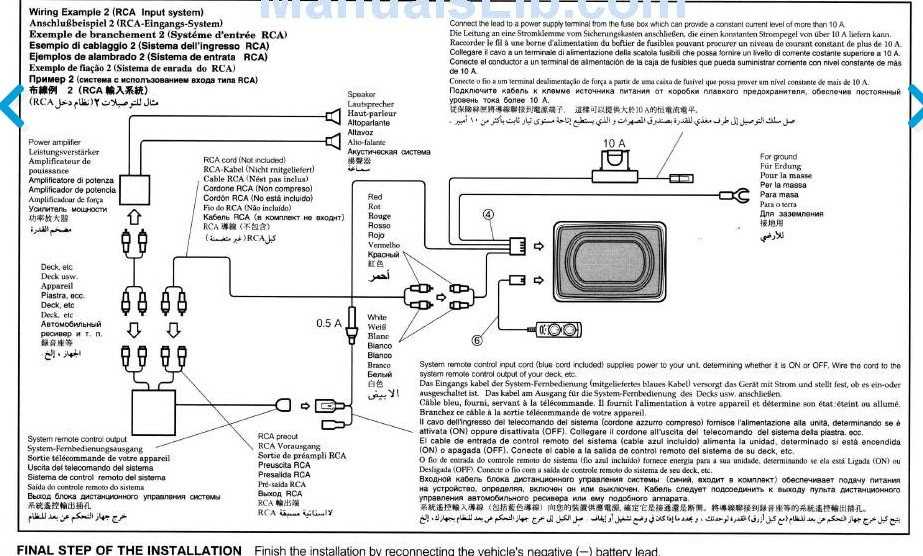
When setting up a bass system, it is important to follow the proper connections to ensure your setup delivers optimal sound quality. Properly connecting your amplifier to your bass speakers ensures both power and clarity, eliminating distortions or loss of signal.
To get started, check the impedance of your speakers and the amplifier. Matching impedance values will prevent damage to either component. Ensure that the speaker’s input terminals and the amplifier’s output are connected correctly, using the appropriate cables and connectors. Typically, the wire color scheme will help identify each function – such as positive and negative connections – for precise placement.
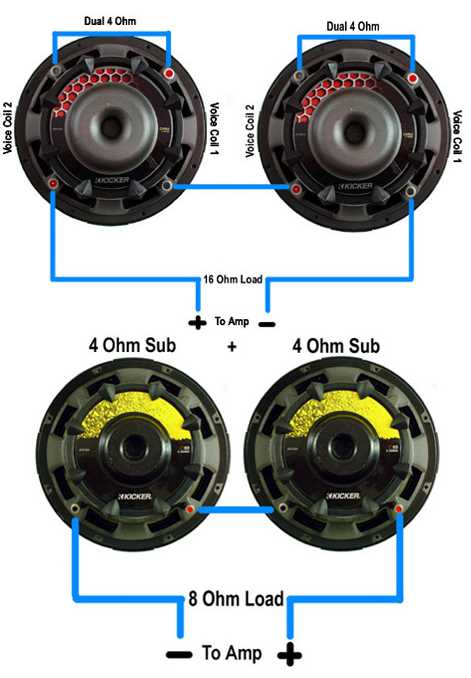
If you are adding more than one speaker, consider how to wire them in either parallel or series configuration. This decision will affect the overall system’s power handling and impedance. Wiring multiple speakers in parallel, for instance, can increase the overall impedance load on the amplifier, while series wiring will decrease it. It’s crucial to adjust the system accordingly to avoid overloading.
Lastly, keep in mind that incorrect connections can result in inefficient performance or even permanent damage to your components. Verify that each connection is secure and that there is no short circuit, which can occur if wires are exposed or not properly insulated. The right configuration will make a noticeable difference in sound output and overall performance.
Wiring Subwoofer Connections
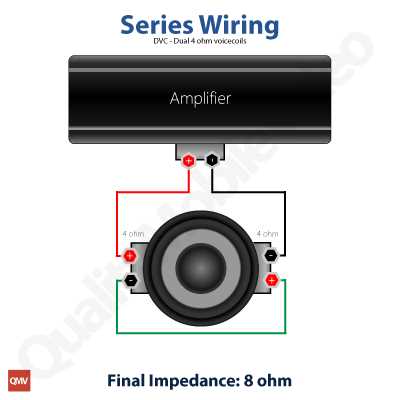
Ensure that your amplifier’s positive and negative terminals are connected to the corresponding terminals on the speaker using high-quality speaker wire. The wire should have the proper gauge to handle the power output. If you are using multiple speakers, make sure to follow the appropriate configuration, either in parallel or series, depending on your desired load and impedance matching with the amplifier.
For best performance, pay attention to the polarity of each connection. Incorrect polarity can result in phase cancellation, reducing the quality of sound. Verify that all connections are tightly secured to avoid any signal loss or distortion. Double-check the input and output terminals before powering on the system to ensure everything is correctly installed.
Step-by-Step Guide to Wiring a Single Subwoofer
Start by ensuring that your amplifier is turned off and disconnected from the power source. Prepare the necessary tools, including a wire stripper, speaker wire, and your subwoofer unit. Cut the speaker wire to the required length to reach both the amplifier and speaker terminals. Strip the ends of the wire, exposing enough copper to make solid connections.
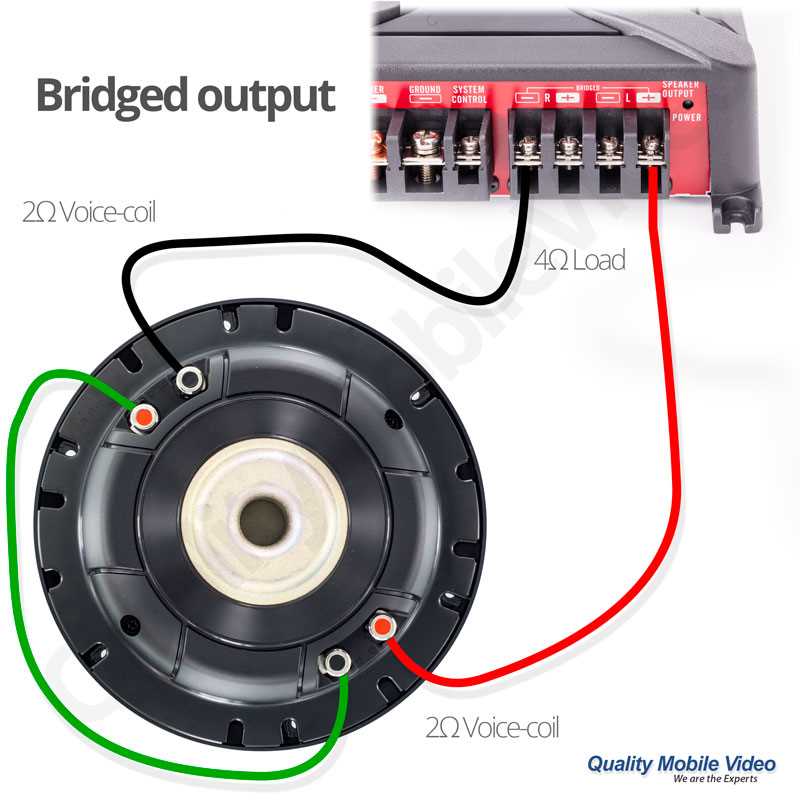
Next, connect one end of the speaker wire to the amplifier’s output terminal, ensuring that the positive (usually marked with a red label) and negative (black label) wires are correctly matched to their respective terminals. Securely tighten the wire into place, making sure there is no loose contact, which could lead to signal loss.
Now, connect the other end of the wire to the speaker terminals. The process is the same as with the amplifier: match the positive and negative terminals to the corresponding wires. If the speaker has multiple terminals, check the manufacturer’s guidelines to ensure the correct configuration for single-channel input.
Once all connections are secured, inspect for any loose or exposed wires that might cause shorts. After verifying the connections, power on the system. Check the audio output for clarity, and ensure that the bass response is balanced. If you experience issues, double-check the wire connections for correct polarity and integrity.