Use a dedicated dual-phase household power line with two hot conductors and a grounding core connected through a properly rated circuit breaker. A typical submersible water-lifting motor operating on a two-hundred-twenty-volt supply requires a breaker rated between 15–30 amperes, depending on motor capacity. Copper conductors with a cross-section of 2.5–4 mm² (14–12 AWG) maintain stable current flow across longer distances between the control panel and the submerged unit.
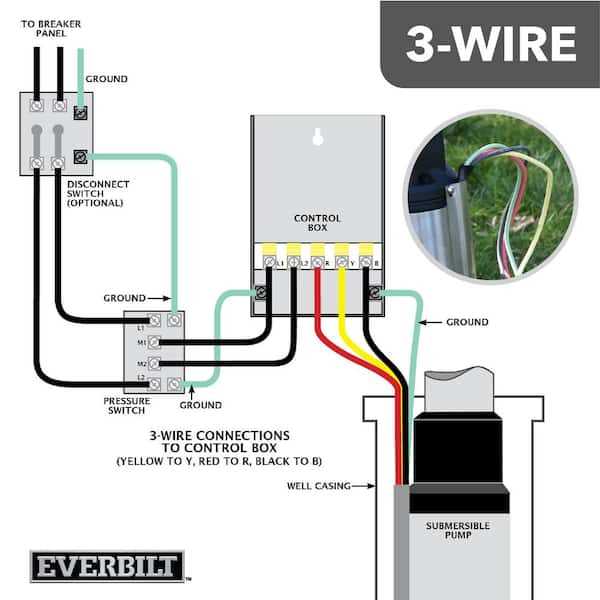
The connection scheme normally includes two live conductors, one ground conductor, and a pressure switch block placed near the pressure tank. Current travels from the distribution panel through the breaker into the pressure switch contacts. From there the line continues toward the motor leads. Grounding connects directly to the metallic body of the submersible drive or to the green terminal in the junction box, preventing hazardous voltage on exposed metal parts.
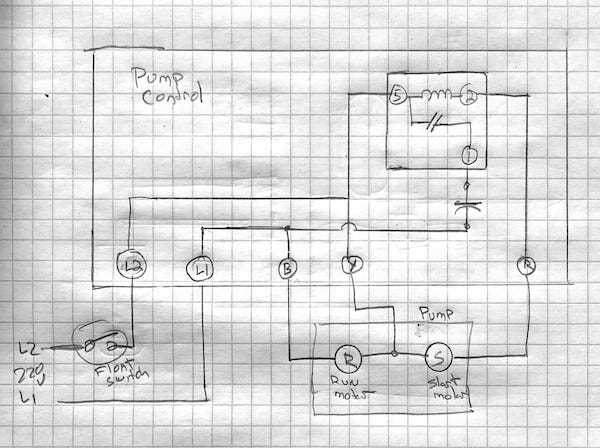
For installations deeper than 30–40 meters, voltage drop becomes noticeable. Increasing conductor thickness reduces power loss and keeps the motor from overheating. Many technicians also install a motor control box with a start capacitor and overload relay when the system uses a three-lead submersible drive. The control box terminals are usually labeled L1, L2, R, Y, B, guiding correct conductor placement.
A clear connection layout shows the breaker feeding the pressure switch, the switch feeding the motor leads, and the ground path bonded across all metal components. Each junction should sit inside a sealed electrical enclosure rated at least IP65, especially in humid pump-house environments. Tight screw terminals, corrosion-resistant connectors, and waterproof cable splices prevent intermittent contact and motor shutdown during continuous water extraction.
Connection Layout for a 230-Volt Submersible Borehole Motor
Install a double-pole circuit breaker rated 20–30 A for most residential groundwater motor units drawing 8–12 A at 230 V. Run a two-hot-plus-ground cable from the service panel to the pressure switch enclosure. Use copper conductors sized at least 12 AWG for runs shorter than 30 m; increase to 10 AWG if distance exceeds 60 m to limit voltage drop below 3%.
Inside the pressure switch box, attach the two incoming hot conductors to the LINE terminals. The outgoing pair feeding the submerged motor connects to the LOAD terminals. The protective earth wire must bond to the metal enclosure and continue uninterrupted toward the motor casing to provide a low-resistance fault path.
Typical Conductor Identification
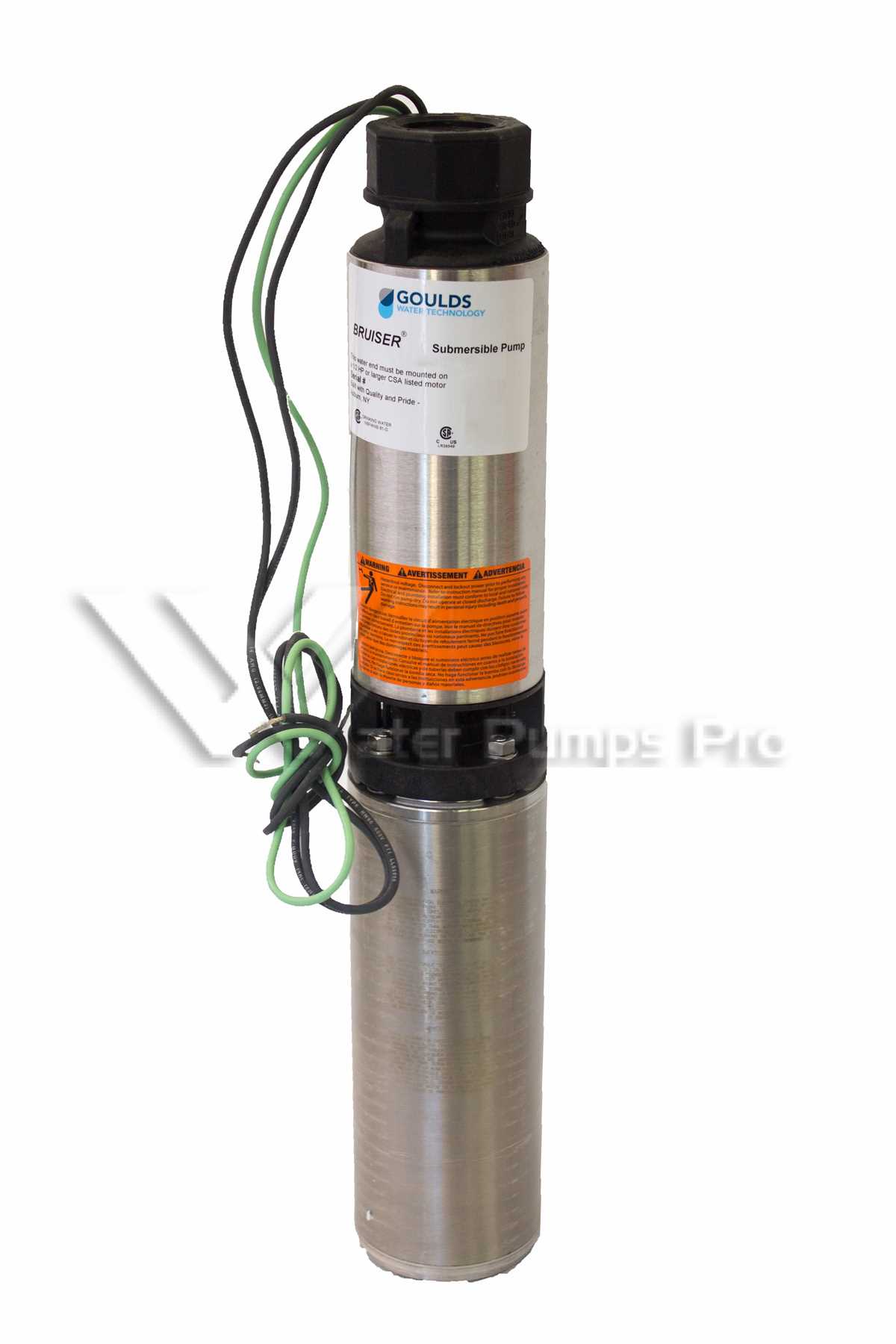
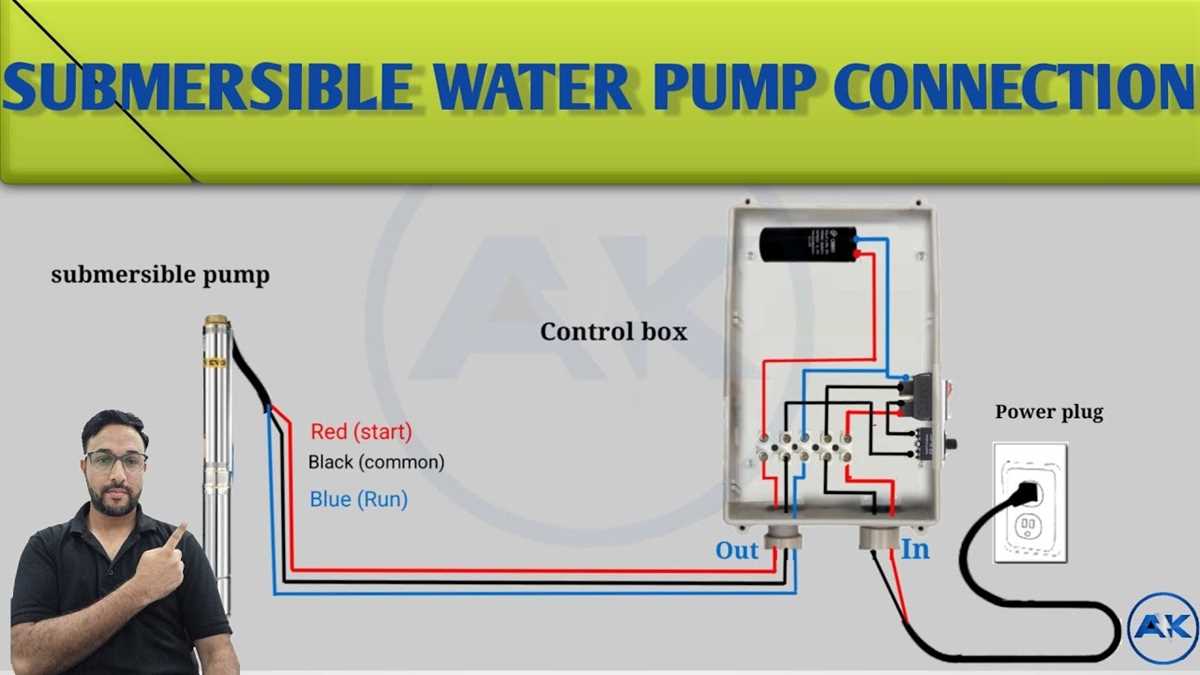
Most installations use black and red as energized conductors delivering split-phase power from the panel. A green or bare copper conductor serves as grounding. If a control box is present for three-wire motor assemblies, additional leads–commonly yellow, black, and red–run between the control unit and the submerged motor. These correspond to start, run, and common terminals located inside the control enclosure.
Mount the control box on a dry interior wall within 1–2 m of the pressure switch. Route the cable from the borehole casing through watertight conduit. Splice connections using heat-shrink waterproof connectors rated for underground environments; standard wire nuts corrode quickly in humid pits.
Protection and Testing
Add a surge protector rated for 230-V motor loads if the property experiences lightning or unstable grid supply. Ground resistance should remain under 25 Ω; verify using a clamp meter or earth tester. Before energizing, measure continuity between both hot conductors and ground to confirm absence of shorts.
After restoring power, observe pressure switch operation. Contacts should close when system pressure falls below the cut-in setting (commonly 30–40 psi) and open near the cut-out level around 50–60 psi. Rapid cycling signals incorrect tank pre-charge or insufficient conductor size causing voltage sag.
Label each terminal inside the switch and control enclosure with permanent markers. Future maintenance becomes faster, particularly when diagnosing insulation faults or replacing the submerged motor assembly.
How to Connect a 220V Well Pump to a Double-Pole Circuit Breaker Step by Step
Use a double-pole breaker rated for the motor’s amperage and connect each hot conductor from the service panel to separate terminals of that breaker. For most residential water-lifting motors using a 240-volt class supply, a 20–30 A breaker and 12 AWG or 10 AWG copper conductors are typical. Verify the motor nameplate first; the rated current determines both breaker size and conductor gauge.
Panel Preparation
Deactivate the main disconnect before touching the distribution panel. Remove the panel cover and identify two adjacent slots for the dual-pole breaker so each pole contacts a different bus bar phase.
- Switch off the main service disconnect.
- Confirm absence of voltage with a multimeter.
- Install the dual-pole breaker into paired bus slots.
- Leave the breaker in the OFF position until all conductors are secured.
Connecting Conductors
The motor circuit normally uses two energized conductors and a grounding conductor. No neutral conductor is required for most 240-volt motor circuits.
- Strip about 12 mm of insulation from each energized conductor.
- Insert the first conductor into terminal A of the dual-pole breaker.
- Insert the second energized conductor into terminal B.
- Tighten terminal screws to manufacturer torque values (commonly 25–35 lb-in).
- Attach the grounding conductor to the grounding bar inside the panel.
Route the cable from the panel to the borehole motor control box or pressure switch enclosure using conduit where required. PVC conduit with sweep elbows is common for outdoor runs, while metal conduit may be required in mechanical rooms or exposed interior routes.
Inside the control box or pressure switch housing, connect the two energized conductors to the LINE terminals. From the LOAD terminals, another pair of conductors runs toward the submerged motor assembly. Ensure insulation ratings match at least 600 V and temperature ratings of 75 °C or higher.
- LINE terminals receive power from the panel.
- LOAD terminals feed the motor.
- Grounding conductor bonds the metal enclosure.
- Cable clamps prevent tension on terminal screws.
After closing all enclosures, restore power at the main disconnect, then switch the dual-pole breaker to ON. Measure voltage across the two energized conductors at the control box; readings between 230 V and 245 V are typical for residential supply systems. If the motor fails to activate when pressure drops, inspect terminal tightness, pressure switch contacts, and breaker rating.