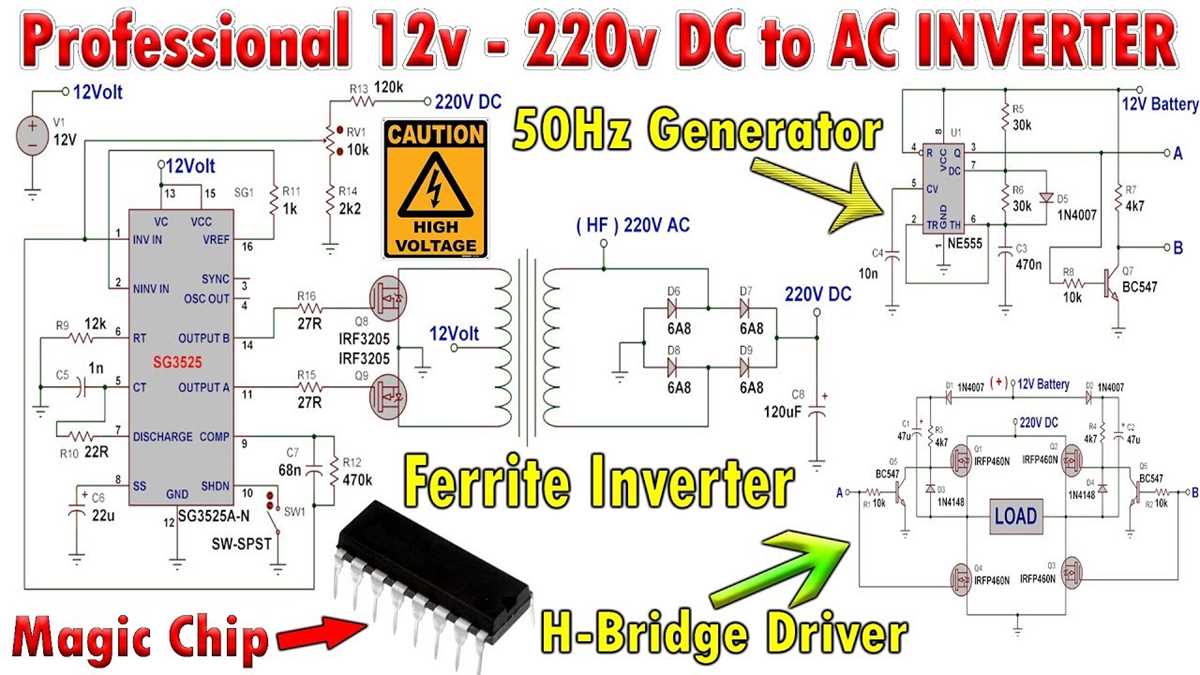
Use a push pull switching stage with two power MOSFET transistors connected to the center tap of a step up transformer. A low voltage source such as a 12 V battery feeds the primary winding, while alternating switching pulses drive current through each half of the coil. This arrangement generates an alternating magnetic field that produces higher voltage at the secondary winding.
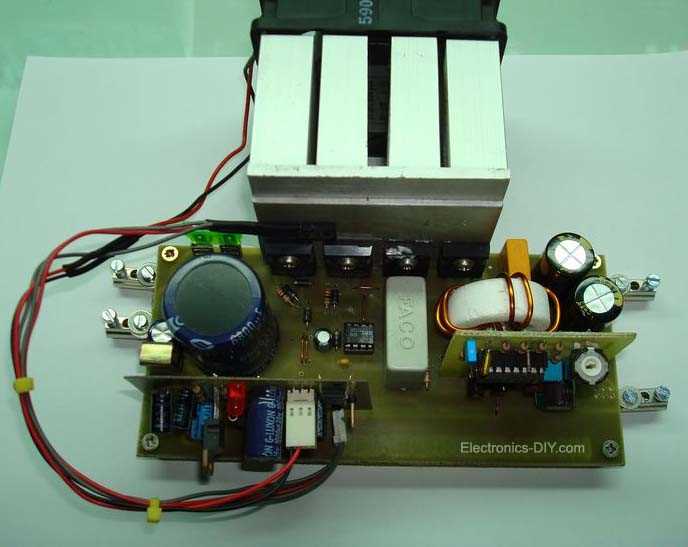
A square wave oscillator normally produces the control signal for the switching stage. Common oscillator devices include SG3525, TL494, or simple multivibrator transistor pairs. These generators create alternating gate pulses with a frequency near 50 Hz or 60 Hz, matching the frequency used by household electrical systems.
The transformer converts low voltage input into higher output levels such as 120 V AC or 230 V AC. A typical small installation uses a 12 V to 230 V transformer rated between 200 W and 500 W. Proper selection of the primary current rating prevents overheating during high load conditions.
Gate resistors placed between the oscillator stage and MOSFET gates limit switching current and stabilize transistor operation. Values between 47 Ω and 220 Ω are common depending on transistor gate charge. Fast switching reduces heat dissipation and keeps transistor temperature within safe limits.
Install a heat sink on each power transistor because switching devices can dissipate 10–30 watts during heavy load operation. Aluminum heat sinks with thermal resistance below 3 °C per watt help maintain junction temperature under the safe operating limit of roughly 150 °C.
Output filtering improves waveform quality when powering sensitive electronics. A simple LC network placed after the transformer secondary smooths the square wave and reduces harmonic distortion. Inductors rated for 2–5 A combined with capacitors around 0.47 µF to 2 µF produce a cleaner alternating output suitable for many household appliances.
DC to AC Inverter Circuit Diagram with Transformer MOSFET Switching and Output Stage
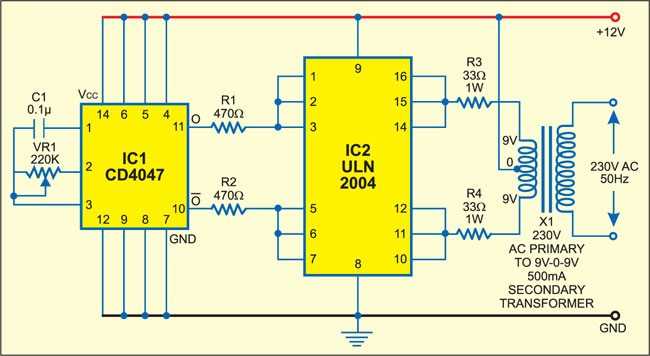
Use a push pull switching arrangement with two N-channel MOSFET transistors connected to the primary winding of a center-tapped transformer. The battery positive terminal connects to the center tap, while each transistor controls current through one half of the winding. Alternating gate signals force current to switch from one side to the other, generating a magnetic field reversal that produces alternating voltage on the secondary side.
Select MOSFET devices with a drain current rating at least three times higher than the expected load current. For example, a 300 W power stage operating from a 12 V battery can draw more than 25 A, so transistors rated above 75 A provide safer operating margin. Low Rds(on) values below 10 mΩ reduce heat generation during switching.
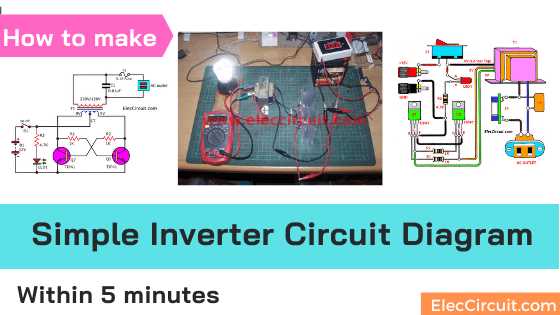
The oscillator stage produces complementary control pulses with frequency near 50 Hz or 60 Hz. These pulses drive the MOSFET gates through resistors typically between 68 Ω and 150 Ω. Proper timing prevents both transistors from conducting at the same moment, which would short the battery through the transformer winding.
The step up transformer determines the final AC voltage. A common configuration uses a 12-0-12 V primary winding with a 220 V or 230 V secondary winding. Core power rating must exceed the intended load; for instance, a 500 W design requires a transformer rated at least 500 VA to avoid magnetic saturation and overheating.
Attach aluminum heat sinks to each switching transistor and mount them with thermal compound. Under heavy load these devices can dissipate 15–40 W. Output terminals from the transformer secondary connect directly to the AC load, while optional LC filtering placed after the secondary winding can smooth the square waveform and reduce harmonic content.
DC to AC Inverter Circuit Diagram Using Transformer and Push Pull MOSFET Stage
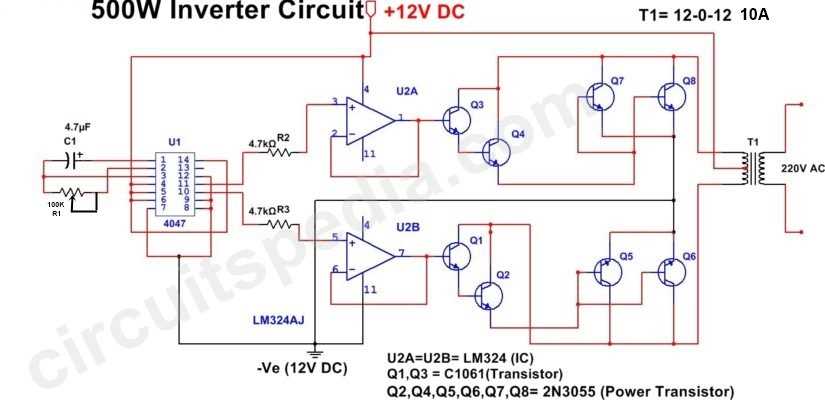
Connect a center tapped transformer primary to a 12 V or 24 V battery and drive each half of the winding with separate MOSFET switches. The positive terminal of the battery attaches to the center tap, while each transistor alternately connects the remaining ends of the primary to ground. This switching pattern produces alternating magnetic flux inside the core and creates higher voltage across the secondary winding.
Select power MOSFET devices with voltage ratings above 60 V and current capability at least three times higher than the expected operating current. A system delivering 300 W from a 12 V battery may draw more than 25 A during peak load. Devices such as IRF3205 or similar low resistance MOSFETs reduce conduction losses due to their low channel resistance.
The switching pulses usually originate from a square wave generator running at 50 Hz or 60 Hz. These pulses reach the MOSFET gates through resistors around 68–120 Ω, which limit transient current and stabilize gate charging. Complementary timing prevents simultaneous conduction of both transistors and protects the transformer primary from short circuit current.
Transformer selection determines output voltage and available power. A typical arrangement uses a 12-0-12 V primary winding and a 220 V or 230 V secondary. The power rating of the core should match the intended load; for example, a 400 W supply requires a transformer rated at least 400 VA. Oversized magnetic cores reduce heating and maintain stable output during prolonged operation.
Attach heat sinks with thermal compound to each switching transistor because switching losses and conduction losses produce heat that may exceed 20 W per device under heavy load. The secondary winding feeds the alternating output directly to the load, while optional LC filtering placed after the transformer can smooth the square waveform and reduce harmonic distortion.