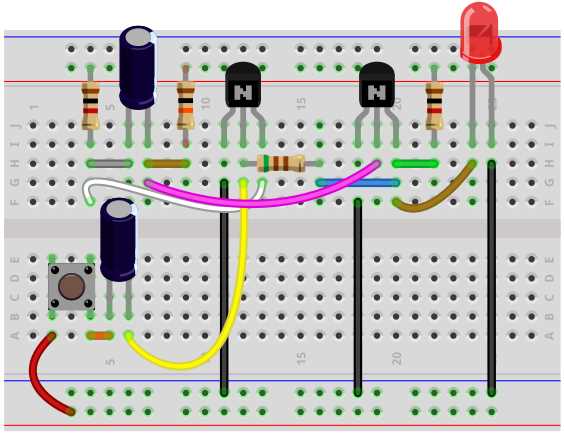
Use a single trigger pulse to produce a fixed width output signal by combining a timing resistor and capacitor with a switching device such as a timer IC or two-transistor pulse generator. A brief input edge charges or discharges the timing capacitor, forcing the output to change state for a calculated period before returning to its stable condition.
Pulse duration depends on the RC network. A common configuration with a timer IC follows the relation T ≈ 1.1 × R × C. For example, a 100 kΩ resistor paired with a 10 µF capacitor generates a pulse close to 1.1 seconds. Short delays use smaller capacitance values such as 100 nF–1 µF, while longer intervals rely on resistors above 220 kΩ.
Inspect the schematic layout to identify the trigger input, timing network, and output stage. The trigger pin usually reacts to a falling edge, pulling the internal latch into an active state. The capacitor then begins charging through the resistor until the threshold level reaches roughly two thirds of the supply voltage, which forces the output back to its idle level.
Such pulse generators appear in delay modules, push-button timers, relay drivers, and digital logic conditioning. Designers often connect the output through a transistor or MOSFET when the load requires more than 20–30 mA, such as a relay coil or indicator lamp.
Single Shot Pulse Generator With Trigger Input and Pulse Timing Control
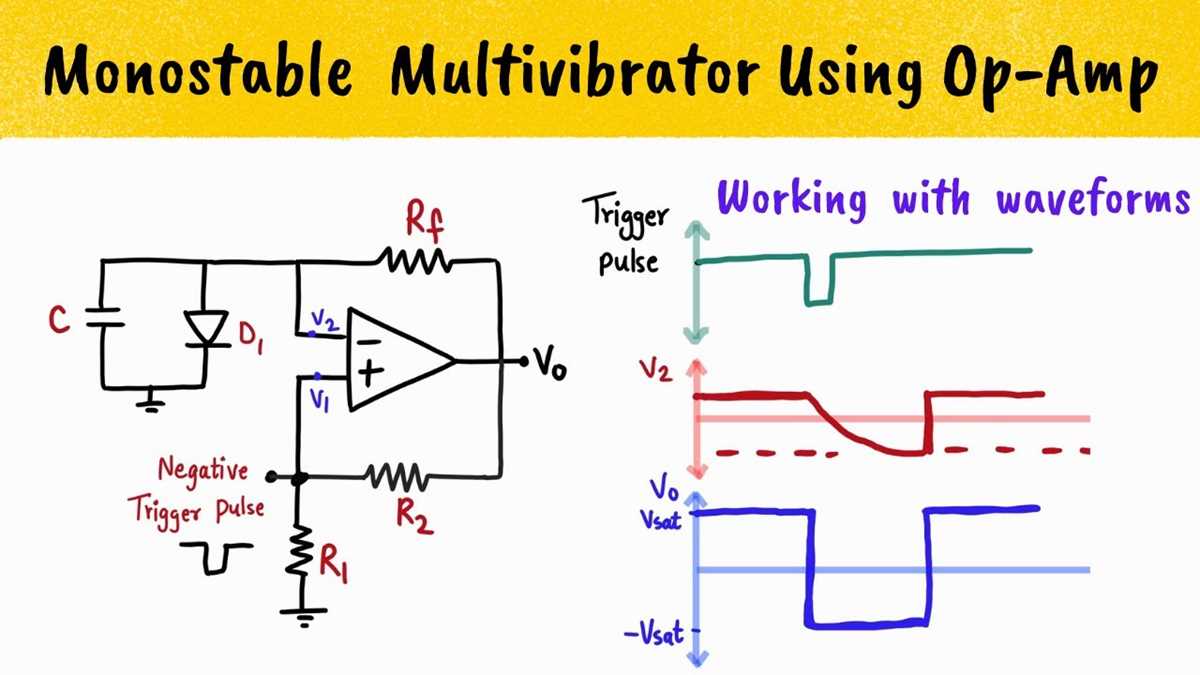
Connect the trigger input to a short negative pulse to produce one timed output signal. The input edge forces the internal latch of the timer stage into an active state. Once triggered, the output switches high and remains in that state while the timing capacitor charges through a resistor.
Pulse length depends on the RC timing network. A typical timer configuration follows the relation T ≈ 1.1 × R × C. For instance, pairing a 47 kΩ resistor with a 10 µF capacitor yields a pulse close to 0.5 seconds. Short delays below 100 ms usually require capacitors between 10 nF and 100 nF combined with resistors from 10 kΩ to 100 kΩ.
The trigger input often reacts to a falling edge. When voltage at the trigger pin drops below roughly one third of the supply level, the timing process begins. During this period the discharge transistor inside the timer device switches off, allowing the capacitor to charge through the resistor path.
Output control occurs when the capacitor voltage reaches about two thirds of the supply rail. At that point the internal comparator resets the latch and returns the output to its idle state. The discharge path then rapidly drains the capacitor so the stage becomes ready for the next trigger event.
Designers frequently connect the output stage to a transistor or MOSFET driver when the load requires higher current. Relay coils, LED arrays, and alarm indicators often demand more than 20–30 mA, exceeding the direct drive capability of many timer IC outputs.
Careful component selection stabilizes pulse width. Use resistors with 1% tolerance for predictable timing, and choose low leakage electrolytic capacitors for delays longer than one second. Temperature variation and capacitor aging can shift pulse duration, so testing with an oscilloscope helps confirm the final timing behavior.
How to Read a Single Shot Pulse Generator Schematic and Identify Trigger Input and Output
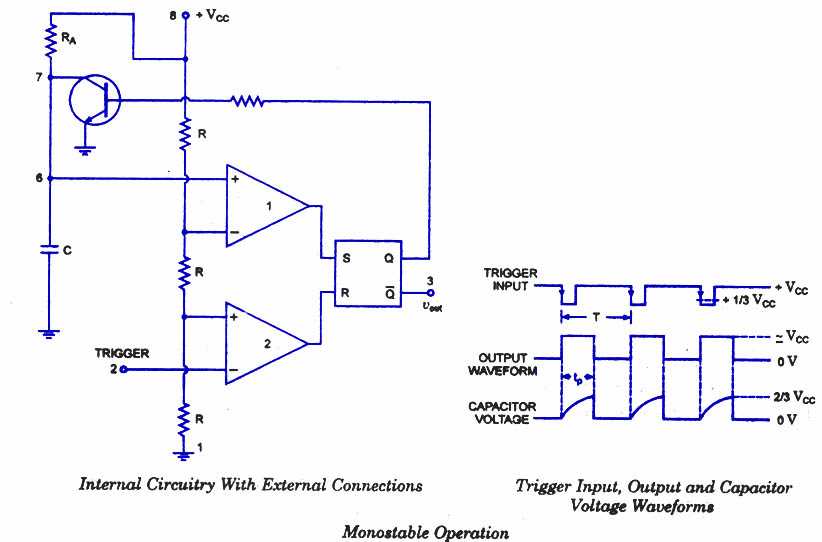
Locate the trigger node by finding the input line connected to a comparator or timer pin that reacts to a short voltage transition. In many timer-based pulse generators this input activates when the voltage drops below roughly one third of the supply level. The line often includes a pull-up resistor between 10 kΩ and 100 kΩ that keeps the input high until an external signal pulls it low.
Follow the path connected to the timing capacitor. This component normally sits between a threshold node and ground. Its value determines pulse length together with the resistor placed between the supply rail and the same node. Capacitors from 10 nF to 100 µF appear depending on the required delay.
Check the resistor attached to the timing capacitor. Its value usually ranges from 1 kΩ to 1 MΩ. Larger resistance produces longer pulses because the capacitor charges more slowly toward the comparator threshold level.
Finding the Output Node
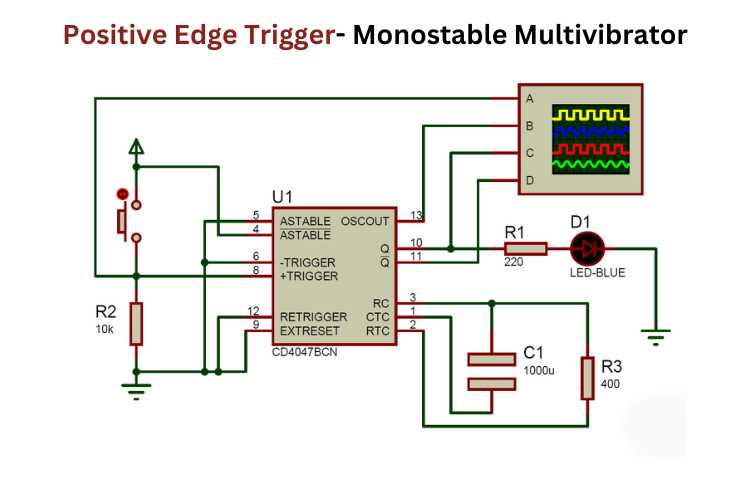
Identify the output stage by locating the pin connected to loads such as LEDs, relay drivers, or logic inputs. This node switches state once the trigger event occurs and remains active until the capacitor voltage reaches about two thirds of the supply rail.
The output trace often leads through a transistor or MOSFET when current demand exceeds the timer IC capability. Small signal loads connect directly, while relay coils or alarm indicators require a switching stage with base resistors around 1 kΩ–4.7 kΩ.
Recognizing Supporting Components
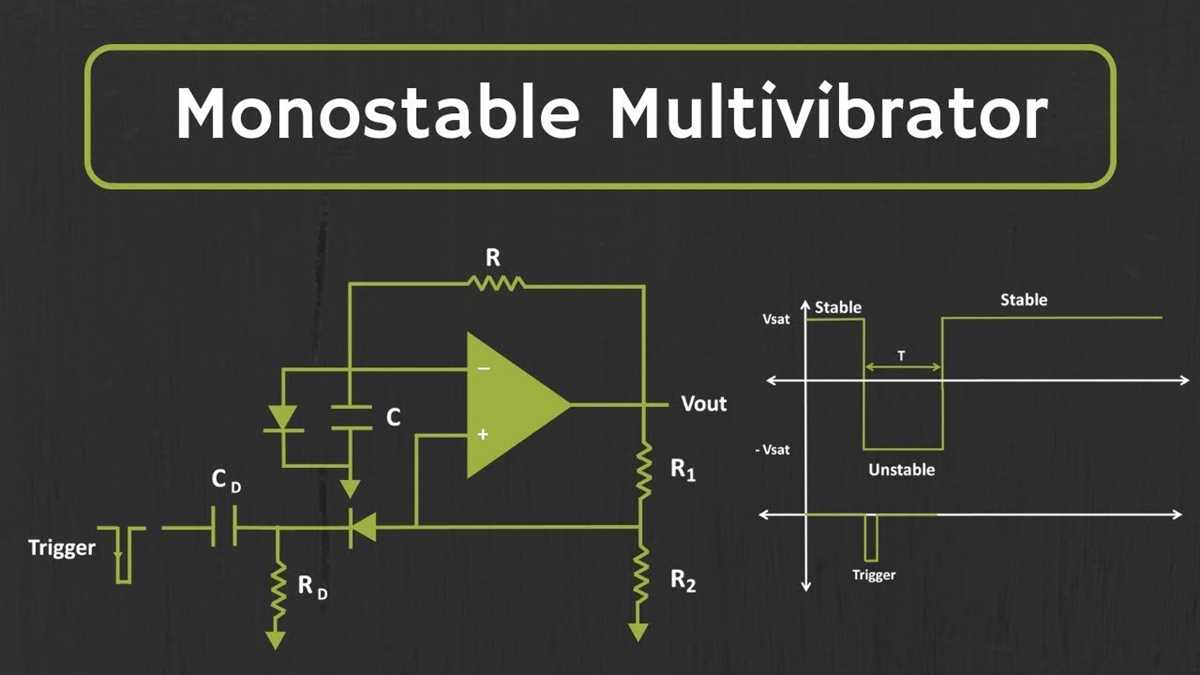
Observe the presence of a discharge transistor path linked to the timing capacitor. In timer IC implementations this internal transistor pulls the capacitor to ground after the pulse ends, resetting the timing network and preparing the stage for the next trigger event.
Supply rails usually appear at the top and bottom of the schematic sheet. Typical operating voltage ranges from 5 V to 15 V. Decoupling capacitors between 100 nF and 10 µF often sit near the timer device to stabilize the supply during switching.
Tracing the schematic from trigger node through the timing network to the output stage reveals the full pulse generation path. This method allows quick identification of how a single input transition produces a controlled output interval.