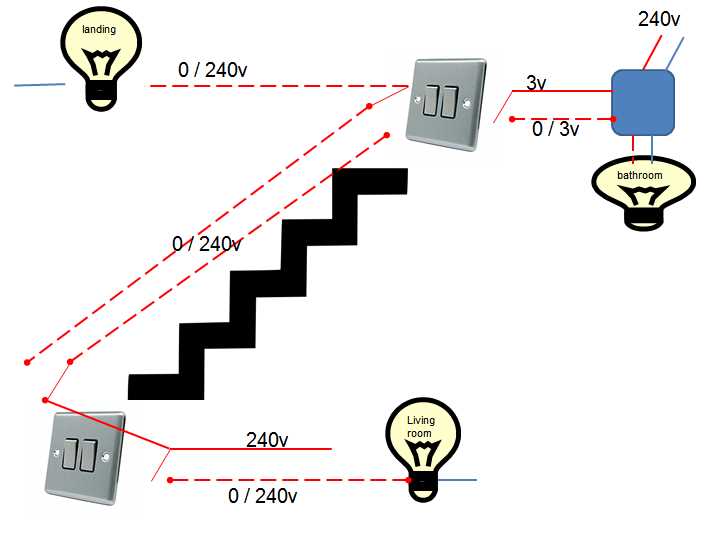
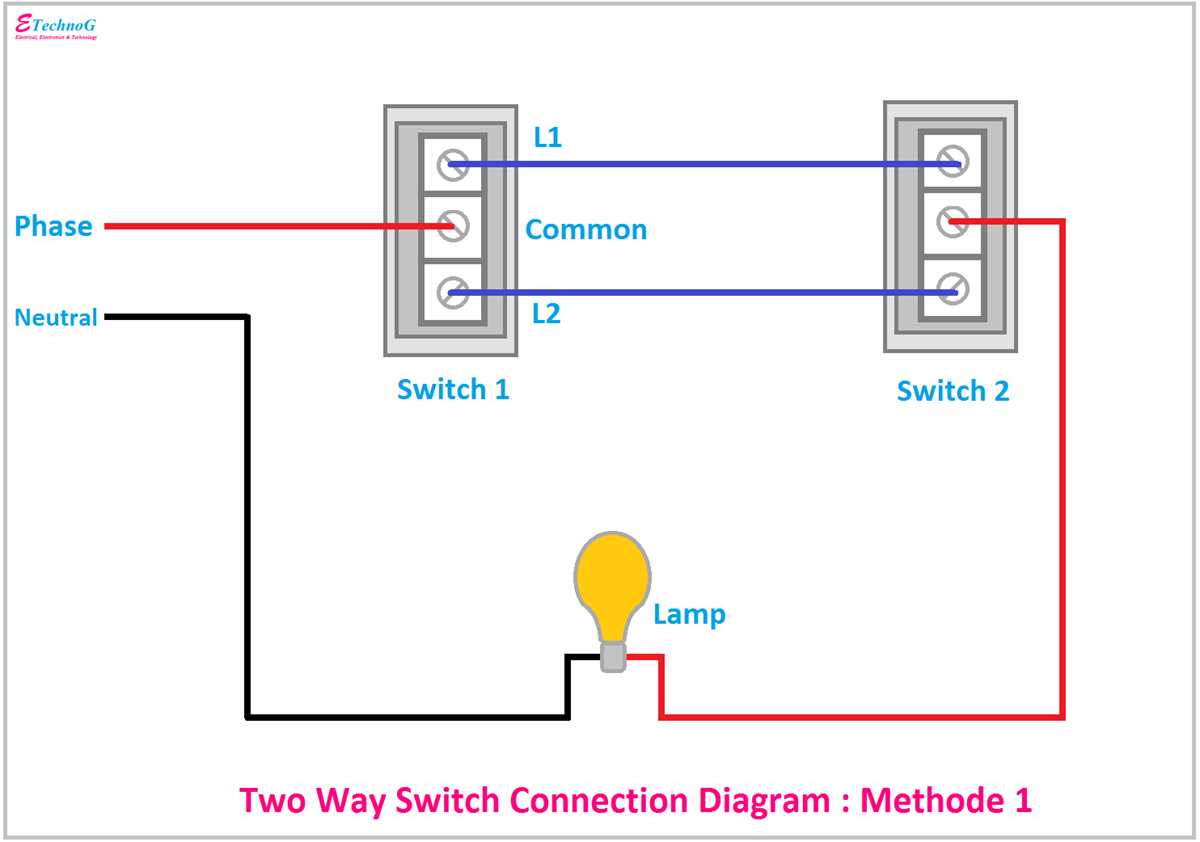
Connect the line conductor from the power source to the common terminal of the first switch, then route two traveler conductors between both switches. The common terminal of the second switch feeds the lamp fixture. This arrangement allows the light to be controlled from two separate locations such as the top and bottom of a staircase.
Use a three-conductor cable between the switches. Two insulated conductors serve as travelers while the third wire acts as ground. The travelers attach to the brass terminals on each switch, while the common terminal usually appears darker or marked with the letter COM.
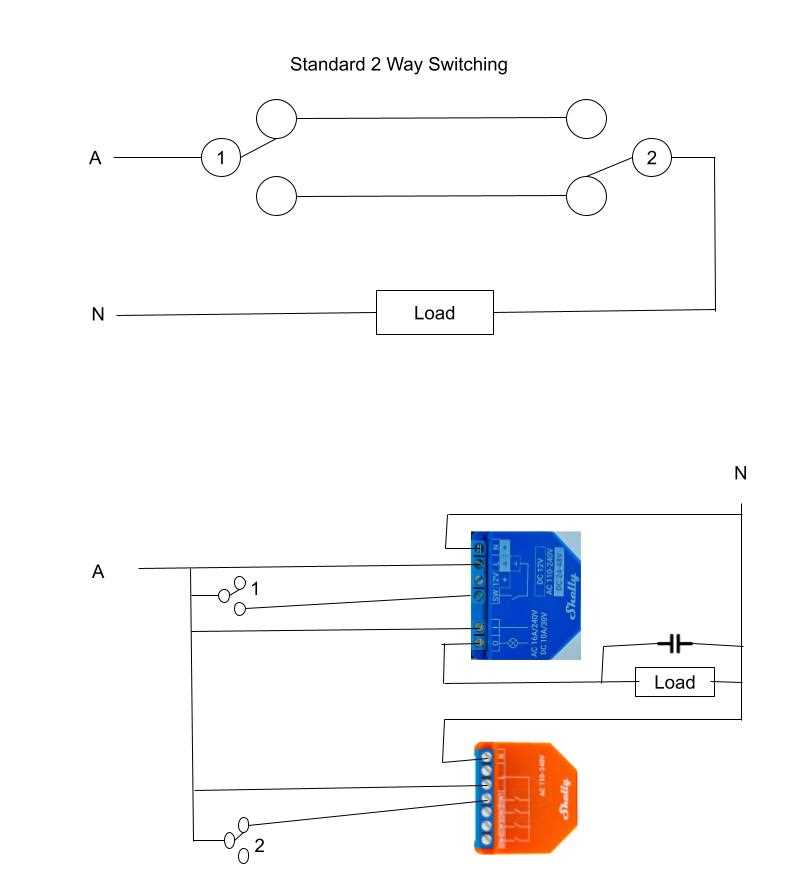
The lamp connects to the switched hot conductor coming from the second switch. The neutral conductor from the supply line bypasses both switches and connects directly to the light fixture. This separation keeps the switching action on the hot side only, which follows standard residential electrical practice.
Confirm connections using a multimeter set to continuity mode. When either switch changes position, the path between traveler terminals alternates, allowing the lamp to turn on or off regardless of the position of the other switch.
2 Way Circuit Diagram Showing Switch Terminals Traveler Wires and Light Fixture Connections
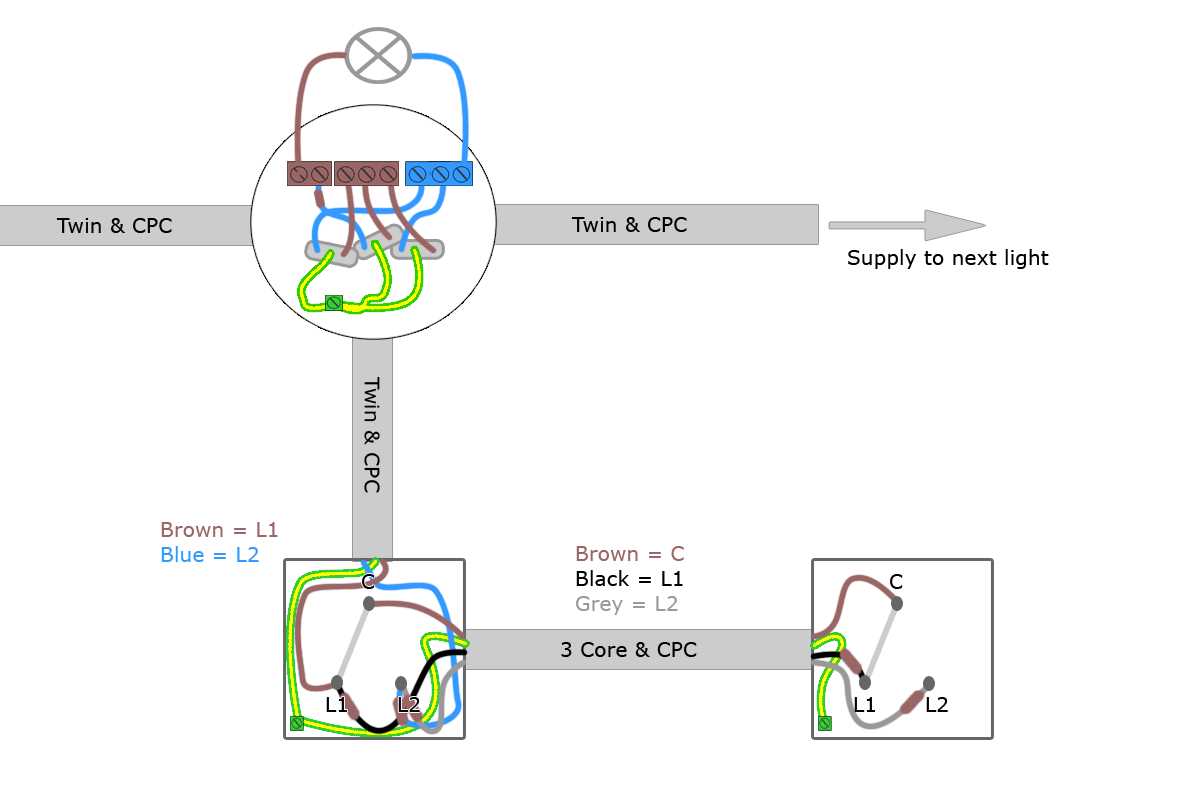
Connect the incoming hot conductor to the common terminal of the first switch, then run two traveler conductors between the brass terminals of both switches. The common terminal on the second switch sends the switched hot lead to the lamp fixture.
Use a three-conductor cable between both switches. Two wires carry alternating current paths while the third provides ground protection.
Typical terminal arrangement:
- Common terminal – dark screw connected to line or load
- Traveler terminal 1 – brass screw linked to the first traveler conductor
- Traveler terminal 2 – brass screw connected to the second traveler conductor
- Ground terminal – green screw connected to equipment ground
The neutral conductor bypasses both switches and connects directly to the lamp holder. Only the hot conductor passes through the switching network. This configuration prevents voltage from remaining present at the lamp when the switch path opens.
Use color-coded conductors so the traveler pair remains easy to identify. A common practice includes red and white wires as travelers, black as the supply line, and bare copper or green for grounding.
Verify the connection pattern with a multimeter. Toggle either switch while checking continuity between the traveler terminals. One position connects traveler A, the other connects traveler B, allowing the lamp to change state from either switch location.
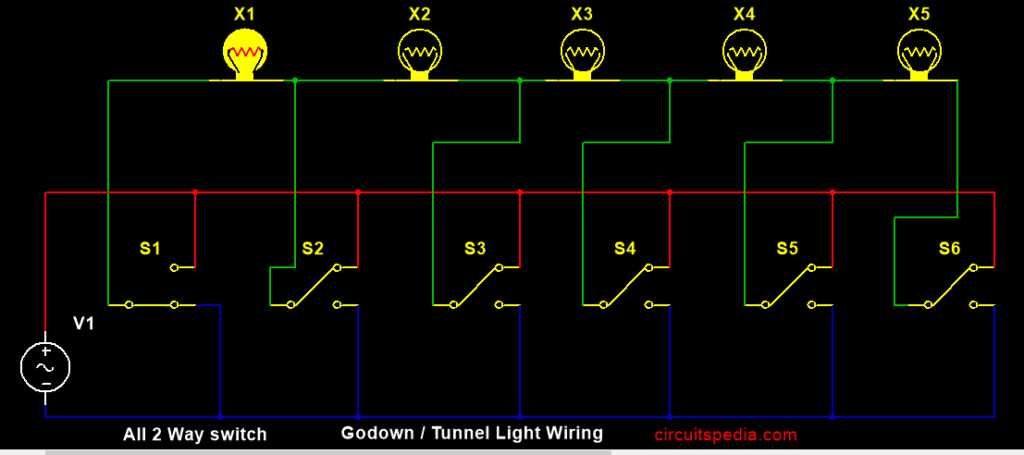
Terminal Identification on Two Way Light Switch and Correct Traveler Wire Connections
Locate the common terminal on the light control switch before attaching any conductor. This terminal usually uses a darker screw and connects either to the incoming hot supply or to the lamp feed depending on which switch sits closer to the power source.
The remaining two brass screws serve as traveler terminals. These terminals carry alternating current paths between both switches. Attach the traveler conductors to these two screws so the switching positions can redirect the hot path from one traveler to the other.
Use consistent conductor colors to prevent confusion during installation or maintenance. Typical color assignments include black for the supply line, red and white for traveler conductors, and green or bare copper for the grounding conductor.
The grounding terminal appears as a green screw on the metal frame of the switch. Attach the equipment ground conductor from the cable to this screw and connect it to the metal box when present. This provides a safe path for fault current.
Inside the wall box, keep traveler conductors grouped together and separate them from the supply lead. Clear routing reduces installation mistakes and simplifies troubleshooting if the light fails to respond correctly.
Check terminal function using a multimeter set to continuity mode. Toggle the switch lever while measuring between the common terminal and each traveler post. One position connects to the first traveler, while the opposite position connects to the second traveler.