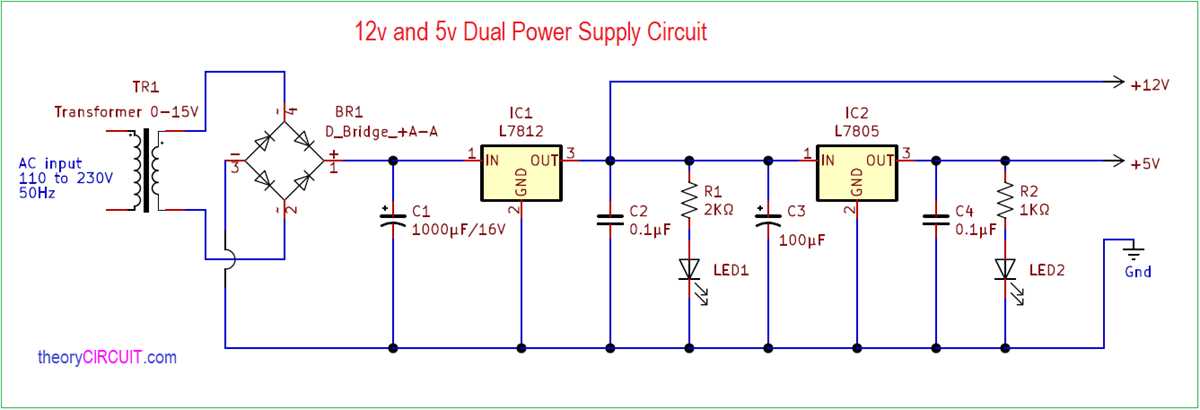
Start by selecting the appropriate components for reducing higher voltage to 5V. You’ll need a reliable voltage regulator, such as the popular LM7805, or a DC-DC buck converter. These components ensure the output is stable and can handle varying load conditions without overloading.
Ensure that the regulator is rated for the input voltage you are using. For instance, when converting from a 12V source, the chosen regulator must handle higher input voltages and reliably output a consistent 5V. Proper heatsinking may be required for linear regulators, especially when there’s a significant voltage drop between input and output.
Once you’ve assembled your components, carefully check all connections to avoid potential shorts. Pay attention to the placement of capacitors as they help stabilize the output. Test your setup with a multimeter to verify the output voltage is correct before using it in a circuit.
Step-by-Step Guide to Building a 12V to 5V Conversion Circuit
Begin by selecting a suitable voltage regulator, such as the LM7805 for linear regulation or a DC-DC buck converter for higher efficiency. The LM7805 is easy to use, but keep in mind that it may require additional cooling if the voltage difference is large. A buck converter will provide better performance for larger current requirements.
Next, prepare the power input. Ensure you have a stable power source that provides a constant 12V, such as a battery or an adapter. Connect the positive and negative terminals of the power source to the input pins of the regulator, ensuring correct polarity to avoid damage.
Now, connect the output pins of the voltage regulator to your desired load. For the LM7805, connect the output pin to the device or component that needs 5V power. Be sure to use a multimeter to verify that the output voltage is correctly regulated before applying it to sensitive equipment.
For added stability, include capacitors at both the input and output of the regulator. A typical setup would use a 0.33µF capacitor at the input and a 0.1µF capacitor at the output to filter noise and prevent voltage spikes. These capacitors ensure the regulator operates smoothly without fluctuations in the voltage.
Finally, double-check all connections to ensure there are no loose or shorted wires. Once everything is connected properly, power on the system and measure the output voltage. If the voltage is consistent at 5V, your setup is ready for use. If not, recheck the components and connections to resolve any issues.
Components Needed for a 12V to 5V Voltage Regulator Circuit
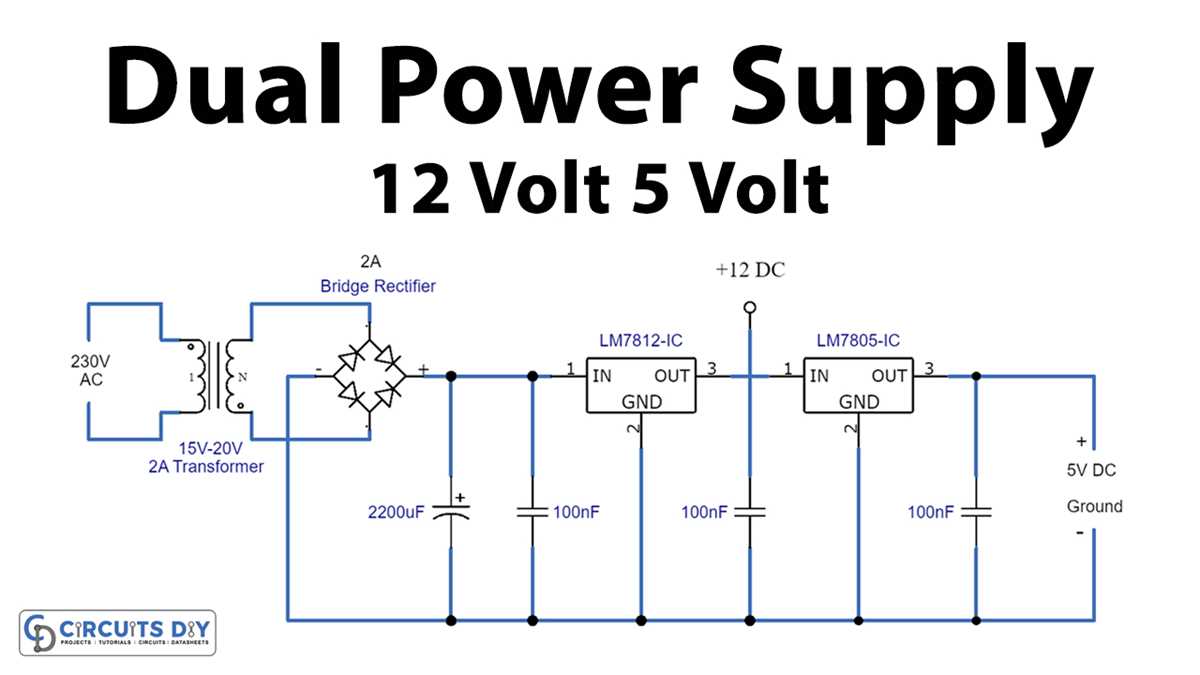
The primary component you will need is a voltage regulator, such as the LM7805 for linear regulation or a DC-DC buck converter for higher efficiency. For linear regulation, the LM7805 can step down a higher voltage to 5V, but it may require heat dissipation. A buck converter, on the other hand, provides better efficiency, especially when there is a larger difference between input and output voltages.
| Component | Purpose |
|---|---|
| Voltage Regulator (LM7805 or DC-DC Buck Converter) | Regulates input voltage down to 5V |
| Capacitors (0.33µF and 0.1µF) | Stabilizes input and output voltages, reduces noise |
| Heat Sink (for LM7805) | Dissipates heat generated by the regulator |
| Multimeter | Verifies correct voltage output |
| Wires and Connectors | For connecting the power source and load to the regulator |
Additionally, ensure proper grounding by connecting the ground pin of the regulator to the negative terminal of your power source. It’s also advisable to use a multimeter to check the output after assembling the components to ensure the voltage is correctly reduced to 5V. If using a buck converter, check its datasheet for specific wiring instructions and efficiency details.
Common Issues and Troubleshooting in 12V to 5V Circuit Design
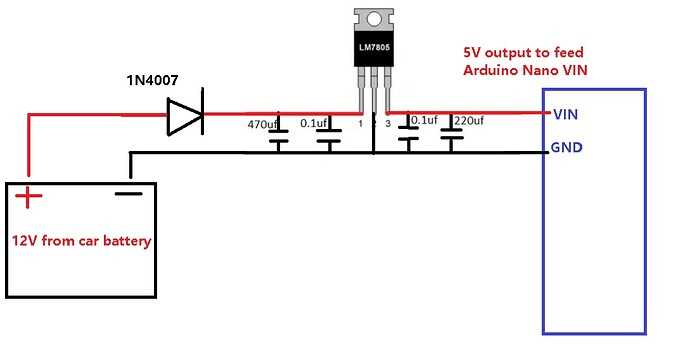
If the output voltage is not stable at 5V, check the power supply for any fluctuations. Inadequate filtering of the input voltage is often the cause of such issues. Ensure that capacitors are correctly placed on both the input and output terminals of the voltage regulator. If you’re using a linear regulator like the LM7805, check whether it is overheating. In such cases, adding a heat sink will help dissipate excess heat and stabilize the output.
Other Common Issues:
- Incorrect wiring: Ensure that the positive and negative terminals are correctly connected to avoid shorts.
- Overheating: If using a linear regulator, consider using a higher current rated model or switching to a buck converter for better efficiency.
- Low current output: Verify the regulator’s current rating and ensure the load does not exceed the specified limits.
- Capacitor placement: Incorrect placement or missing capacitors can lead to unstable voltage. Always add capacitors to smooth out voltage spikes.