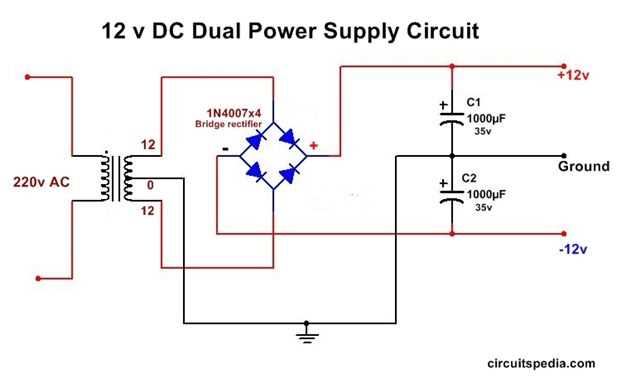
For creating a stable 12V system, understanding how to connect each component correctly is key. A consistent voltage is required for powering devices like motors, lights, and other electronics in cars, home projects, and DIY builds. Ensuring correct wiring is critical for the system’s longevity and proper operation. Start by ensuring a clean power source that provides stable and continuous voltage.
When designing your setup, focus on the voltage regulator, capacitors, and the transistor that will manage the flow of energy. The main regulator should be capable of converting a higher voltage input into a steady 12V output, while capacitors will smooth out any fluctuations in the power delivery. The transistor, usually a MOSFET or similar, controls the energy flow based on input signals.
Always check that the connections are tight and that wires are properly insulated. Inadequate insulation or loose connections can lead to shorts or fluctuations in voltage, potentially damaging your equipment. Additionally, consider the power requirements of the devices being powered, as overloading the system can result in failure or overheating.
Building a Reliable 12V System
To create a reliable 12V system, the first step is to select a stable input source. Most systems require a transformer or a similar device to step down higher voltages to the desired 12V. The input should be connected to the regulator, which ensures that the voltage remains constant even if the input fluctuates.
Next, use a regulator capable of converting higher AC or DC voltages to a smooth, steady 12V DC. A common choice for this purpose is a linear regulator, such as the LM7812. This component has a fixed output voltage, making it ideal for circuits that require a stable 12V output. However, be mindful of its heat dissipation–using a heat sink may be necessary to prevent overheating during operation.
Another important part of the setup is the filtering component. Capacitors are used to smooth out any fluctuations or ripple in the output voltage. A capacitor with a value of at least 100uF is typically sufficient for this purpose. It should be placed as close to the output of the regulator as possible to ensure it functions effectively.
For better performance, include a diode in the design to protect against reverse voltage. This simple but important step prevents damage to the regulator and other sensitive components in case the input polarity is reversed. A Schottky diode is a good option due to its low forward voltage drop.
Once the components are connected, the ground connection must be solid. Ensure the ground of the regulator is connected to the common ground of the system, which may include the input source. A poor ground connection can lead to instability and can cause the output voltage to fluctuate.
After assembling the system, use a multimeter to check the output voltage. Make sure that the voltage is stable and consistent at 12V. If the voltage varies too much, you may need to adjust the regulator or check for issues in the circuit, such as loose connections or faulty components.
Finally, ensure the system is capable of handling the desired current load. If your setup is powering high-demand devices, such as motors or lights, ensure the regulator can handle the required current without overheating. Choosing the right components based on the expected load is critical for maintaining long-term reliability and preventing component failure.
Understanding Key Components for a 12V System
The first crucial component for building a stable system is the voltage regulator. A linear regulator, such as the LM7812, is commonly used for maintaining a steady 12V output. The regulator works by reducing excess voltage and preventing fluctuations that could damage connected devices. Be sure to choose a regulator that matches the required current rating to avoid overheating and ensure long-term reliability.
Another important part is the filter capacitor, which smooths out voltage ripples from the regulator. A capacitor with a rating of at least 100uF should be placed near the output of the regulator. This will help maintain a steady DC voltage, especially when there are sudden load changes. For best results, use a low ESR (Equivalent Series Resistance) capacitor to minimize losses.
- Diodes: A diode is necessary for protecting the circuit from reverse polarity. A Schottky diode is a good option due to its fast switching speed and low forward voltage drop.
- Capacitors: These are essential for filtering and stabilizing the voltage. Use both ceramic and electrolytic types to cover a wide range of frequencies and smooth out any noise.
- Resistors: Often used to limit current or to set specific voltage levels, resistors are simple components that should match the desired specifications for your system.
Finally, the input side of the system requires a reliable AC to DC conversion. If using an AC source, a transformer and rectifier bridge will be necessary to convert the alternating current to direct current. For DC sources, a suitable step-down converter or battery can be used, depending on the required voltage range. Make sure to select components that are capable of handling the expected input voltage and current without causing excessive heat buildup.