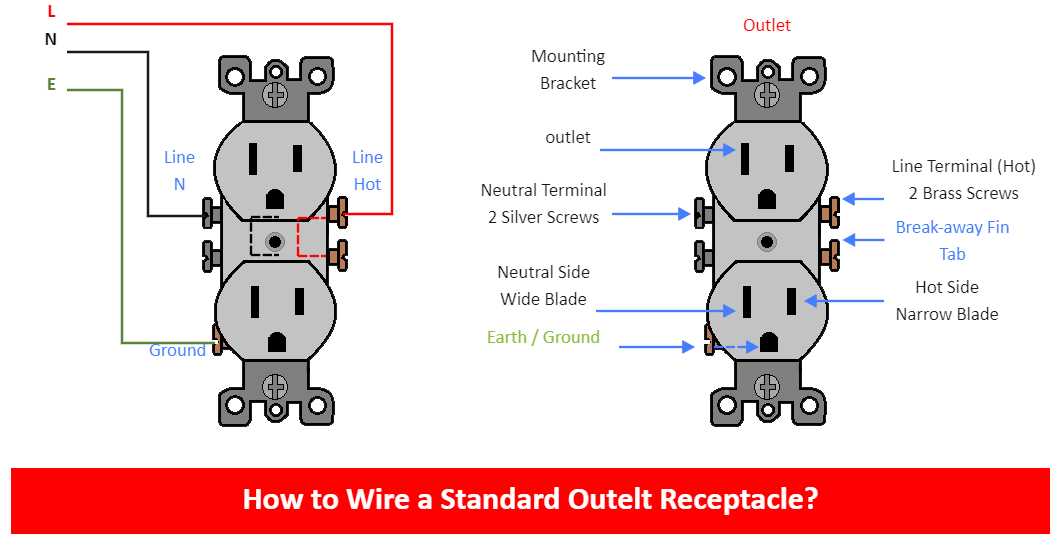
Attach the live conductor to the brass terminal using 14 AWG copper wire for standard 15-amp circuits. Ensure the screw is tightened to 20–25 inch-pounds torque to prevent loose connections and sparking.
Connect the neutral wire to the silver terminal and verify continuity with a multimeter. Keep the wire strands fully inserted under the terminal clamp to maintain stable electrical contact.
Secure the grounding conductor to the green screw on the metal outlet box or mounting frame. Remove paint or debris at the contact point to reduce resistance and protect against electrical faults.
Organize and label all conductors before installing the cover plate. Maintain a small bend radius and avoid crossing wires under the terminal screws to prevent insulation damage and shorts during operation.
Test the connections with a plug-in tester before applying full load. Confirm proper polarity, grounding, and voltage levels to ensure the outlet operates safely and reliably.
Identifying Terminals and Preparing Conductors
Locate the brass, silver, and green screws on the outlet body. Brass screws connect to live leads, silver to neutral, and green to grounding conductors. Confirm labels or use a multimeter to verify continuity before installation.
Strip insulation carefully from each conductor, exposing approximately 3/4 inch of copper. Avoid nicking strands to maintain full cross-sectional area, which ensures proper current handling and prevents overheating.
Color Coding and Wire Selection
Use black or red wire for live, white for neutral, and green or bare copper for ground. Standard residential circuits typically require 14 AWG for 15-amp outlets and 12 AWG for 20-amp circuits. Consistent color coding prevents misconnection.
| Terminal Type | Recommended Wire Gauge | Purpose |
|---|---|---|
| Brass | 14–12 AWG | Live supply |
| Silver | 14–12 AWG | Neutral return |
| Green | 14–12 AWG | Ground protection |
Preparing Multiple Conductors
When connecting multiple outlets in series, twist like-colored wires together and secure under a single terminal using a pigtail. This method reduces stress on screws and maintains solid contact.
Inspect all stripped ends before insertion. Ensure no copper extends beyond the terminal, which could cause accidental shorting to the metal box or neighboring terminals.
Finally, keep conductors separated and routed cleanly within the box. Use cable clamps or ties to prevent strain on the terminals and maintain consistent spacing between live, neutral, and ground leads.
Connecting Live Neutral and Ground Wires
Attach the live conductor to the brass terminal and tighten the screw to 20–25 inch-pounds. Confirm the wire is fully inserted under the terminal to prevent arcing and maintain reliable contact under load.
Connect the neutral wire to the silver terminal and ensure no stray strands are outside the clamp. Verify continuity with a multimeter to confirm a proper return path before energizing the circuit.
Secure the ground conductor to the green screw or grounding lug. Check that all metal parts of the box or mounting frame have continuous connection to this terminal to protect against shock hazards and ensure code compliance.
Testing Connections and Ensuring Electrical Safety
Verify each terminal connection with a multimeter before energizing the line. Measure voltage between live and neutral, live and ground, and neutral and ground to confirm proper potential and eliminate miswiring.
Inspect mechanical tightness of all screws and clamps. Loose terminals can generate heat under load, creating fire hazards and premature equipment failure.
Step by Step Safety Checks
- Use a plug-in tester to confirm correct polarity.
- Check for continuity between ground terminals and metal boxes.
- Ensure no exposed copper strands touch neighboring terminals or the box.
Perform load testing by plugging in a standard device rated for the circuit. Observe for voltage drop or abnormal heating at terminals, which may indicate poor contact or undersized conductors.
Document each measurement to maintain a reference for future inspections or troubleshooting. Note voltage, resistance, and polarity results for verification against electrical codes.
Finally, reassemble the outlet cover securely and route all conductors to prevent pinching. Proper alignment ensures long-term reliability and compliance with safety standards.