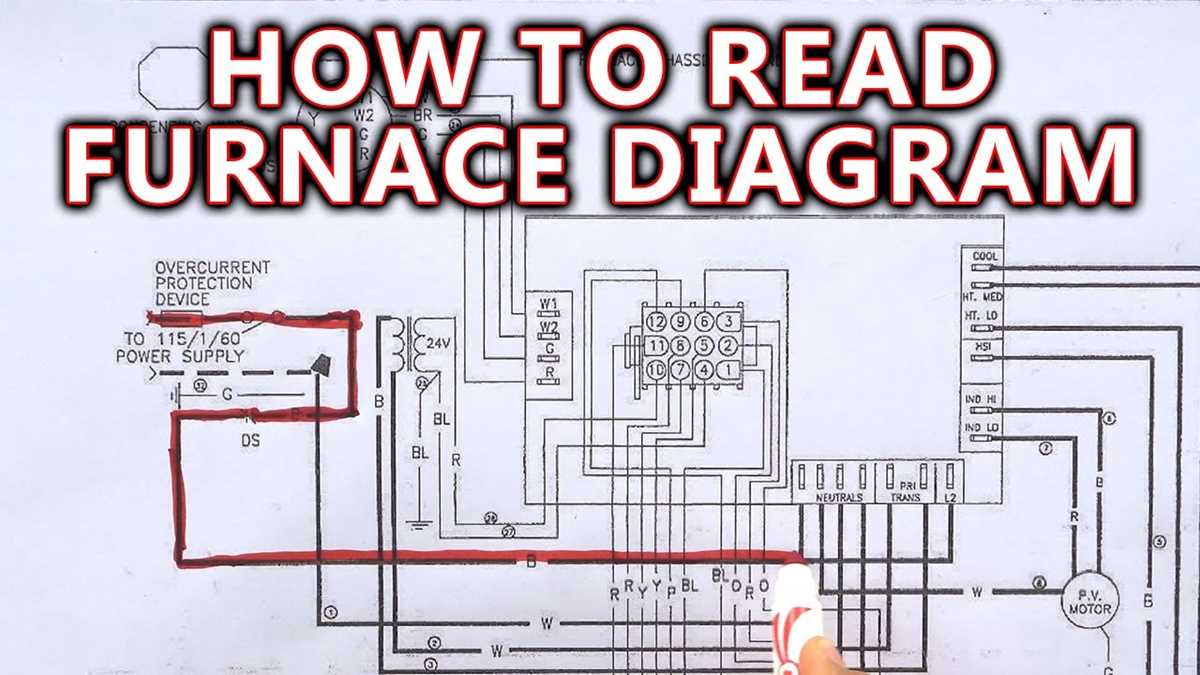
Turn off the 120 V power supply at the service breaker before opening the heating unit cabinet. Inside most residential heating systems, low-voltage control lines operate at 24 V AC and connect the wall thermostat, control board, gas valve, and blower relay.
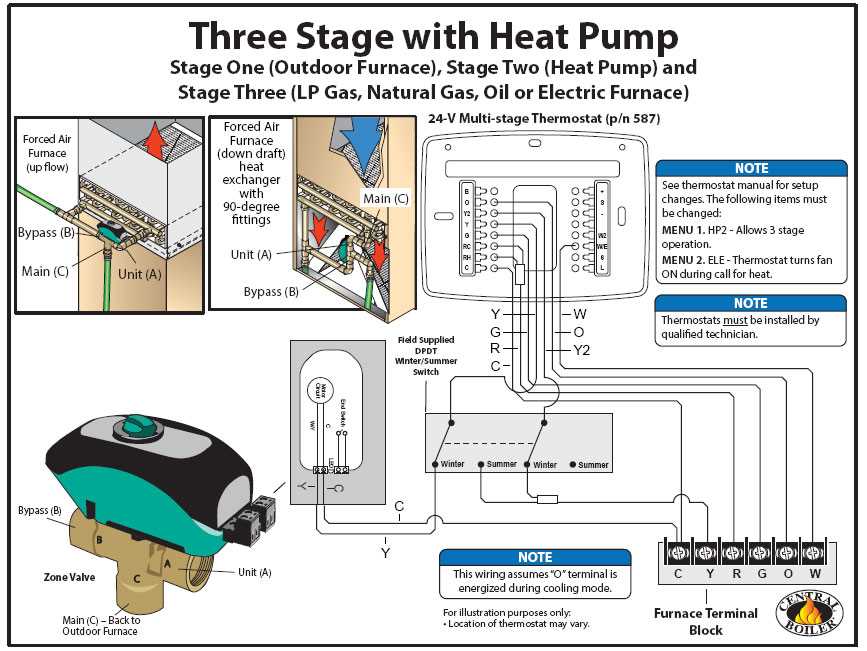
Locate the control board terminals labeled R, W, Y, G, and C. The R terminal carries 24-volt power from the transformer. The W terminal activates the heating cycle, while Y controls the cooling relay in combined HVAC systems. The G terminal engages the blower motor relay, and C provides the common return path.
Use 18-gauge thermostat cable for low-voltage connections between the wall thermostat and the heating unit. Standard color practice includes red for R, white for W, yellow for Y, green for G, and blue or black for C. Maintain clear labeling at both ends of the cable to avoid misconnection during maintenance.
Inside the unit, the blower motor usually connects through a relay or integrated control board. Typical motors use multiple speed leads such as black for high speed, blue for medium, and red for low. Unused leads should be insulated with wire caps and secured away from moving parts.
Wiring Diagram for a Furnace With Thermostat and Control Board Connections
Connect the thermostat cable to the control board terminals marked R, W, Y, G, and C. The red conductor delivers 24-volt power from the transformer, while the white conductor triggers the heating cycle. Yellow activates the outdoor condenser in combined HVAC setups, and green starts the blower relay.
Follow the standard connection sequence between the wall temperature controller and the internal control board:
- R terminal → 24 V supply from transformer
- W terminal → heating call signal
- Y terminal → cooling relay signal
- G terminal → indoor blower relay
- C terminal → common return line
Route the low-voltage cable away from high-voltage motor conductors. Most residential systems use 18 AWG thermostat cable, which carries control signals safely without interference from the 120-volt blower supply.
Inside the heating unit cabinet, the control board distributes signals to ignition components, safety switches, and the blower motor relay. Secure each conductor under the terminal screw, keep insulation intact, and leave 10–15 cm of free length inside the cabinet so future maintenance can be completed without reconnecting the cable.
Connecting thermostat terminals R W Y G and C to the furnace control board
Attach the thermostat cable to the control board terminals labeled R, W, Y, G, and C. The R terminal supplies 24 V AC from the transformer. The white conductor typically connects to W and signals a heating request when the thermostat closes the contact.
Connect the yellow conductor to the Y terminal if the system includes an outdoor condenser unit. The green conductor links to G and activates the indoor blower relay. The blue or black conductor usually attaches to C, which provides the common return path for the 24-volt control circuit.
Strip about 8–10 mm of insulation from each conductor and tighten the terminal screws firmly so copper remains fully under the clamp. Keep low-voltage control cables separated from the 120 V blower motor supply lines inside the cabinet to reduce electrical interference.