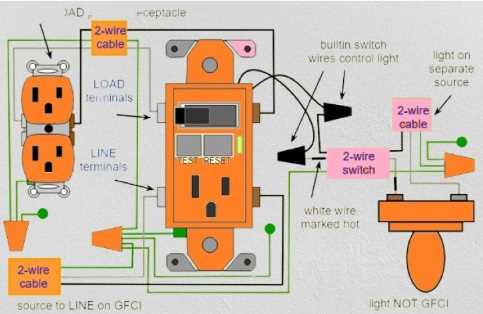
Ensure the power is completely disconnected at the breaker before starting any connection of wall-mounted outlets. Use a non-contact voltage tester to verify absence of current in all terminals. Never rely solely on the main switch to assume wires are inactive.
Identify each conductor by color coding: black or red for live, white for neutral, and green or bare for ground. Accurate labeling prevents reverse connections that can cause short circuits or shock hazards.
Strip insulation only to the recommended length, typically 3/4 inch, to allow secure attachment to terminal screws or push-in slots. Over-stripping exposes excess wire and increases risk of accidental contact with adjacent metal parts.
Attach the live conductor to the brass-colored terminal and neutral to the silver-colored terminal, ensuring firm but not over-tightened screws. Ground wires should connect to the green terminal, forming a continuous protective path to the panel.
After all connections are complete, gently fold wires back into the box without crimping. Space management inside the box avoids pressure points that can loosen terminals over time.
Mount the outlet securely and replace the cover plate. Restore power and test with a plug-in tester to confirm correct polarity and grounding. Any irregular readings indicate the need to recheck each connection immediately.
Complete Guide to Connecting Standard Electrical Outlets
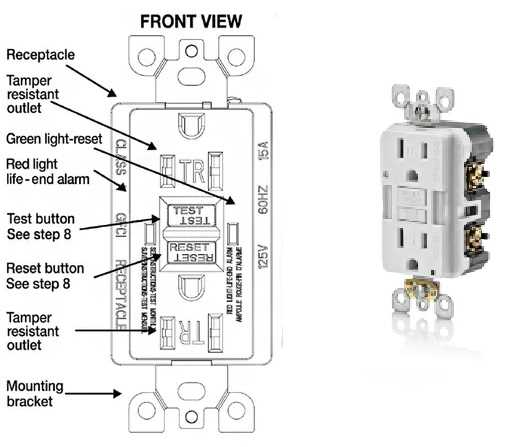
Disconnect all power at the main panel and verify deactivation with a voltage tester before handling wires. Identify each conductor: black or red for live, white for neutral, and green or bare for grounding. Proper identification prevents reverse connections and potential hazards.
Strip insulation to 3/4 inch and secure wires to the correct terminals, keeping screws snug but not over-tightened. Fold conductors neatly into the box to avoid pressure points, mount the device securely, and restore power. Use a polarity tester to confirm correct connections and ensure grounding continuity.
Identifying Hot Neutral and Ground Wires for Proper Connection
Always turn off power at the main panel before handling any conductors. Use a reliable voltage tester to confirm deactivation before touching wires. Incorrect identification can lead to shorts or shock hazards.
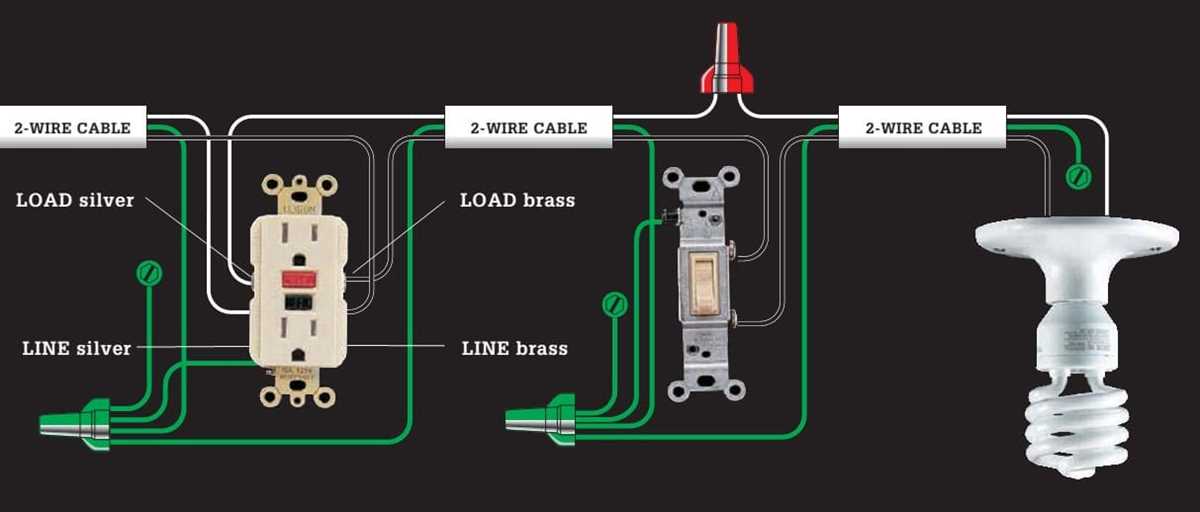
Locate the hot conductor, typically coated in black or red insulation. This wire carries the live current and must be attached to the brass-colored terminal. Double-check color coding if multiple cables are present in a single box.
Identify the neutral wire, usually white or gray. This line completes the flow of electricity back to the panel and must connect to the silver-colored terminal. Keep the neutral isolated from the grounding system to avoid nuisance trips or shocks.
Find the ground conductor, often green or bare copper. Connect it securely to the green screw or grounding clip to ensure safe operation. Grounding continuity prevents accidental shocks and maintains system stability.
- Verify continuity using a multimeter before making connections.
- Ensure that grounding wires are not frayed or corroded.
- Maintain consistent wire lengths for neat installation.
When multiple sets of conductors enter a junction box, label each hot, neutral, and ground wire. Labeling avoids confusion during installation and future maintenance.
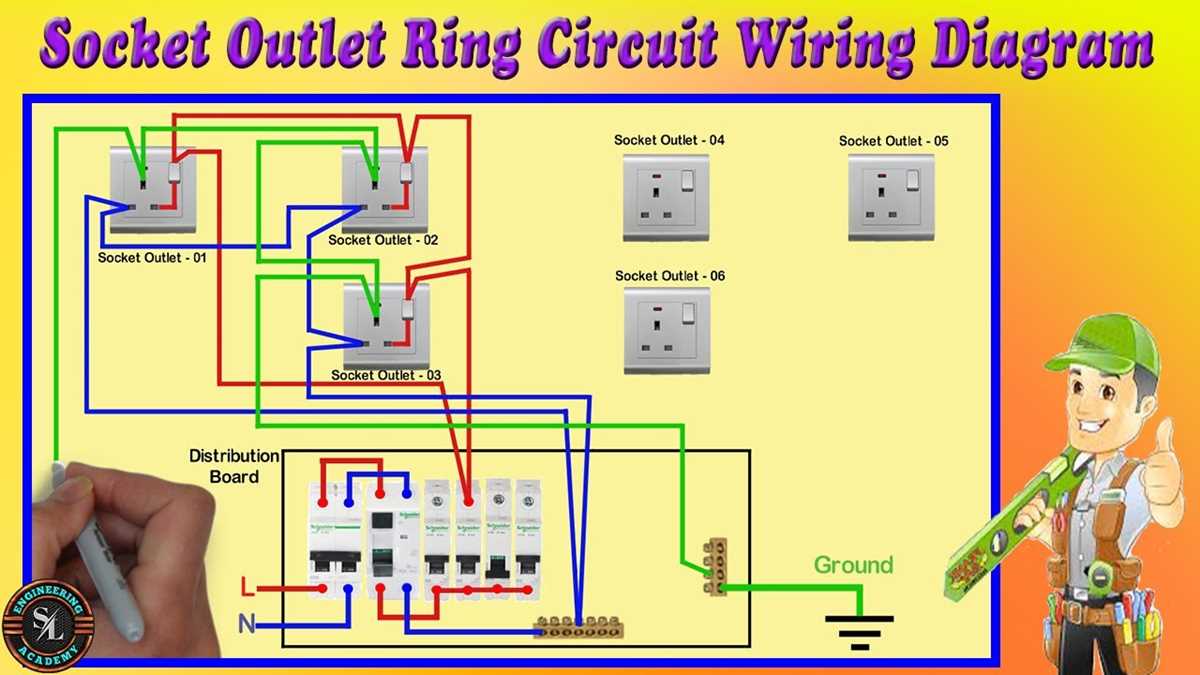
Double-check terminal connections by gently tugging on each conductor after tightening screws. Proper torque prevents loose connections that could overheat or arc during use.
After installation, restore power and test each line with a polarity tester. Confirm that the hot, neutral, and ground wires are correctly placed to ensure the device functions safely and reliably.