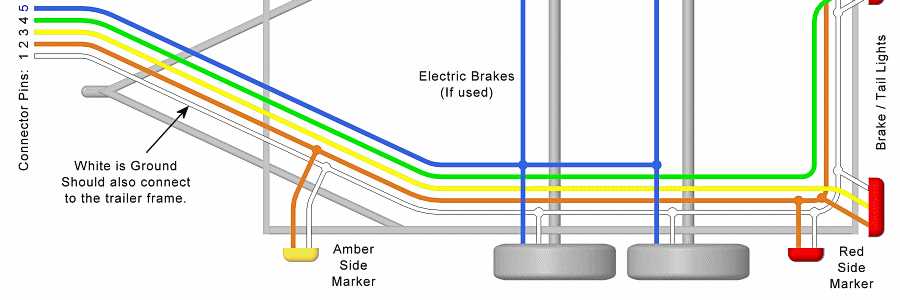
To successfully connect your vehicle to an accessory, such as a small utility or boat, you need to understand the correct method for linking the power and signal lines. A 4-wire setup is commonly used for trailers and similar devices, as it handles basic functions like lighting, turn signals, and brake lights. Ensuring the correct connections and wire placement can prevent malfunctions during use.
Start by confirming that your vehicle’s power system matches the required specifications. Most systems will operate on 12V DC, so double-check that your vehicle’s outlet can supply the necessary voltage. A typical 4-wire connector includes separate lines for the left and right signals, the tail lights, and the ground connection. Properly identifying each wire and securing its placement will prevent short circuits and ensure reliable operation.
Next, verify that the wires in both the vehicle and accessory are correctly stripped and cleaned to expose clean, conductive metal. Frayed or corroded wires can lead to poor connections, making the system prone to errors. Carefully attach each wire to its corresponding terminal, ensuring a tight, secure fit. Once all the connections are made, test the setup to confirm that the signals and lights are working as expected.
Understanding 4-Wire Electrical Connections for Your Vehicle
For proper connection to your vehicle, a 4-wire setup is commonly used to ensure all necessary functions are activated. This connection includes wires for left and right signals, brake lights, and ground. Correctly identifying each wire is key to making sure your setup works efficiently.
The wire color codes are typically as follows: white for ground, brown for the tail light, yellow for the left turn signal, and green for the right turn signal. Before connecting, ensure the wires are stripped to the correct length and free from any damage. A clean, reliable connection is crucial to avoid intermittent signal issues.
Step-by-Step Process for Connecting Your Vehicle
Begin by inspecting the vehicle’s connector. It should have four corresponding terminals for each function. Use a multimeter to check the output of each terminal before attaching the wires. Once confirmed, connect each wire to the correct terminal: white to ground, brown to the tail light, yellow to the left turn signal, and green to the right turn signal. Tighten each connection securely, avoiding any loose connections which could cause operational issues.
Once connected, test the functionality of each signal. Turn on your vehicle’s lights and activate the turn signals and brakes. Verify that all lights are functioning as expected. If any are not working, double-check the connections and wire integrity.
Common Issues and Troubleshooting
If signals are not working as expected, it could be due to several issues. The first thing to check is the grounding. A poor ground connection can lead to intermittent signals or no light at all. Inspect the ground wire and make sure it is securely attached to a clean, rust-free metal part of the vehicle.
Another common issue arises from using corroded or poorly stripped wires. If the wires have corrosion, clean them thoroughly or replace them as needed. Also, ensure the terminals are properly seated and not loose, as this can cause power loss or signal failure.
How to Connect a 4 Pin Connector to Your Vehicle
Start by ensuring you have the correct connector for your vehicle. A 4-wire setup is standard, typically including connections for the ground, brake light, and both left and right turn signals. If your vehicle lacks a connector, you can purchase one from an auto parts store. Always double-check the wire colors for consistency: white is commonly used for ground, brown for tail lights, yellow for left turn, and green for right turn signals.
Before you begin the installation, disconnect your vehicle’s battery to prevent any electrical shorts. This simple precaution ensures safety while working with the electrical system. Use a multimeter to verify that the wires on your vehicle’s connector are receiving the correct voltage, as this will help avoid any electrical issues once the connection is made.
Step 1: Identifying and Preparing the Wires
Locate the wiring harness on your vehicle that is designated for trailer or accessory connections. This is typically near the rear bumper or within the rear lights area. Once located, strip back the insulation of each wire to expose the copper. Make sure to strip only a small portion to avoid damaging the rest of the wire.
After stripping the wires, check for any signs of wear or damage, such as fraying or corrosion. If there’s any damage, repair the wire using electrical tape or replace it with a new section of wire. Clean any oxidized connectors with a wire brush to ensure a strong, reliable connection.
Step 2: Attaching the Connector
Attach the correctly colored wires to the corresponding terminals of the 4-pin connector. The white wire should be connected to the ground terminal, the brown to the tail light terminal, the yellow to the left turn signal, and the green to the right turn signal. Use crimp connectors or solder the wires to ensure they are securely attached.
If using crimp connectors, ensure you apply the right amount of pressure to secure each wire. A loose connection can cause flickering lights or, worse, cause the system to fail completely. After securing each wire, cover the connections with electrical tape to protect them from moisture and debris.
Step 3: Finalizing the Installation
After securing the wires to the connector, it’s time to attach the connector to the vehicle. Most 4-pin connectors will simply plug into a matching port on the vehicle’s electrical system. If the vehicle does not have this port, you will need to wire the connector directly into the vehicle’s existing system, which may require additional connectors or modification of the wiring.
Once the connector is attached, recheck each wire’s connection to make sure there are no loose or exposed wires. Tighten the screws or clamps to ensure a snug fit. Reconnect your vehicle’s battery, and test each function (turn signals, brake lights, and tail lights) to ensure they are all working properly.
If you notice any malfunction, such as dim or non-functioning lights, check for poor connections. Verify that each wire is properly attached and the connections are firm. A multimeter can be helpful to test if the correct voltage is being sent through each wire.