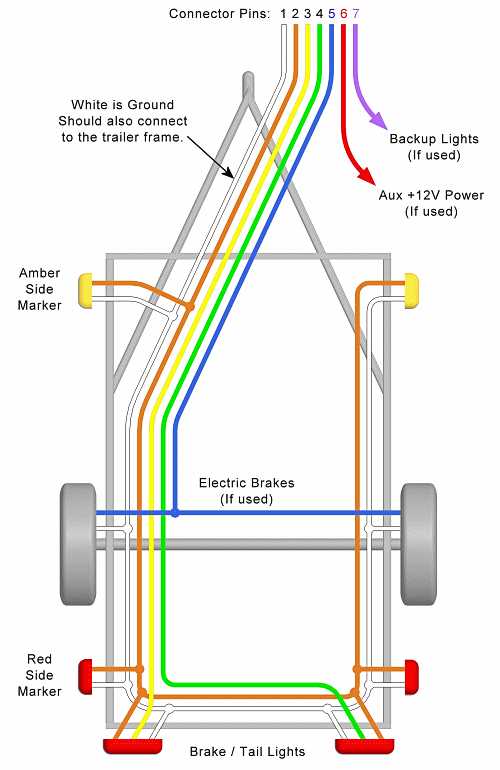
Ensure proper identification of each terminal before linking vehicle and towed unit connections. Use a multimeter to verify pin assignments: ground, left and right indicators, tail lights, brake, and auxiliary power. Misidentifying a pin can cause signal failure or short circuits.
Color coding is critical. Standard six-conductor setups typically follow brown for tail lights, yellow for left indicator, green for right indicator, white for ground, blue for brake, and black for auxiliary. Confirm each line with a tester before joining to avoid reversed signals or overloads.
Maintain consistent contact pressure. Clean terminals with a dielectric cleaner to prevent oxidation and ensure reliable connectivity. Loose connections increase resistance, which can lead to dim lights or intermittent operation.
Use heat-shrink tubing or protective covers over all exposed connections. This prevents moisture ingress that can cause corrosion and eventual failure of the electrical path.
Follow proper torque specifications for screw or bolt terminals. Over-tightening can strip contacts, while under-tightening can create high-resistance joints. Consistent torque ensures long-term reliability under vibration and movement during travel.
Test each function individually before completing the assembly. Activate left and right indicators, brakes, and tail lights while observing the signals on the towed unit. Correct operation confirms accurate linkages and pin matching.
Document the final setup. Label each conductor at both ends of the connection for future reference. Clear labeling reduces troubleshooting time and avoids errors during maintenance or component replacement.
Complete Guide for Connecting a 6 Pin Tow Connector
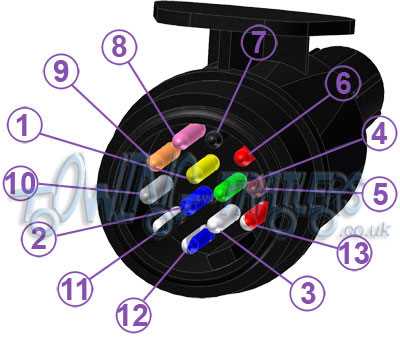
Verify each terminal’s function before making connections. Use a digital multimeter to check continuity between vehicle pins and the towed unit terminals. Confirm ground, left and right indicators, tail lights, brake, and auxiliary circuits to prevent signal failure.
Follow standard color codes for identification. Brown for tail lights, yellow for left indicator, green for right indicator, white for ground, blue for brake, and black for auxiliary. Testing each wire ensures correct function and prevents reversed connections.
Strip insulation precisely. Remove only 3–5 mm of coating from each conductor to prevent shorts. Excess stripping exposes wires to contact with adjacent pins, which may create electrical faults under vibration.
Secure terminals with firm but controlled pressure. Crimp connectors should hold the conductor without deforming it. Use a calibrated crimping tool for consistent results across all six pins.
Protect exposed connections from moisture. Apply heat-shrink tubing or dielectric grease to prevent corrosion. Even a small amount of oxidation can increase resistance, dimming lights or causing intermittent operation.
Check each signal individually after assembly. Activate left and right indicators, brakes, and tail lights while observing the towed unit. Ensure correct illumination and response on each pin before completing the harness installation.
Route the harness along secure paths. Avoid sharp edges, moving parts, and heat sources. Use cable ties or clips at intervals to prevent chafing and strain on connections during travel.
Label each conductor clearly. Mark pins at both vehicle and towed ends for future maintenance. Proper labeling reduces troubleshooting time and avoids errors during disconnection or replacement of components.
Identifying Pins and Their Functions for Accurate Connections
Start by labeling each terminal according to its intended signal. Use the standard color-coding system to match each pin with its function: brown for tail lights, yellow for left indicators, green for right indicators, white for ground, blue for brakes, and black for auxiliary supply.
Verify pin continuity using a multimeter. Test each conductor from the source connector to the mating end to ensure no breaks or crossed signals. This step prevents misfires and incorrect illumination during operation.
Check the physical layout of the connector. Ensure that each pin aligns with its counterpart on the receiving unit. Misaligned pins can cause short circuits or prevent certain signals from activating.
Document the configuration. Create a simple table or list showing each pin’s color, position, and function. This reference helps during troubleshooting or when replacing components in the future.
Testing Individual Functions
- Activate the left indicator and observe the corresponding pin for proper response.
- Repeat for the right indicator, tail lights, and brake signals.
- Test auxiliary circuits separately to confirm continuity and correct voltage delivery.
Secure each connection with a reliable terminal. Ensure that the conductor is fully seated and crimped or tightened. Loose pins can result in intermittent failures or sparks under load.
Protect pins from environmental damage. Use dielectric grease or heat-shrink sleeves to prevent moisture and corrosion from interfering with signal flow.
Recheck all connections after routing. Ensure no pins have shifted, no wires are stressed, and every signal activates correctly before finalizing the harness installation.