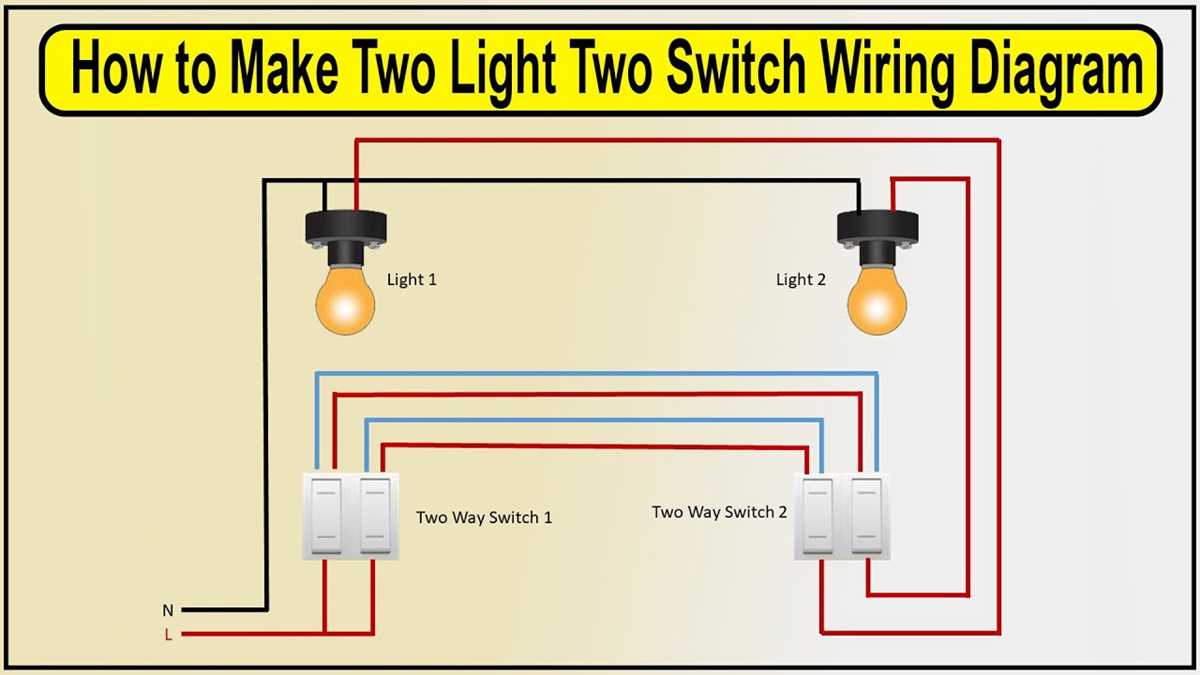
Use two control units linked by a pair of traveler conductors and a common line to operate one lamp from separate points. The supply phase connects to the common terminal of the first control unit, while the lamp lead attaches to the common terminal of the second. Two intermediate conductors run between matching traveler terminals, forming a reversible path that alternates current flow each time either control lever changes position.
Maintain clear color identification during installation. The phase conductor normally appears in black or brown, traveler links often use red or yellow, and the neutral line runs directly to the luminaire without passing through the control pair. This arrangement allows either wall control to redirect current through the alternate traveler conductor, toggling the lamp state regardless of the position of the opposite control.
Mount the first control point near the power source or entry point of the room. Route a three-core cable between both control boxes so that two cores act as traveler links and the remaining core carries the phase continuation toward the luminaire. Ground conductors must connect to each metal box and device frame to prevent fault current from energizing exposed components.
Place the second control point near exits such as stair landings or corridor ends. The lamp conductor connects to its common terminal, completing the alternating path between both control devices. Each toggle changes which traveler conductor carries the phase, enabling convenient light operation from either location without additional electronics or control modules.
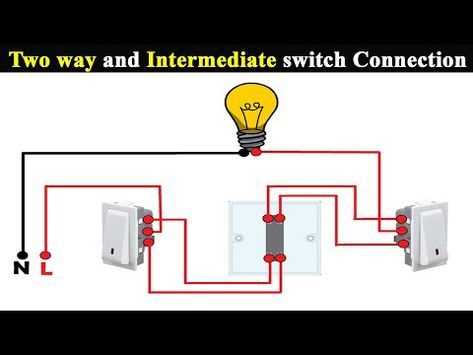
Two-Point Light Control Connection Layout
Use two SPDT toggle units linked through a pair of traveler conductors so one lamp can be controlled from separate locations such as the bottom and top of a staircase. Connect the incoming phase conductor to the common terminal of the first control unit. The lamp’s phase lead attaches to the common terminal of the second unit, while neutral runs directly from the supply line to the lamp holder without interruption.
Between both control units install two traveler conductors. These link the remaining terminals on each device. When either lever position changes, the internal contact redirects the phase path through the alternate traveler. That change either completes or interrupts the circuit feeding the lamp.
Use a three-core cable (phase + two travelers) between the two control points. Typical conductor colors in many installations: brown for phase input, black and grey for traveler lines, and blue for neutral leading directly to the light fitting. Ground must continue through every junction box and metal enclosure.
Mount both control units inside wall boxes placed about 90–110 cm above floor level for comfortable access. Route cables vertically within wall cavities to avoid accidental drilling damage. Secure conductors using terminal screws tightened to manufacturer torque values; loose terminals often cause overheating or intermittent lamp behavior.
If troubleshooting, test continuity across the traveler terminals while toggling the lever positions. A multimeter should show alternating closed and open paths depending on lever orientation. If the lamp never turns off or never turns on, one traveler line is commonly misconnected to the common terminal.
For long corridors or stairwells, this two-location lighting control layout prevents unnecessary walking in darkness and reduces lamp operating time by allowing shutdown from the exit point.
Identifying Terminals and Wire Roles in a Standard 2 Location Lighting Control Layout
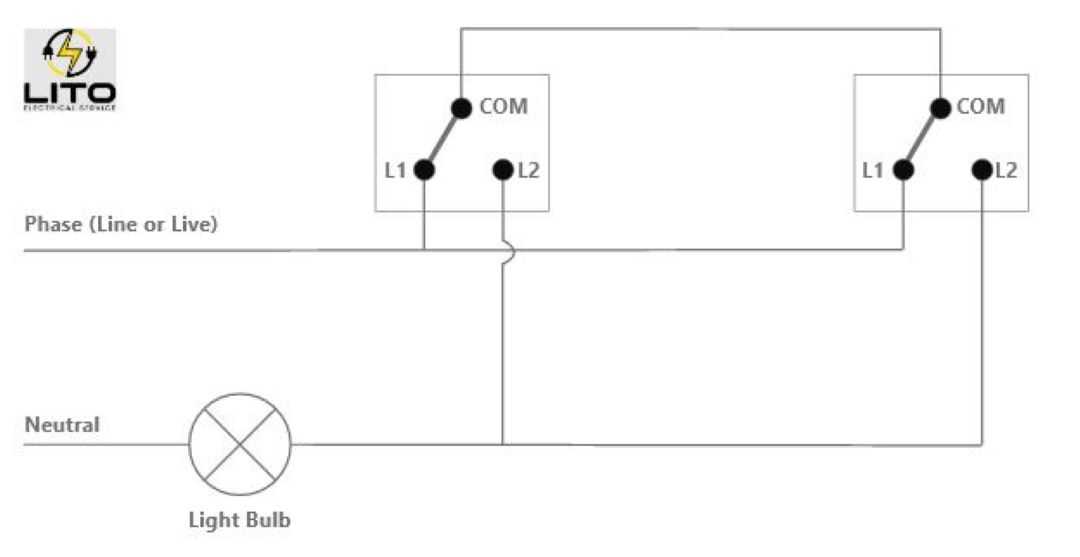
Locate the common terminal first: it is usually darker (black or bronze) and positioned slightly apart from the remaining contacts on the SPDT wall control device. This terminal carries either the incoming live conductor from the breaker panel or the outgoing conductor feeding the lamp. The remaining two contacts are traveler connections that alternately redirect current between paired control units mounted in different positions. Misidentifying the common point leads to incorrect lamp behavior, such as light operating only from one control location.
Use color coding and cable grouping to determine conductor roles:
- Line conductor – brings energized power from the distribution panel; often black.
- Load conductor – routes current to the light fixture.
- Traveler pair – two conductors linking both control devices; frequently red and black inside the same cable.
- Ground – bare copper or green insulation attached to the metal frame.
Check the physical markings stamped into the device body. Manufacturers often label contacts using short abbreviations. Typical examples include:
- COM – common terminal connected to supply or lamp feed.
- T1 / T2 – traveler contacts that alternate current paths.
- GND – grounding screw bonded to the device strap.
Confirm these markings with a continuity tester before connecting conductors. With the toggle flipped, continuity should alternate between COM–T1 and COM–T2.
Inspect cable entry points inside the wall box to determine conductor origin. A cable containing the incoming hot line normally has only one energized conductor plus neutral and ground. The cable linking both control devices contains two active conductors used as travelers. Tag these with colored tape before disconnecting anything during maintenance. This small step prevents confusion during reinstallation and reduces the risk of cross-connecting the lamp feed with the traveler pair.