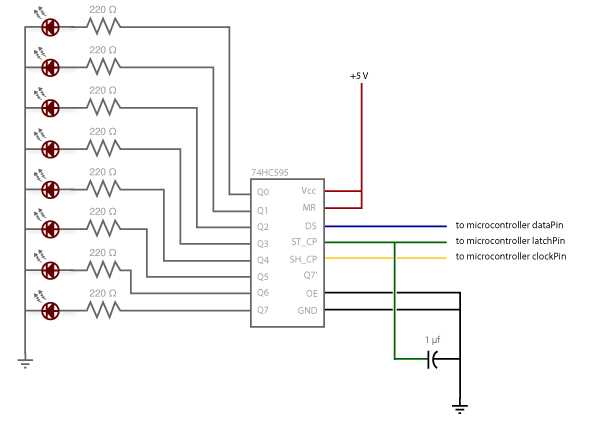
Use precise resistors and capacitors to control timing and movement of the paddles and ball on your electronic board. Standard 220 Ω resistors and 10 µF electrolytic capacitors create smooth response without flicker.
Select logic gates carefully to manage collisions and scoring. A combination of NAND and XOR gates ensures accurate bounce detection and point updates with minimal delay.
Organize power lines separately from signal traces to reduce interference. A 5 V regulated supply with 500 mA capacity provides stable operation for all active components and LEDs.
Test each connection with a multimeter before applying full power. This prevents short circuits and allows fine-tuning of paddle sensitivity using variable resistors.
Use a solderless breadboard for initial assembly to adjust layouts quickly. Once performance meets expectations, transfer components to a perf board for permanent setup.
Component Layout and Step by Step Wiring Instructions
Place the ICs first on the board, leaving at least 1 cm between each chip for easy wiring. Connect all ground pins to a common rail and use short jumper wires to minimize resistance. Insert resistors and capacitors according to timing requirements: 470 Ω for signal pull-ups and 22 µF for stabilizing the paddle control voltage.
Wire the input controls carefully using separate traces for each paddle. Connect LEDs for ball movement indication with 330 Ω current-limiting resistors. Test each logic path individually before combining them, verifying that collisions trigger correctly and scoring LEDs light as expected. Secure all connections with solder once behavior matches the expected pattern.
Choosing Components for a Functional Electronics Layout
Select ICs with matching voltage ratings to ensure stable logic operation. Standard 74LS series chips work well with a 5 V supply and provide fast switching for ball and paddle interactions. Avoid mixing TTL and CMOS families without level conversion to prevent signal errors.
Use resistors and capacitors to control timing. For paddle responsiveness, 220 Ω resistors paired with 10 µF electrolytic capacitors create smooth delays. Ball speed can be adjusted by increasing capacitor values up to 47 µF for slower motion.
Choose switches and potentiometers with low contact resistance. Mini toggle switches or rotary pots around 10 kΩ allow precise control of paddle positions and scoring adjustments. Ensure mechanical durability to handle repeated use.
Select LEDs with appropriate forward voltage for visual indicators. Standard 5 mm red and green LEDs with 330 Ω resistors provide bright illumination without overloading the IC outputs. Arrange them in a row to track ball movement and scoring easily.
Include a regulated power supply capable of delivering 5 V and at least 500 mA. Adding a 100 µF capacitor near the supply input reduces voltage spikes. Verify polarity before powering the assembly to prevent IC damage and inconsistent behavior.