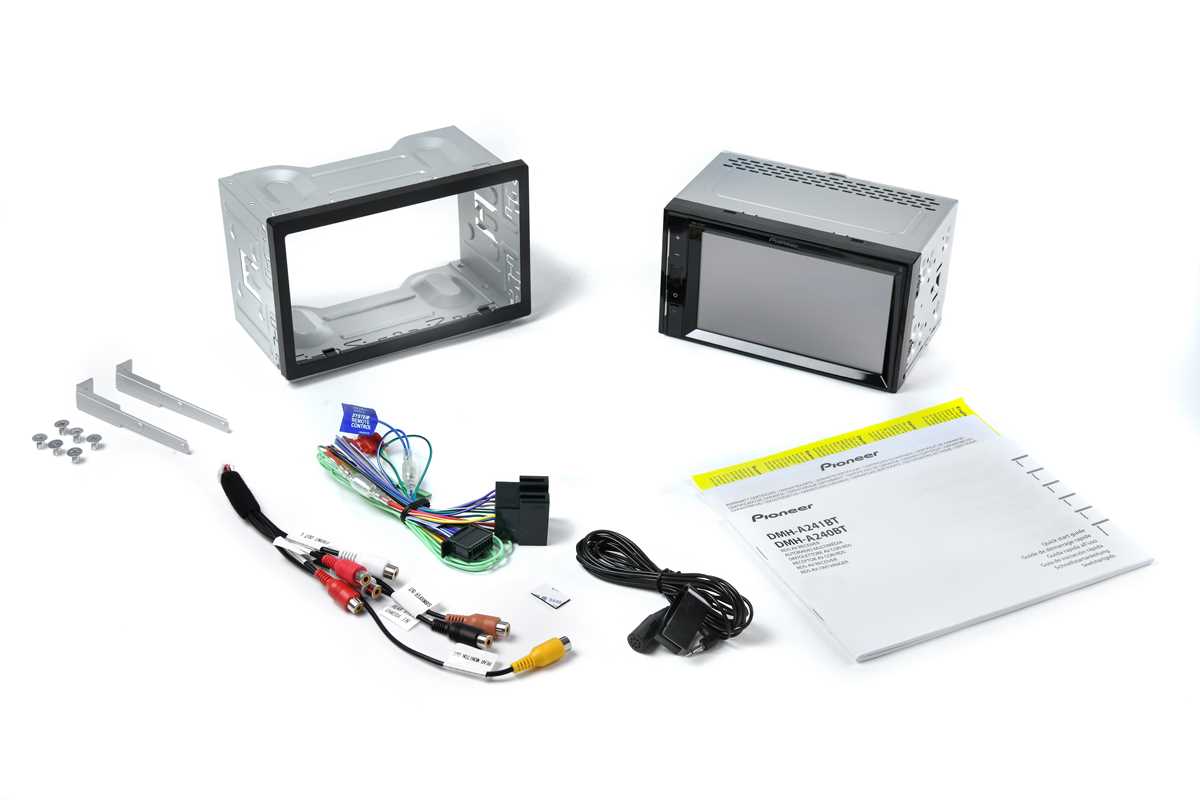
Check the harness color codes before connecting the head unit to the vehicle electrical system. The multimedia receiver uses a standard automotive harness with dedicated leads for battery power, ignition control, ground, and speaker outputs. A yellow lead normally connects to constant 12-volt battery supply, while the red lead attaches to an ignition-switched source that activates the receiver only when the key is in ACC or ON position.
Speaker outputs follow a clear color pairing system. White and white with black stripe feed the front left speaker, gray pair drives the front right channel, green pair connects to the rear left speaker, and purple pair handles the rear right channel. Solid color wires carry the positive signal, while the same color with a black stripe serves as the negative return path. Correct polarity prevents phase cancellation and keeps stereo balance stable.
Additional leads support external devices inside the vehicle audio system. A blue or blue-white conductor activates an external amplifier or power antenna, delivering a 12-volt trigger signal once the receiver powers on. A light green lead connects to the parking brake signal for video safety lock, and a violet-white conductor receives the reverse gear signal used for rear camera display.
Pin connections on the rear harness also provide audio and video expansion. RCA connectors route low-level audio to external amplifiers or subwoofer channels, while a dedicated video input handles the rear camera feed. Clear connection drawings help installers trace each wire path, match harness leads with vehicle wiring, and avoid short circuits or incorrect speaker routing.
Pioneer DMH 160BT Wiring Diagram With Harness Color Codes and Pin Connections
Match each harness lead with the vehicle power lines before connecting the receiver. The multimedia head unit relies on a standard automotive connector where every conductor has a defined role. A yellow lead attaches to constant battery supply around 12–14.4 volts. The red lead connects to the ignition ACC line so the receiver powers up only when the key is turned.
The black conductor connects to chassis ground. Attach this line to a clean metal point on the vehicle body or the factory ground location behind the dashboard. Poor grounding often causes audio noise, unstable screen behavior, or random restarts.
Speaker output color pairs
Speaker channels follow a consistent color pairing structure. Each pair includes a positive lead and a negative lead marked with a black stripe.
- White pair – front left speaker
- Gray pair – front right speaker
- Green pair – rear left speaker
- Purple pair – rear right speaker
Solid colored wires carry positive audio output, while striped versions carry the negative return signal. Keep polarity consistent across all speakers. Reversed polarity can weaken bass response and shift the stereo image toward one side.
Auxiliary control leads
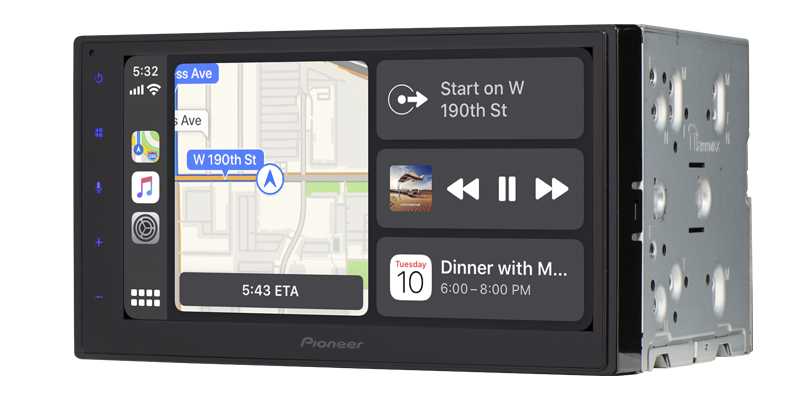
Additional conductors control external equipment installed in the vehicle audio system.
- Blue or blue with white stripe – amplifier or power antenna trigger
- Light green – parking brake signal input
- Violet with white stripe – reverse gear signal for camera activation
The amplifier trigger line sends a small 12-volt control signal once the head unit powers on. This signal activates external amplifiers or a powered antenna without manual switching.
Rear camera connection uses a composite video input located on the rear panel. When the reverse gear signal line receives voltage from the vehicle transmission switch, the receiver automatically displays the camera feed on the screen.
Pioneer DMH 160BT Harness Color Codes for Power Ground and Speaker Connections
Connect the yellow lead to constant battery power and the red lead to the ignition ACC line. These two conductors control how the multimedia receiver starts and stores settings. The yellow line supplies uninterrupted 12-volt power from the vehicle battery, allowing memory retention for radio presets, Bluetooth pairing data, and time settings.
The red conductor links to the ignition-controlled circuit. Voltage appears on this line only when the vehicle key is in ACC or ON position. Without this connection the receiver may remain powered at all times, draining the battery during long parking periods.
The black lead connects to vehicle chassis ground. Attach it to a clean metal surface or the factory grounding bolt behind the dashboard. Paint or corrosion on the contact point increases resistance and can introduce audio interference or unstable screen operation.
Speaker connections follow a consistent color structure where each audio channel uses a pair of conductors. A solid color indicates the positive audio signal, while the same color combined with a black stripe represents the negative lead returning to the internal amplifier.
Front speaker channels use the following color pairs. The white pair feeds the front left speaker, while the gray pair carries audio for the front right channel. Maintaining correct polarity across these two channels preserves stereo balance and proper bass response.
Rear speaker channels use green and purple pairs. The green pair supplies the rear left speaker, and the purple pair handles the rear right channel. Each conductor connects directly to the vehicle speaker without sharing a common ground, because the internal amplifier uses a floating output stage.
Check insulation and connector alignment before restoring dashboard panels. Short circuits between speaker leads or contact with vehicle ground can damage the built-in amplifier. Correct matching of harness colors with vehicle speaker wires ensures stable audio output across all four channels.