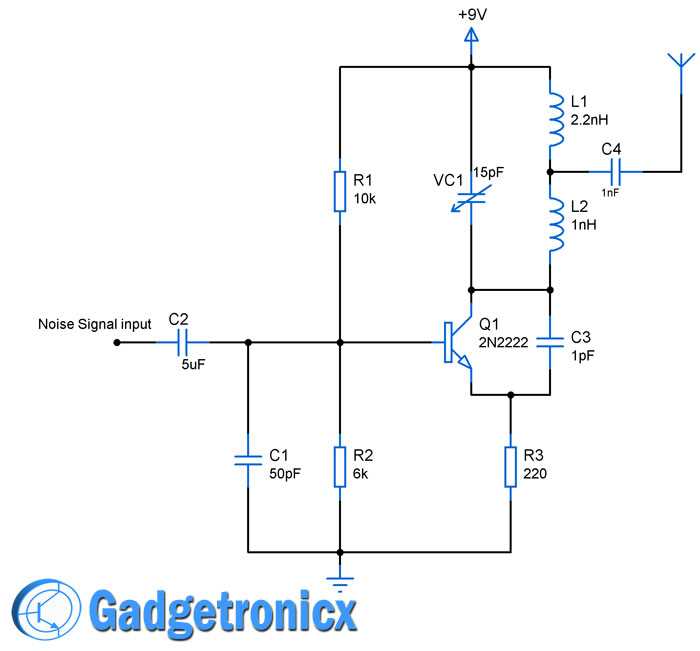
Use a regulated DC power source rated between 5 and 12 volts to prevent voltage spikes from damaging transistors and oscillators. Confirm polarity before connecting to avoid reverse current that could destroy sensitive components.
Install resistors at the input stage to control base current for switching elements. A 220-ohm resistor is suitable for most low-current modules, while higher voltage inputs may require 470-ohm or 1k-ohm resistors to maintain safe operation.
Capacitors help stabilize voltage and suppress high-frequency noise. Place a 100nF ceramic capacitor across supply rails and add a 10µF electrolytic capacitor to smooth voltage fluctuations during rapid activation cycles.
Select transistors according to load requirements. Standard NPN types like BC547 handle low-current paths, while MOSFETs may be necessary for higher output power. Verify collector-emitter voltage and maximum current ratings before soldering.
Wire the antenna and output properly to prevent short circuits. Connect the active element to the switching transistor or MOSFET and ensure grounding is consistent. For magnetic antennas, a flyback diode prevents reverse voltage spikes.
Label connections for easy testing and maintenance. Identify power, input, and output lines clearly to facilitate troubleshooting and modifications without disturbing other components.
Keep signal lines short and separated to reduce parasitic capacitance and crosstalk. Route high-current paths away from sensitive input lines to avoid interference and false triggering.
Test each stage individually using a multimeter and signal generator. Confirm voltage and waveform integrity at trigger, switching, and output points before final assembly, adjusting resistors or capacitors as needed to achieve stable operation.
Phone Signal Blocker Wiring and Component Guide
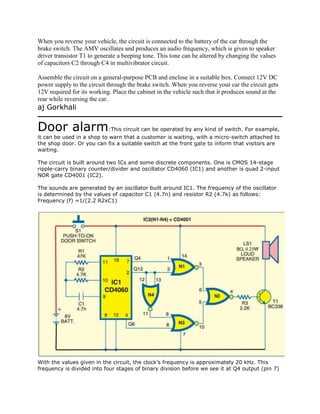
Use a regulated DC supply between 5 and 12 volts to power the module. Ensure polarity is correct and check voltage with a multimeter before connecting to prevent damage to semiconductors and oscillators.
Install resistors at input stages to control current to switching transistors. Standard 220-ohm resistors are suitable for low-current modules, while higher voltage sources may require 470-ohm or 1k-ohm resistors to maintain safe operation.
Capacitors stabilize supply lines and reduce noise. Place a 100nF ceramic capacitor across power rails and a 10µF electrolytic capacitor near the power input to smooth voltage fluctuations during rapid activation sequences.
Select transistors based on load requirements. NPN types like BC547 handle currents up to 100mA, while MOSFETs are necessary for higher power modules. Verify maximum voltage and current ratings to prevent thermal stress or breakdown.
Connect antennas and output stages carefully. Ensure proper grounding and separation from sensitive input lines. For inductive antennas, place a flyback diode across the coil to suppress reverse voltage spikes.
Keep wiring organized and short to minimize parasitic capacitance and crosstalk. Separate high-current paths from low-level trigger lines, and route power lines along stable paths to maintain consistent operation.
Test each stage individually using a multimeter and signal generator. Confirm voltage and waveform integrity at input, switching, and output points, adjusting resistor or capacitor values as needed to achieve stable signal blocking before final assembly.
Identifying Critical Components and Their Functions
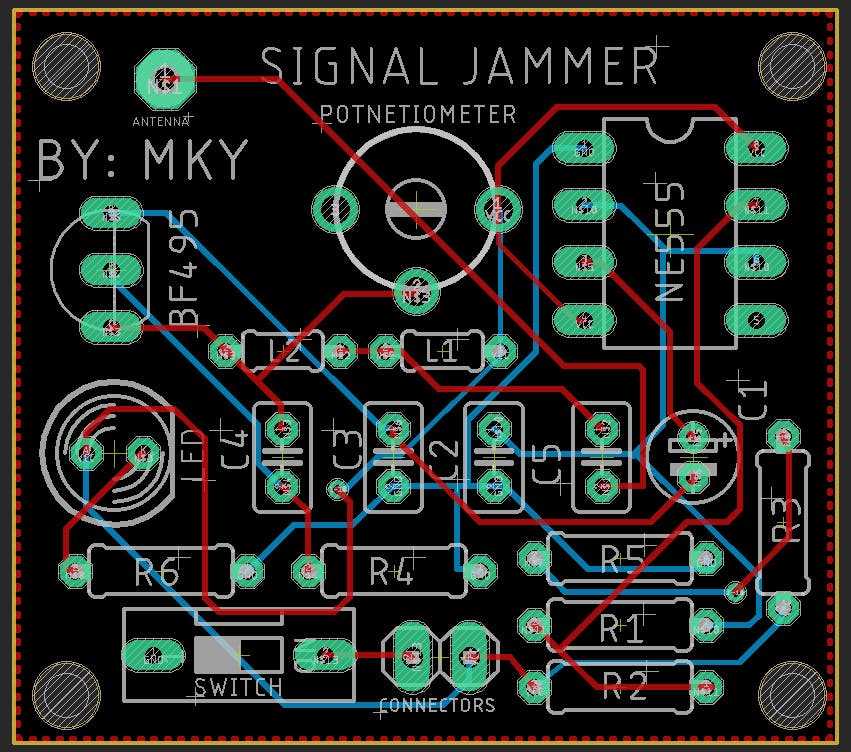
Use NPN transistors such as BC547 for low-current switching stages. Verify collector-emitter voltage exceeds supply voltage and that base resistors are properly sized to prevent overcurrent and thermal stress.
Resistors control current flow throughout the module. Install 220-ohm resistors at trigger inputs and 1k-ohm resistors in series with output stages to prevent overheating and maintain predictable activation thresholds.
Capacitors stabilize voltage and reduce high-frequency interference. Place 100nF ceramic capacitors near supply pins and 10µF electrolytic capacitors across power lines to smooth voltage dips during rapid activation pulses.
Diodes protect sensitive components from reverse voltage spikes. Use 1N4148 diodes for low-current paths and 1N4007 for higher current inductive loads to prevent back EMF from damaging semiconductors.
Antennas and output transducers must be connected with correct polarity and adequate separation from input lines. Magnetic antennas require flyback diodes, while piezo transducers operate directly with high-frequency signals.
Use connectors or headers for modular assembly.
- Label input, output, and power lines.
- Allow for easy replacement of switching elements.
- Facilitate testing without disconnecting other components.
Short, organized wiring reduces parasitic capacitance and crosstalk. Maintain separation between high-current and low-level trigger lines and route power lines along stable paths.
Test each stage before full operation using a multimeter and signal generator. Verify voltage at trigger, switching, and output points, and adjust resistor or capacitor values as needed to achieve stable and predictable module behavior.