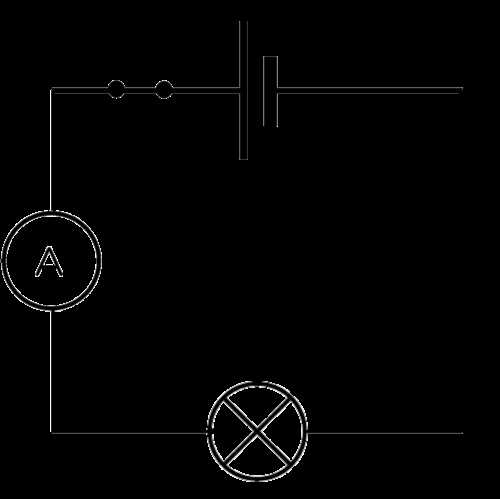
Place loads in a single continuous path when equal current must pass through each component. This arrangement simplifies current analysis and works well for simple LED chains, sensor loops, or resistor networks used for voltage division. For example, three resistors rated 1 kΩ, 2 kΩ, and 3 kΩ connected along one path with a 12 V supply produce a total resistance of 6 kΩ, resulting in a current of about 2 mA.
Use branch-based wiring when each load requires the same voltage. In this layout, every branch connects directly across the power source. Household lighting and electronic modules use this structure so that one device failure does not interrupt power to others. A practical example includes three lamps rated 12 V connected across the same source, each drawing current independently while maintaining identical voltage.
Sketching electrical layouts with clear node points and labeled values reduces wiring mistakes during assembly. Mark supply polarity, identify current paths, and label resistance or load ratings near each symbol. Using distinct nodes for branch connections and straight signal paths for single-route wiring improves readability and helps predict voltage drop, current distribution, and load behavior before physical assembly.
Parallel and Series Circuit Diagram with Current Flow and Component Connection Examples
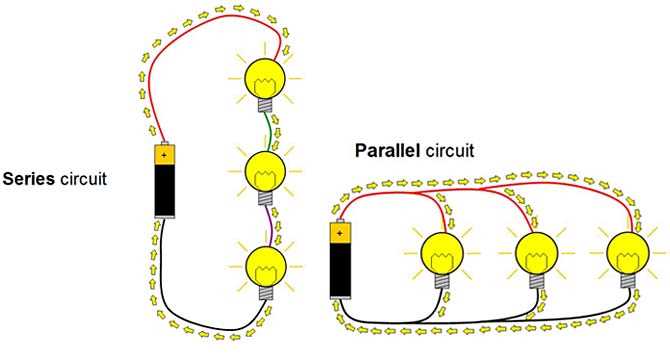
Use a single continuous electrical path when identical current must pass through every component. This layout appears frequently in resistor chains, simple sensing loops, and LED strings powered from one supply. Connect each element end-to-end so electrons move through one uninterrupted route from the positive terminal to ground.
A practical example includes three resistors rated 220 Ω, 330 Ω, and 470 Ω linked in a single path with a 9 V battery. Total resistance becomes 1020 Ω. Applying Ohm’s law gives a current of roughly 8.8 mA. Each component receives the same current, while voltage divides across the elements according to their resistance values.
For loads that must receive identical supply voltage, place them across the same two nodes of the power source. This branch-based wiring allows current to split into multiple paths. Lighting systems and power distribution boards rely on this structure so one device failure does not interrupt operation of others.
Consider three lamps rated 12 V connected across the same supply rails. If each lamp draws 0.25 A, the source must deliver 0.75 A total. Each branch maintains the full supply voltage while current divides according to load demand.
Clear node placement improves readability of electrical drawings. Mark the positive rail at the top and the return line at the bottom. Branch connections should meet at visible junction dots so readers instantly see where current splits.
Use straight conductor lines for single-path connections and vertical branches for split paths. Place resistance values, lamp ratings, or module labels close to their symbols to prevent wiring mistakes during assembly.
Before building the physical layout, verify current distribution and voltage drop with basic calculations. Check total resistance for a single-path network or combined load current for branch-based wiring. These steps help confirm that the power supply, wiring gauge, and components operate within their rated limits.
Drawing a Series Circuit Diagram with Multiple Resistors and One Power Source
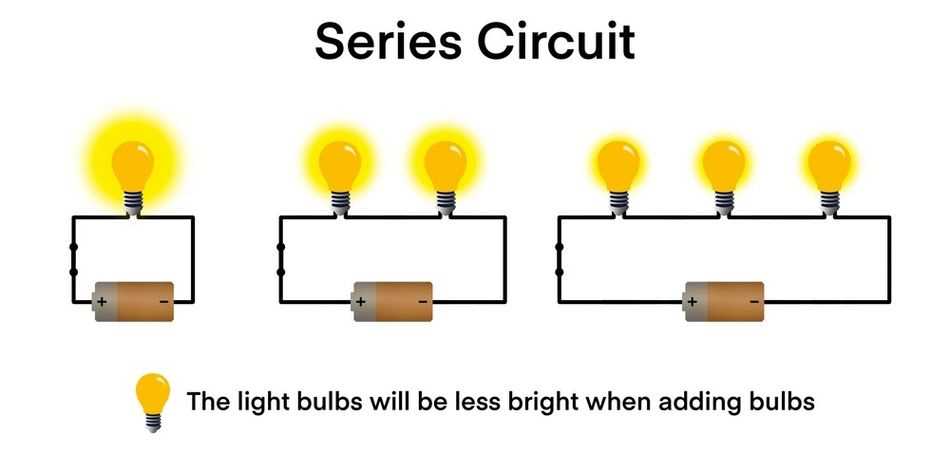
Place the power supply symbol on the left and arrange resistors one after another along a single conductive path. Each component connects end-to-end so electric charge travels through every resistor before returning to the negative terminal.
Label resistance values directly beside each symbol to simplify later calculations. For example, a chain containing 100 Ω, 220 Ω, and 330 Ω connected to a 12 V source forms a total resistance of 650 Ω. Current through the entire path equals roughly 18.5 mA using Ohm’s law.
- Draw a battery or DC supply symbol at the beginning of the path
- Place resistor symbols sequentially along one line
- Connect the last resistor back to the supply return node
- Mark resistance values near each element
- Add arrows or notes indicating current direction
Voltage divides across the resistors based on their resistance ratio. Using the example above, the 330 Ω component receives the largest drop because it represents the biggest portion of the total resistance.
- Calculate total resistance by summing all resistor values
- Determine current using supply voltage divided by total resistance
- Find voltage drop across each element using V = I × R
- Write calculated voltages near the corresponding symbols
Keep conductor lines straight and avoid unnecessary crossings so the drawing remains readable. Clear spacing between components allows quick visual tracing of the single electrical path from supply to return.