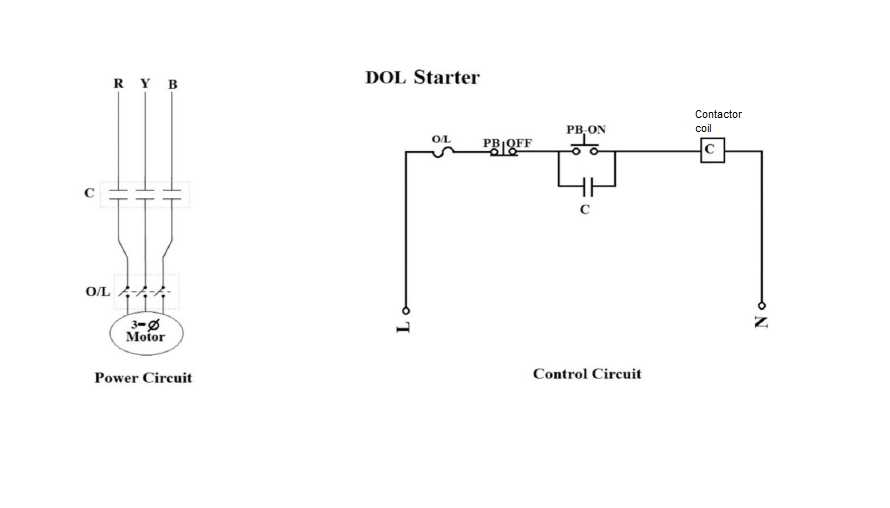
Connect the power supply terminals to the main contactor first to prevent overloads during initial activation. Ensure all fuses match the rated current of the induction equipment and verify phase sequence to avoid reverse rotation.
Label each relay and contact properly before energizing the control panel. This allows clear identification of protective devices, overload relays, and control switches, reducing the risk of miswiring and equipment damage.
Use proper cable sizing and insulation according to the full-load current and ambient temperature. Include a short-circuit protective device near the supply input and check the torque rating of the connected machinery to confirm compatibility.
Perform a trial run without load to verify the engagement of contactors and the correct operation of auxiliary switches. Observe the voltage drop across terminals and ensure the control wiring is secure to prevent unintended trips during startup.
Electrical Control Panel Wiring for Direct On Line Activation
Start by connecting the three-phase supply to the main contactor terminals and verify that overload relays are set according to the rated current of the induction unit. Ensure all auxiliary relays and push buttons are correctly wired to prevent misfires during startup.
Check the connection of protective fuses and earth grounding before energizing the panel. Conduct a no-load test to confirm proper engagement of the magnetic switch and smooth operation of the control elements. Record voltage readings at each terminal to identify potential drops or loose connections that could affect performance.
Step by Step Wiring Connections for a Direct On Line Activation
Begin by securing the three-phase supply wires to the main magnetic switch terminals. Tighten all connections to the manufacturer’s torque specification and ensure correct phase sequence to prevent reverse rotation of the induction unit.
Connect the control relays and push buttons according to their functional roles. Use color-coded wires for start, stop, and auxiliary contacts to avoid confusion during maintenance or troubleshooting.
- Mount the overload relay inline with the main contacts and set the current rating to match the full-load amperage of the equipment.
- Wire the normally closed contacts of the relay to the control circuit to provide automatic shutdown in case of overcurrent.
- Verify that the auxiliary contacts from the contactor are connected to indicator lamps for operational feedback.
Inspect all protective fuses and grounding points before energizing the panel. A loose or undersized wire can cause voltage drops or trip the relays during the initial activation, leading to equipment stress.
- Perform a no-load test to confirm the engagement of all switches and relays.
- Measure voltage across each terminal to detect any potential weak points.
- Ensure mechanical interlocks are functioning to prevent simultaneous activation of conflicting contacts.