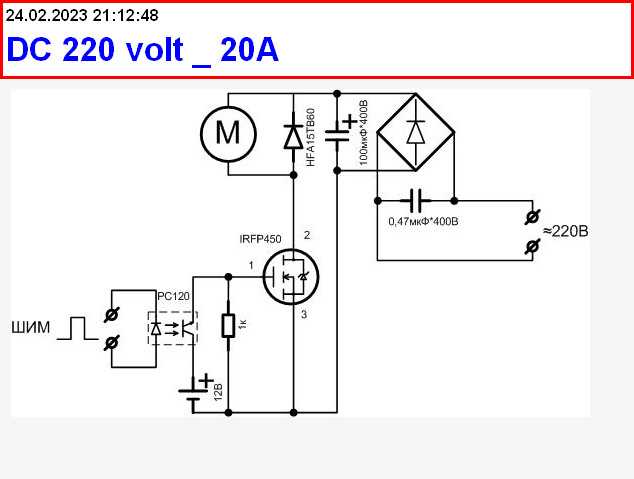
Use a logic-level enhancement FET with low RDS(on) to maintain consistent supply across varying loads. Selecting a transistor rated for at least 1.5 times the peak current ensures thermal safety and minimal voltage drop.
Integrate a precision reference source and a fast-response error amplifier to dynamically adjust conduction. This setup minimizes output fluctuations and reduces stress on downstream components, preserving sensitive electronics from transient spikes.
Implement a low-impedance feedback network with high-quality resistors to maintain steady output levels. Keeping trace lengths short and avoiding unnecessary junctions reduces parasitic effects and improves response time.
Include thermal monitoring and current-limiting features to prevent damage during overload or short circuits. Pairing a small heatsink or copper pad with the transistor enhances dissipation without adding bulky components.
Consider a low-drop configuration to maximize efficiency when the input is only slightly higher than the desired output. This approach lowers heat generation and allows compact design suitable for portable or embedded applications.
Enhanced Stabilizer Layout with Power Transistor
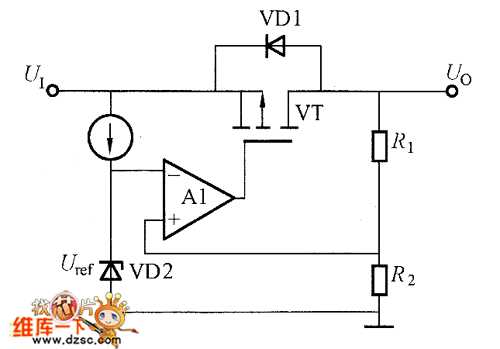
Connect the enhancement-mode transistor with a series resistor of 0.33 Ω to the load terminal for precise current handling up to 5 A. Use a 10 kΩ potentiometer at the gate to fine-tune the output from 1.25 V to 15 V. Ensure the input source provides at least 2–3 V above the maximum desired output for optimal linear performance.
Integrate a Zener diode rated at 12 V across the control pin to prevent overshoot and maintain steady conduction. Include a 100 nF ceramic capacitor close to the transistor’s gate to suppress high-frequency oscillations, and a 470 µF electrolytic capacitor at the load to stabilize the output under transient loads.
- Use an N-channel enhancement FET for low on-resistance and minimal heat buildup.
- Heat-sink the transistor if dissipation exceeds 2 W to avoid thermal runaway.
- Place the sensing resistor as close to the load as possible to reduce voltage drop errors.
- Ensure the Zener diode’s power rating matches the expected spike currents.
Optional feedback from the load through a voltage divider can improve accuracy under variable input. For multi-amp designs, parallel multiple transistors with individual resistors to share the current evenly. Avoid long wiring between the transistor and load to reduce parasitic inductance and maintain fast response to load changes.
Selecting the Right Transistor and Components for Power Control
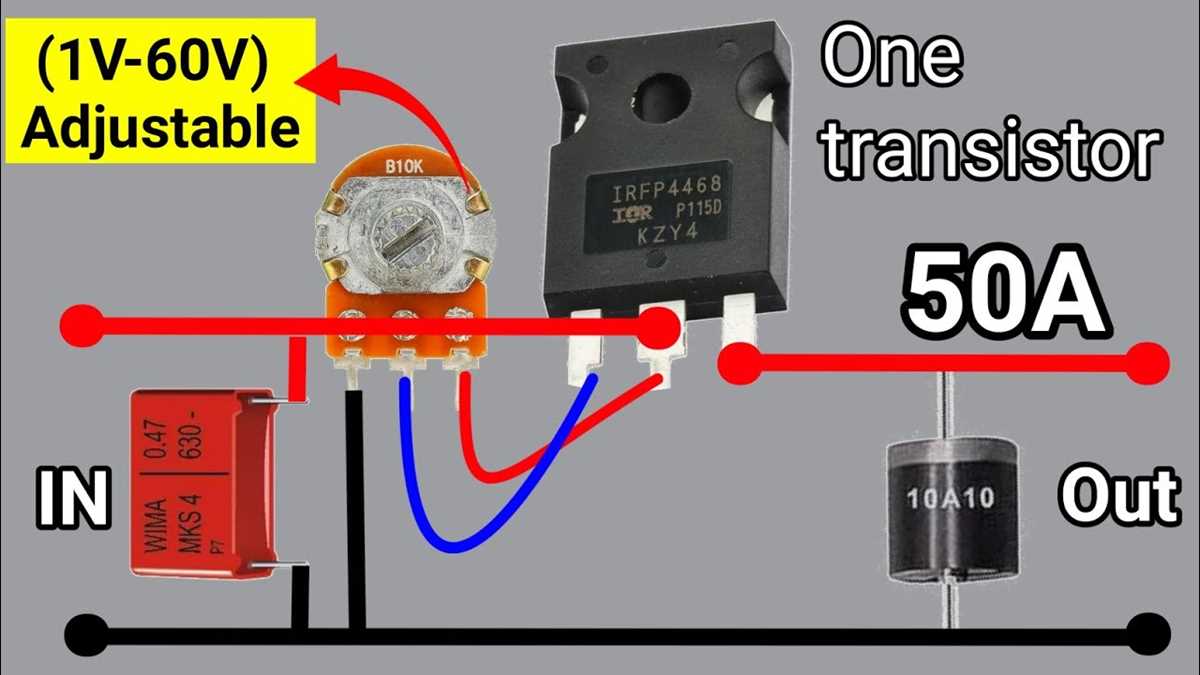
Choose a transistor with a continuous drain current rating at least 50% higher than the peak load. Prioritize devices with low on-resistance, under 50 milliohms, to minimize heat generation. Gate threshold voltage should be compatible with your reference source; logic-level types around 2–4V work well for low-supply designs. Pair the transistor with a fast diode capable of handling the same peak current, and add a small gate resistor (10–22 Ω) to reduce switching spikes without slowing response excessively.
For supporting components, use a high-quality capacitor for the output, rated at twice the expected potential swing to prevent stress and leakage. Include a series resistor of 0.1–0.5 Ω for current sensing if precision feedback is required, and a heatsink rated for the maximum dissipated power based on your load and on-resistance. Thermal paste or pads improve conduction, and a ceramic bypass close to the transistor ensures stability at high frequencies.