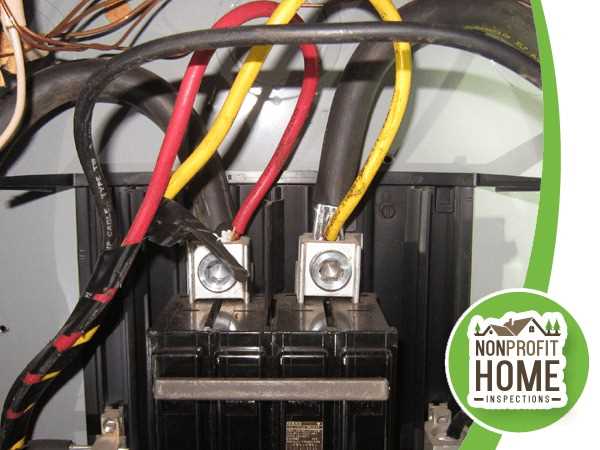
Locate the service panel first and trace each branch line before modifying any electrical installation in a manufactured dwelling. The distribution board usually receives a 120/240-volt feeder from the exterior service disconnect. Inside the panel, breakers divide power into separate branch lines supplying receptacles, ceiling fixtures, kitchen appliances, and HVAC equipment.
In factory-built housing, electrical routing often runs through wall cavities, floor channels, or ceiling trusses installed during assembly. Conductors typically follow a color code: black or red for energized lines, white for neutral return, and bare or green for grounding. Each branch line must return to the panel through its neutral path, while grounding conductors bond metal boxes and appliance frames.
Kitchen receptacles usually appear on 20-amp breakers using 12-gauge conductors, while general receptacle runs often use 15-amp breakers with 14-gauge cable. Electric ranges, dryers, or central HVAC equipment require dedicated 240-volt feeders connected to double-pole breakers. Mapping each conductor path before repairs reduces connection errors and helps identify overloaded lines.
Many manufactured dwellings also contain junction boxes hidden behind wall panels or inside ceiling cavities. These enclosures join branch conductors using approved connectors. Loose splices, damaged insulation, or reversed neutral connections often cause flickering fixtures, tripped breakers, or voltage drop across receptacle runs.
Mobile Home Wiring Diagrams Showing Breaker Panel Branch Circuits and Outlet Connections
Identify each breaker in the distribution panel and trace its branch conductors to receptacles, ceiling fixtures, or dedicated appliances. A typical manufactured dwelling receives a 120/240-volt feeder entering the panel through a main disconnect. Inside the panel, single-pole breakers usually supply 120-volt branch runs feeding receptacles and ceiling fixtures, while double-pole breakers supply 240-volt equipment such as an electric range, clothes dryer, or central HVAC unit.
Branch runs leaving the panel normally use nonmetallic cable containing a phase conductor, a neutral return, and a grounding conductor. Receptacle runs often follow a daisy-chain layout where power enters the first outlet box, continues to the next, and then feeds additional boxes along the same run. Kitchen countertop outlets commonly appear on 20-amp breakers using 12-gauge cable, while general room outlets often connect to 15-amp breakers using 14-gauge cable. Each outlet box must contain secure terminal screws or approved connectors so the energized conductor continues to downstream outlets without loose splices.
Check polarity at each receptacle after installation. The smaller slot connects to the energized conductor, the larger slot connects to neutral, and the round terminal connects to ground. Incorrect polarity or missing ground bonds can leave metal appliance frames energized, creating shock risk inside factory-built dwellings.
Breaker panel layout and branch circuit routing in manufactured homes

Locate the service distribution panel and label each breaker before tracing branch conductors throughout the structure. The panel typically receives a 120/240-volt feeder from the exterior service disconnect. Inside the enclosure, breakers divide incoming power into individual branch runs supplying receptacles, ceiling fixtures, kitchen equipment, and climate control units.
A standard panel layout usually contains these breaker assignments:
- 15-amp breaker for general room receptacle runs using 14-gauge cable
- 20-amp breaker for kitchen countertop outlets using 12-gauge cable
- 20-amp breaker for laundry receptacle
- Double-pole breaker for electric range or dryer
- Dedicated breaker for HVAC air handler or compressor
Branch conductors leave the panel through cable clamps and travel through wall cavities or floor channels installed during factory assembly. Each run contains three conductors: energized line, neutral return, plus grounding conductor bonded to metal boxes and appliance frames.
Trace branch routing carefully before adding new outlets. Manufactured structures often contain hidden junction boxes placed behind wall panels or inside ceiling cavities. These boxes distribute power to multiple outlet runs.
Follow these checks while inspecting branch routing:
- Confirm conductor gauge matches breaker rating
- Verify neutral conductors return to the panel bus bar
- Ensure grounding conductors bond to metal outlet boxes
- Check cable clamps where conductors enter the panel enclosure
Overloaded branch runs usually appear where multiple high-draw appliances share one breaker. Relocating heavy loads such as microwave ovens or portable heaters to separate branch lines reduces breaker tripping and voltage drop across receptacle outlets.