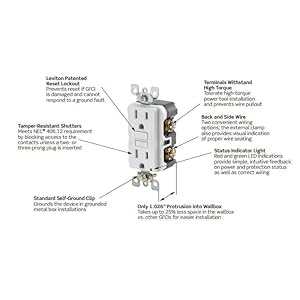
Connect the incoming hot and neutral conductors to the terminals marked LINE on the ground-fault protected receptacle. These terminals supply power to the device electronics and the front receptacle slots. If additional receptacles require ground-fault protection, attach their supply conductors to the LOAD terminals located beneath the line terminals.
A typical installation uses 12 AWG copper with a 20-amp branch circuit or 14 AWG copper with a 15-amp branch circuit. Strip approximately 16–19 mm of insulation so the bare conductor seats fully under the clamp plate. Tighten terminal screws with a torque driver to the value listed on the device body, usually around 14–18 lb-in.
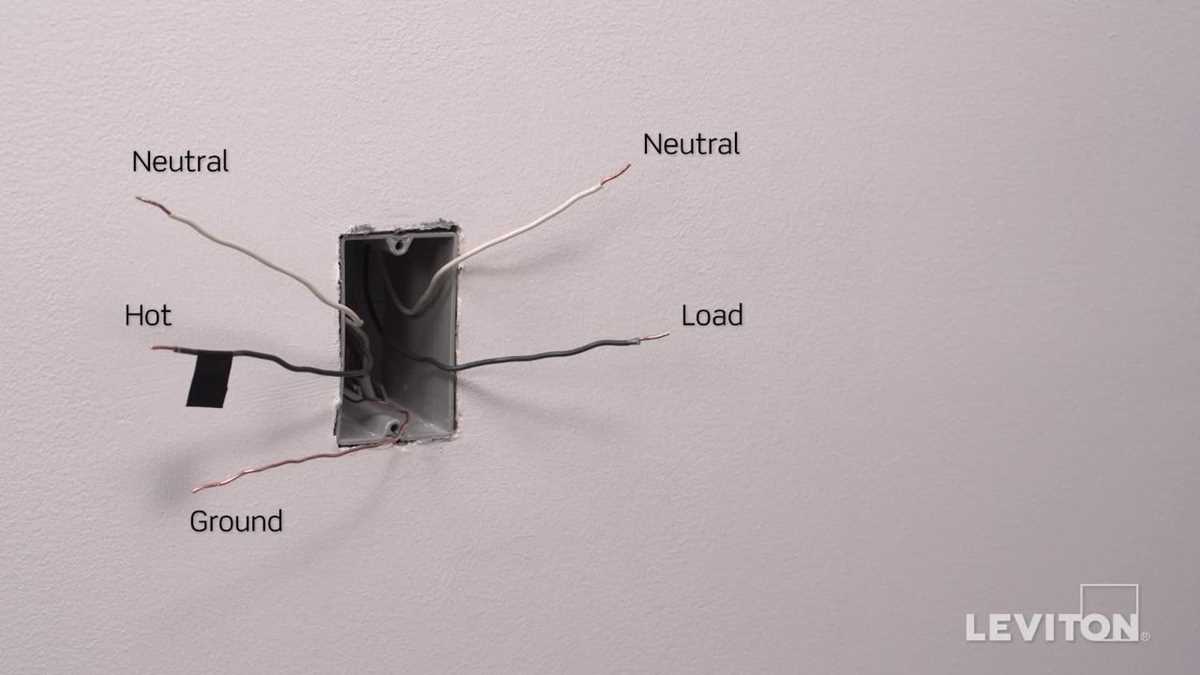
The equipment grounding conductor connects to the green terminal attached to the metal yoke. This connection provides a low-resistance path for fault current. Neutral conductors attach to the silver terminals, while hot conductors attach to the brass terminals. Maintaining this polarity allows the internal sensing electronics to monitor the current difference between hot and neutral paths.
Install the protective receptacle in locations exposed to moisture or water contact such as kitchens, bathrooms, garages, unfinished basements, and outdoor areas. Test the device using the built-in TEST and RESET buttons after installation. A successful test interrupts power instantly and restores power when RESET is pressed, confirming proper connection of line, neutral, and grounding conductors.
Leviton GFCI Outlet Wiring Diagram With Line Load and Ground Connections
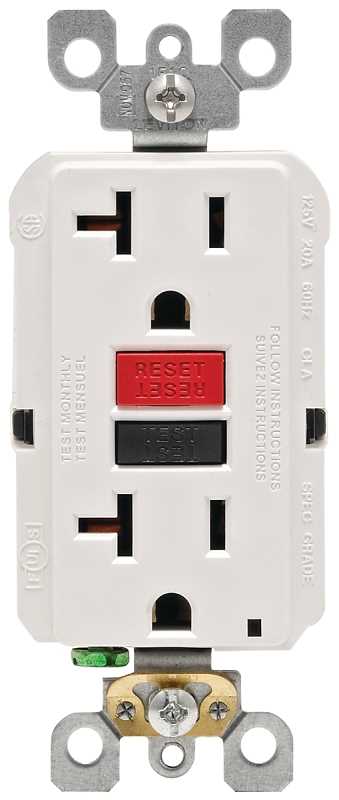
Connect the incoming hot conductor to the brass terminal labeled LINE and attach the incoming neutral conductor to the silver LINE terminal on the ground-fault protected receptacle. These two terminals supply power to the internal sensing electronics and the receptacle contacts located on the front face of the device.
If additional receptacles require ground-fault protection, attach their hot and neutral conductors to the terminals marked LOAD. This connection routes power through the protection circuitry so downstream receptacles lose power when a fault current imbalance occurs.
Strip approximately 16–19 mm of insulation from each conductor before inserting it beneath the pressure plate or terminal clamp. Ensure that no copper remains exposed outside the terminal area and tighten the terminal screws using the torque value specified on the device body, typically about 14–18 lb-in.
The equipment grounding conductor attaches to the green grounding screw connected to the metal mounting yoke. This connection provides a low resistance path that carries fault current back to the panel grounding system if a conductive surface becomes energized.
Typical branch circuits supplying this device include 14 AWG copper conductors on a 15-amp breaker or 12 AWG copper conductors on a 20-amp breaker. Kitchens, bathrooms, garages, and outdoor receptacles commonly use the 20-amp configuration due to higher appliance demand.
Maintain correct polarity during installation. Hot conductors always connect to brass terminals, while neutrals connect to silver terminals. Reversed polarity interferes with the internal sensing circuit and may prevent the protection mechanism from operating correctly.
After installation, restore power and press the TEST button on the front face of the device. A proper connection immediately interrupts power to both the receptacle and any downstream receptacles connected through the LOAD terminals.
Press the RESET button to restore power and confirm that connected equipment operates normally. This test confirms that line conductors, neutral conductors, and grounding connections are installed correctly within the device.
Line Terminal Connections on a Class A Shock-Protection Receptacle
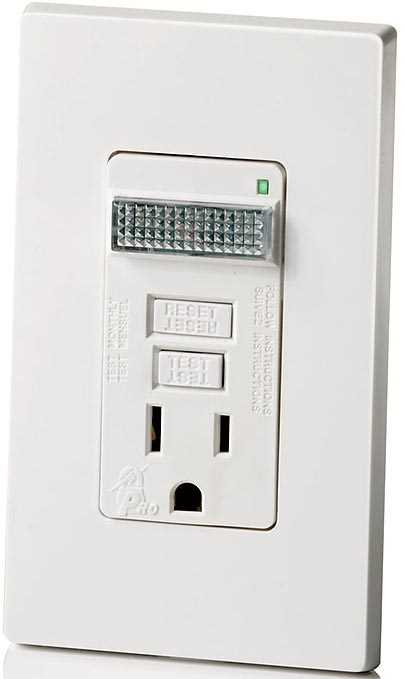
Connect the incoming power conductors only to the terminals marked “LINE”. The brass screw accepts the hot conductor (typically black or red), while the silver screw receives the neutral (white). Strip insulation to roughly 5/8 in (16 mm), bend the copper clockwise, and tighten the clamp screw to about 14–18 in-lb so the conductor sits fully under the pressure plate without exposed strands. The green grounding screw must hold the bare or green equipment ground. Never attach supply conductors to the lower pair marked for downstream protection unless additional receptacles will be protected.
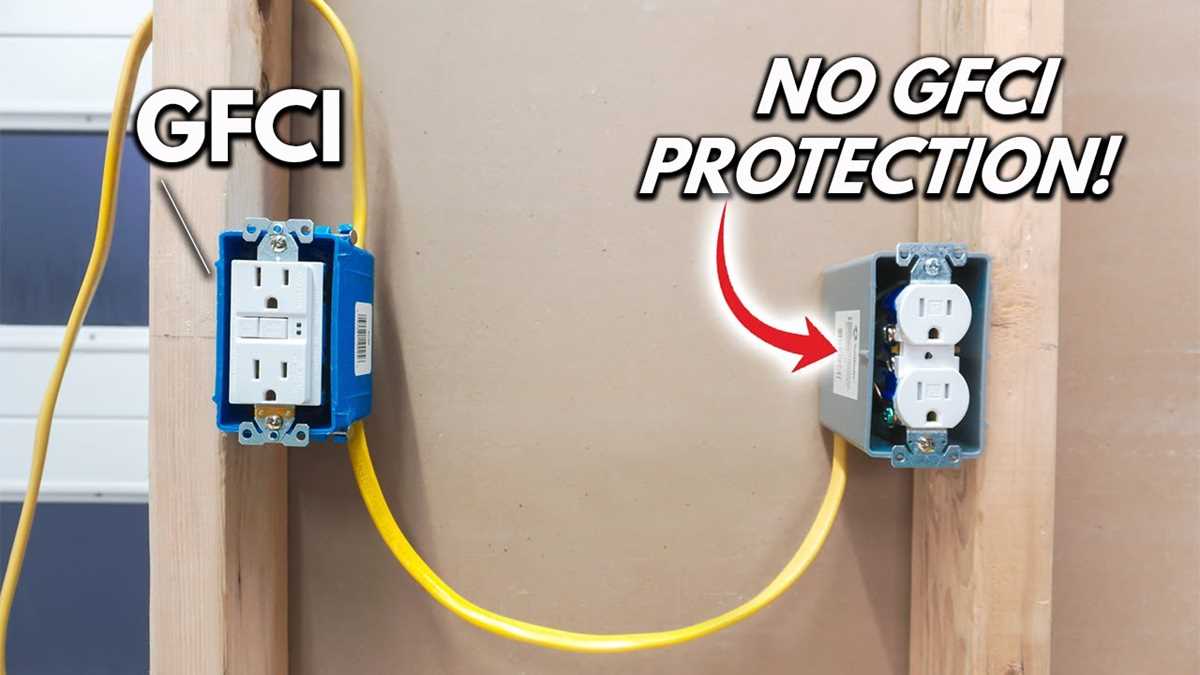
- Shut off the branch circuit at the service panel and verify zero voltage with a tester before touching conductors.
- Locate the incoming cable from the breaker panel; this is the supply pair that belongs on the LINE screws.
- Attach the hot conductor to the brass terminal labeled LINE.
- Attach the neutral conductor to the silver terminal labeled LINE.
- Secure the grounding conductor under the green screw and bond it firmly to the metal strap.
- Keep insulation close to the terminal clamp; copper exposure should not exceed 2 mm beyond the screw plate.
- After tightening, pull each conductor lightly; movement indicates insufficient torque.
- Restore power and press the TEST button; loss of power confirms correct connection of the supply terminals.