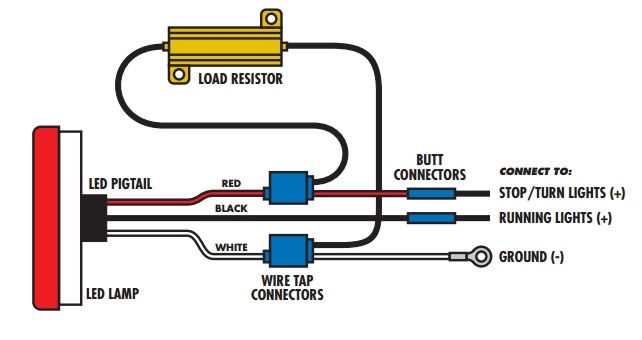
Always disconnect the vehicle battery before handling any electrical connections. This prevents short circuits and ensures safety while attaching power and ground leads to the rear modules.
Identify each conductor clearly using color codes: typically red for brake input, amber for turn signals, and black or brown for ground. Confirm the functions with a multimeter before making permanent connections.
Use proper connectors and terminals to avoid loose contacts. Crimp or solder each connection securely, and apply heat shrink tubing or insulating tape to protect against moisture and vibration.
After all connections are complete, test each function individually. Verify brake, turn, and running operations, ensuring no flicker or delay, then securely mount the units to prevent movement while driving.
LED Tail Light Connection Guide
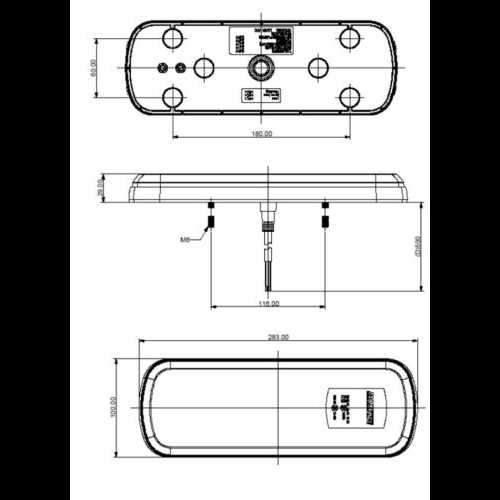
Attach the positive conductor to the vehicle’s auxiliary power output and secure it with a solder joint or a crimp connector rated for automotive current. Avoid using standard household connectors, as they can overheat under repeated braking cycles.
Ground the negative cable directly to a chassis bolt with bare metal contact. Paint, corrosion, or dirt will increase resistance, causing intermittent illumination or flickering during operation.
Integrate a 12-volt inline fuse rated between 5 and 10 amps into the feed line. Position it as close to the power source as possible to protect the circuit from surges or short circuits.
For vehicles with multifunction signals, separate each filament input. Use a multimeter to confirm continuity before connecting to the module, ensuring correct activation for braking, signaling, and nighttime running functions.
Twist wires lightly and use heat-shrink tubing over solder joints. This prevents exposure to moisture, vibration-induced loosening, and mechanical strain that can break the connection over time.
Route cables away from exhaust headers and moving components. High heat or friction can melt insulation, resulting in shorts or permanent failure of the assembly.
If installing on motorcycles or compact vehicles, consider adding a small relay between the switch and the illumination unit. This reduces load on the dashboard controls and maintains steady brightness under heavy current draw.
Test each function individually after installation. Verify that the illumination responds instantly to control inputs and that no ghost flickers occur when the engine is running, as this indicates poor grounding or loose connections.
Identifying Power and Ground Wires
Attach a multimeter set to DC voltage across each conductor and a clean chassis point. A reading close to 12 volts identifies the supply line, while negligible voltage points to a grounding path.
Follow the insulation colors to narrow down candidates. Bright tones like red, orange, or yellow usually carry current from the battery, whereas dark shades such as black or brown are typically negative returns. Confirm continuity with a meter before making permanent connections.
Activate each control function while monitoring voltage under load. True supply lines maintain steady potential during braking or signaling, while ground wires show minimal change. Secure each connection with corrosion-resistant terminals to prevent flickering or intermittent operation over time.