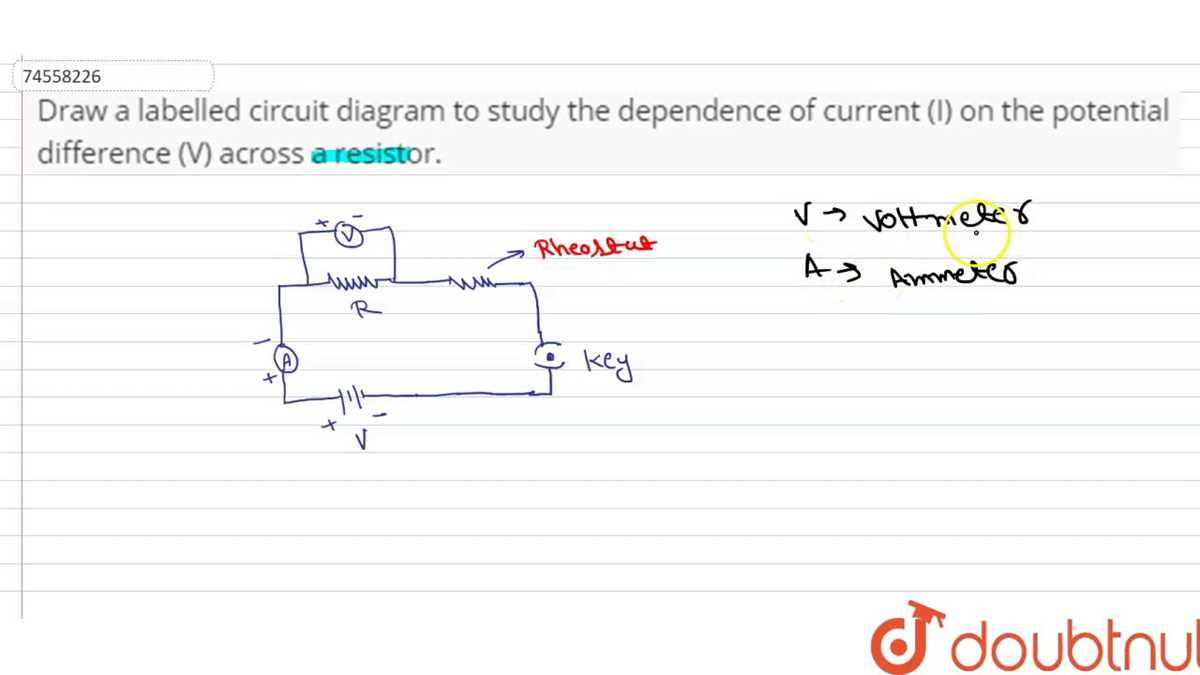
Focus on precise labeling of all components to avoid misinterpretation and reduce troubleshooting time. Each resistor, capacitor, and transistor should carry an unambiguous identifier, while power sources and ground connections must be clearly distinguished. Consistent notation across the schematic ensures smooth collaboration between engineers and technicians.
Illustrate signal flow with directional markers and clearly define junction points to prevent shorts and incorrect connections. Annotating voltage levels and current ratings next to relevant elements aids in verifying operational limits and maintaining safety standards during assembly.
Segment complex layouts into modular sections, each with explicit identifiers for inputs, outputs, and intermediary nodes. This approach improves readability and allows for incremental testing. Documenting component specifications alongside each segment streamlines maintenance and reduces the likelihood of errors during replacements or upgrades.
Use standardized symbols and maintain uniform spacing to prevent overcrowding and confusion. Cross-referencing labels with a legend or key enhances clarity, making it easier for anyone reviewing the schematic to understand functional relationships and detect potential design flaws quickly.
Structured Representation of Electrical Networks
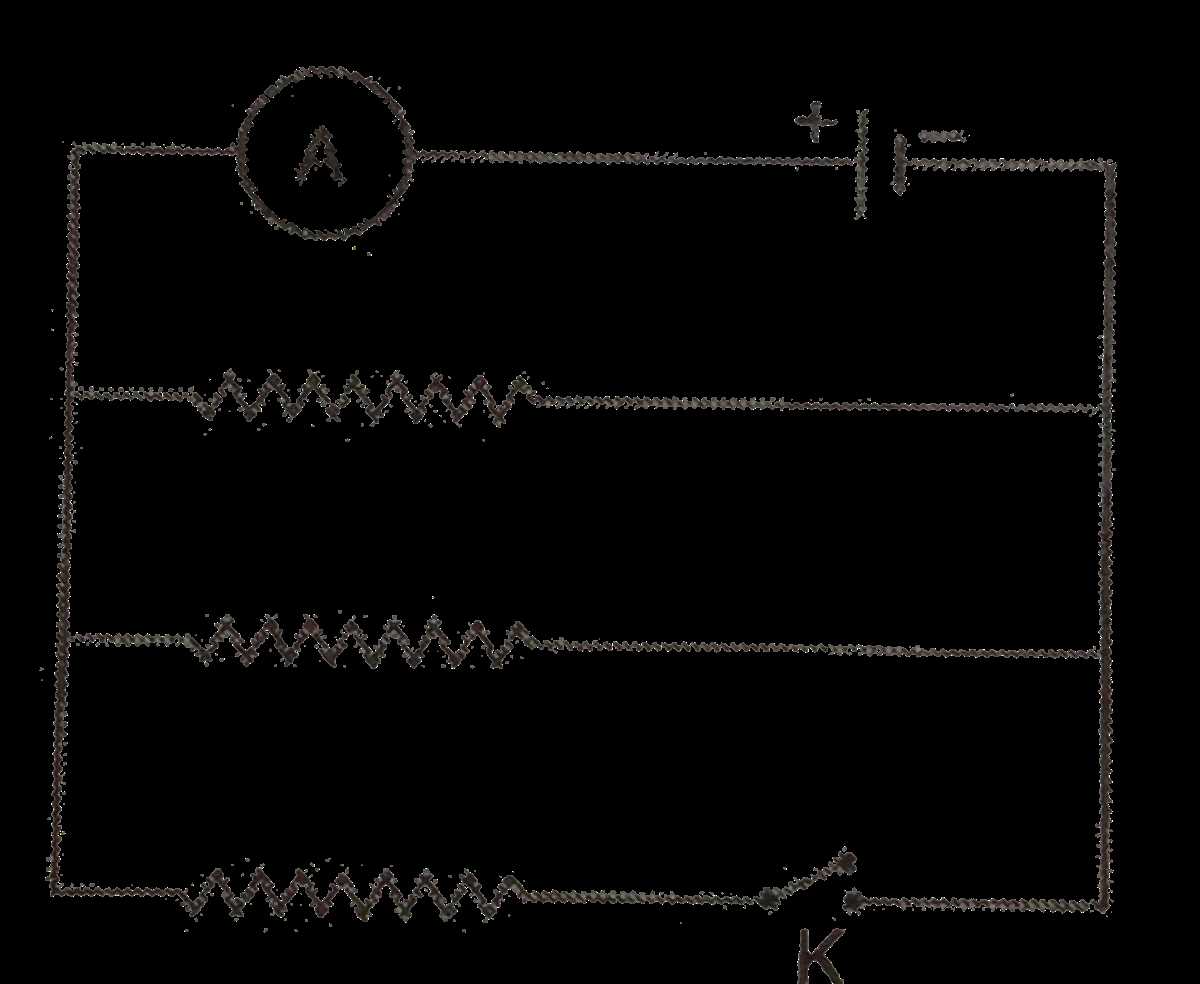
Always indicate each component with clear identifiers and precise connections. Use alphanumeric labels for resistors, capacitors, and power sources, and mark polarity for diodes and batteries. Ensure wire junctions are shown with distinct nodes rather than overlapping lines to prevent confusion during assembly or troubleshooting.
Follow a systematic approach:
- Number all input and output terminals sequentially.
- Specify voltage and current ratings beside each power element.
- Draw switches in their default position to avoid ambiguity.
- Highlight grounding points to maintain consistent reference.
For complex electronic layouts, include sectional views for sub-networks. Annotate each section with function labels such as “amplifier stage” or “filter block.” Maintain uniform spacing between elements and connectors to allow easy replication on a breadboard or PCB. Always cross-check connections against the schematic logic before finalizing any printed or digital representation.
Identifying Symbols for Common Electrical Components
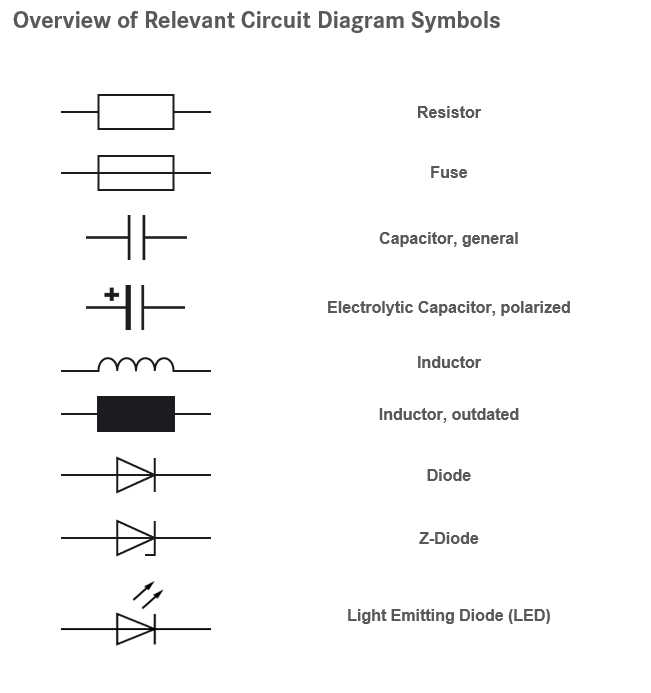
Focus on recognizing the distinct shapes that represent resistors, capacitors, and inductors. A resistor is usually shown as a zigzag line or a rectangle, while a capacitor is drawn as two parallel lines separated by a small gap. Inductors appear as coiled loops or series of humps, making them visually unique in schematics. Memorizing these shapes reduces errors when tracing connections.
Switches and relays carry intuitive symbols. A single-pole switch appears as a break in a line with a movable lever, while double-pole switches are represented with two parallel breaks linked to the actuator. Relays combine a coil symbol with contacts, often depicted with dotted lines connecting the control and load sections. Correctly interpreting these ensures accurate functional understanding of the system.
Power sources and grounding points have clear conventions. Batteries are indicated with alternating long and short parallel lines, showing polarity explicitly. AC sources are marked with a circle containing a sine wave, whereas ground connections use a set of descending lines converging to a point. Misreading these can lead to miscalculations or improper assembly of electronic setups.
Active components like diodes and transistors require attention to arrow direction and terminal labeling. Diodes use a triangle pointing to a line to indicate current flow, and LEDs add a pair of small arrows for light emission. NPN and PNP transistors differ in arrow orientation on the emitter, and MOSFETs include gate, drain, and source terminals. Correct identification ensures devices are connected properly and prevent circuit malfunction.