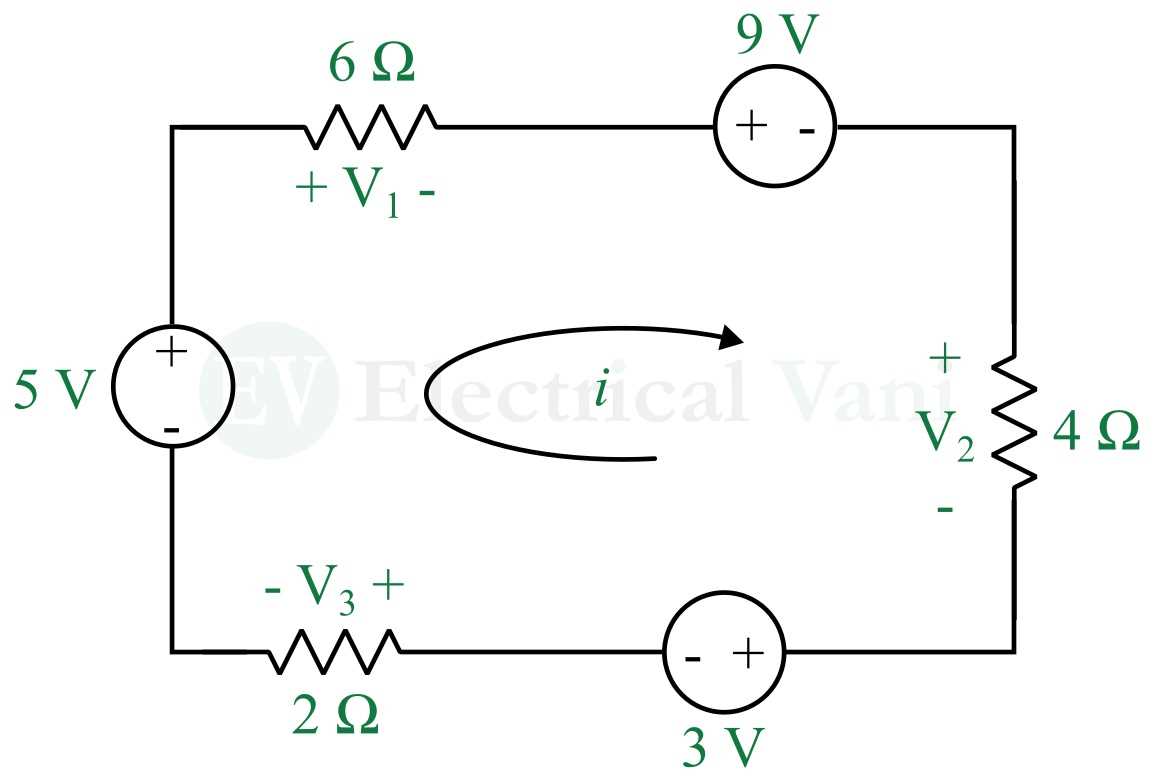
To solve for unknown voltages and currents in any electrical system, it’s important to start with a clear understanding of how voltage behaves within a loop. Applying a method that accounts for all voltage rises and drops allows accurate calculations, and helps in designing or troubleshooting various electrical components. This method involves tracking the sum of voltages across all elements within the loop to determine the current flow.
When dealing with multiple components, ensuring that the voltage drops across resistors, capacitors, and inductors are calculated correctly is key. The process requires attention to how each component impacts the overall loop. For instance, resistive elements directly influence the voltage drops, while reactive components like capacitors and inductors present phase shifts that must be considered carefully.
A thorough understanding of the voltage distribution across a network is not only useful for creating simple circuits but also for complex electrical systems, where the interactions of various elements must be evaluated to ensure stability and efficiency. From basic troubleshooting to the design of larger-scale electronics, mastering these calculations provides insight into every step of the development or repair process.
How to Read and Analyze a Voltage Loop
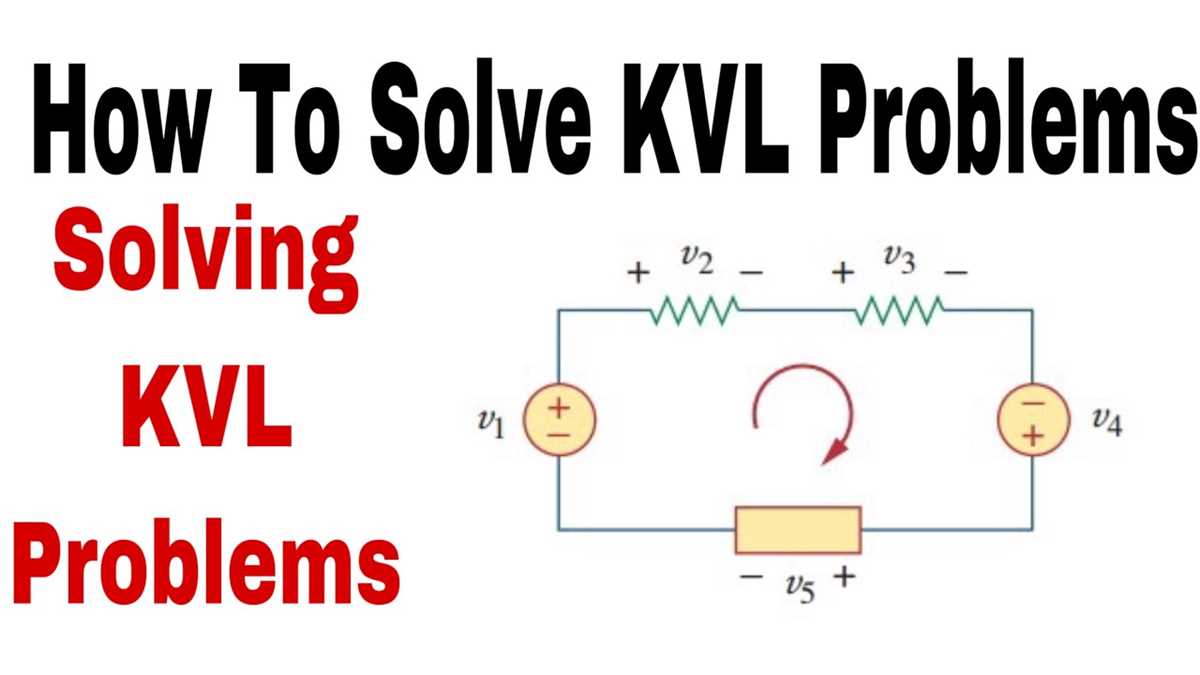
To accurately analyze the voltage distribution in any electrical loop, start by clearly identifying all voltage sources and resistive elements within the system. Each element in the path affects the overall voltage, and understanding how to track each is key to solving for unknowns. A practical first step is to label all components with their respective voltages, starting with known values and working towards the unknown.
In a loop, the sum of all voltages around a closed path must equal zero, as per Kirchhoff’s Voltage Law. This includes both voltage sources and the voltage drops across components such as resistors, capacitors, or inductors. For each element in the loop, assign the correct polarity to indicate the direction of voltage drop or rise. Understanding how to apply this principle ensures the integrity of your analysis.
Analyzing Multiple Loops
For systems with multiple loops, it’s important to apply the same principle across each independent loop. Begin by setting up an equation for each loop, tracking voltage drops and rises for each element. Use mesh analysis to solve for the unknown currents and voltages in the circuit. This method involves creating simultaneous equations that you can solve together to find the complete set of unknowns.
Practical Example of Voltage Analysis
Consider a simple series circuit with a battery and two resistors. The voltage drop across each resistor can be calculated using Ohm’s law, based on the current and resistance values. Add these drops and compare them with the total voltage provided by the battery. The result should match the battery’s output, ensuring the voltage balance is correct.
Understanding and applying these steps is fundamental for designing reliable electrical systems or troubleshooting existing ones. By following a clear process, you ensure that each component’s impact on the voltage distribution is accounted for, preventing errors and inefficiencies in the system’s performance.
How to Apply Kirchhoff’s Voltage Law in Simple Circuits
To apply the law correctly in any loop, begin by identifying all the voltage sources within the path. For every component in the loop, assign its voltage drop according to the current’s direction and component type. This process starts by marking the polarities of voltage sources and resistive components within the loop.
The total sum of voltages around any loop must equal zero. This includes both the potential rises from power sources and drops across resistive elements. If you know the voltage drops across each component, you can use these values to calculate the total voltage, ensuring the overall balance is achieved.
Example with a Simple Series Loop
Consider a loop containing a battery and two resistors. Label the voltage across the battery as positive and the voltage drops across the resistors as negative. Apply Kirchhoff’s Voltage Law by adding all the voltage values and setting the sum equal to zero. If you know the battery’s voltage and one resistor’s value, you can calculate the unknown resistor value using Ohm’s law.
Handling Multiple Power Sources
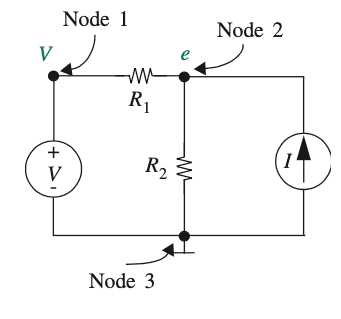
In circuits with multiple power sources, it’s important to track the direction of voltage rises and drops carefully. Use the same technique as before: add up all voltage sources and drops in a loop, but account for the direction of current in each power supply. Each source contributes either a positive or negative value, depending on its orientation.
For more complex systems, apply the same law to multiple loops independently. Create separate equations for each loop in the system. Use these equations to solve for unknown quantities like current or voltage, ensuring the system adheres to the principle of total voltage balance.
By following these steps, you can effectively analyze any simple electrical network. This method allows you to troubleshoot systems, design new ones, and predict behavior by ensuring the voltage around any given loop is balanced, as per the established rules of electrical theory.