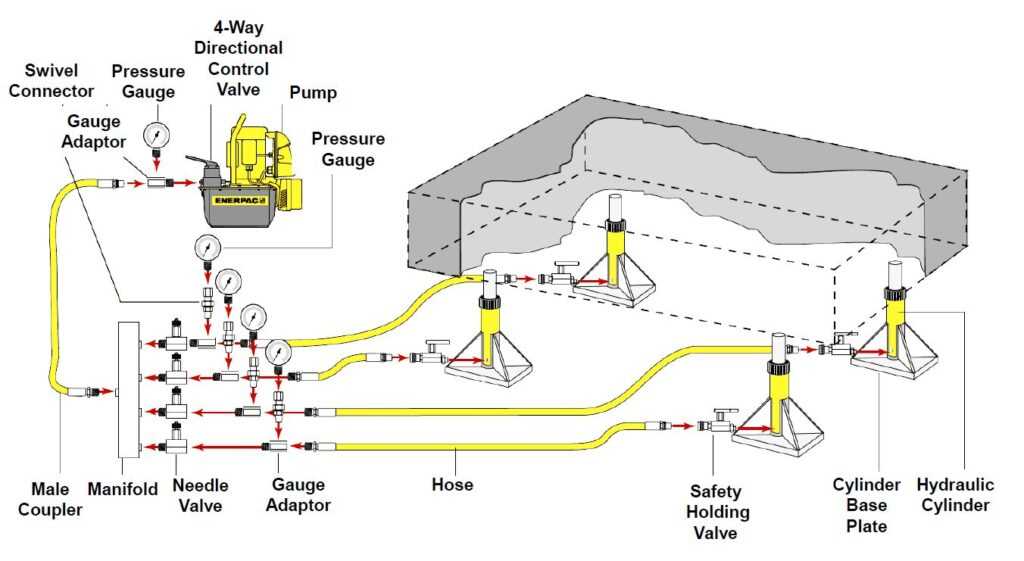
Focus on identifying the primary flow paths from the pump to actuators before examining secondary loops. Trace each line to determine which components control pressure and direction within the system.
Label all valves, reservoirs, and actuators with their standard codes and positions. This ensures accurate tracking of fluid movement and simplifies troubleshooting of unusual pressure drops or leaks.
Verify input and output connections of pumps and motors against operating specifications. Note the orientation of check valves and the placement of pressure relief devices to prevent overloading components.
Understand the role of accumulators and pilot lines in maintaining system stability. Mark pilot-controlled valves separately to avoid confusion with direct-acting devices when analyzing load responses.
Document control switches and sensors alongside mechanical actuators. This provides a clear map of how electrical or mechanical signals influence fluid flow, allowing for precise adjustments during operation.
Understanding Symbols and Standard Notations in Fluid Power Layouts
Identify each pump, valve, and actuator symbol according to ISO or ANSI standards. Use solid lines for pressure paths, dashed lines for pilot controls, and dotted lines for drain connections to distinguish functions clearly.
Pay attention to directional indicators and flow arrows on symbols. A two-position valve may show two boxes with arrows, while pressure relief devices often include spring and arrow markers specifying activation points and pressure ratings.
Standardize labeling of reservoirs, filters, and accumulators to prevent misinterpretation. Include component codes, operating pressures, and flow rates next to each symbol for accurate assessment and maintenance planning.
Tracing Flow Paths and Identifying Key Components in the System
Follow the main pressure line from the pump to the actuator, noting all intermediate valves, check valves, and directional controls. Identify flow splits and return paths to understand load sequences and potential pressure drops.
Mark relief valves and accumulators along the path, as they control peak pressures and energy storage. Confirm their set points and capacity values, which directly influence system responsiveness and safety margins.
Examining Control Lines
Trace pilot and control lines separately from main flow. Look for pressure or electrical signals that operate secondary valves or actuators, and note how signal routing affects overall system timing and sequence.
Document filters, strainers, and directional couplings in each branch. These components prevent contamination, reduce wear, and direct flow efficiently. Check that each filter element matches flow rate and micron ratings indicated in schematics.
Confirming Actuator Connections
Identify cylinders, motors, or rotary actuators at the terminal points of each flow path. Verify connection types, stroke limits, and operational pressures. Ensure the orientation and mounting match system schematics to prevent misalignment or unexpected motion.
Interpreting Pressure Valves and Actuator Connections Accurately
Measure line pressures at multiple points to verify pump output, relief valve set points, and actuator supply. Use calibrated gauges and note differences between pressure and return lines to identify restrictions or potential leaks.
Label each directional valve according to its symbol and port connections. Confirm spool type, shift method, and pressure rating, as these determine flow direction and control sequence across the system.
Examine sequence and pressure-reducing valves for correct orientation. Sequence valves must open at designated pressures, while reducing valves maintain downstream limits to protect sensitive actuators from overload.
Document pilot-operated components separately. Track pilot lines, signal pressures, and feedback loops. Misreading pilot connections can result in delayed actuation or unintended motion.
Check actuator ports for proper connection to supply and return lines. Identify single-acting versus double-acting actuators, noting stroke length and load rating, ensuring compatibility with valve outputs and line pressures.
- Verify pressure relief locations and settings against design specifications.
- Ensure valve symbols match functional type in system layout.
- Confirm actuator movement direction aligns with intended load handling.
Compare each measured value and connection against schematic references. Highlight deviations and investigate causes, such as clogged filters, incorrect valve orientation, or incorrect pressure adjustments, to maintain operational safety and performance.