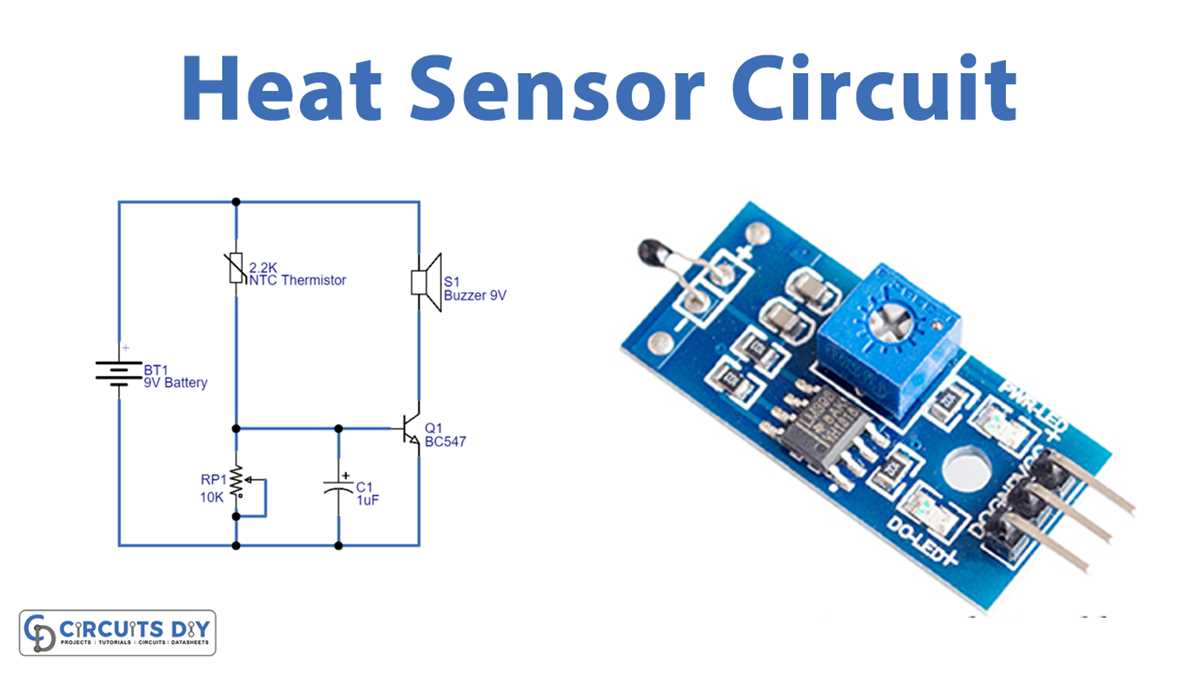
Use a temperature responsive element such as a thermistor or LM35 module connected to a simple electronic layout that activates an alarm once a preset threshold is reached. A typical build uses a 10k NTC thermistor, a voltage divider with a 10k resistor, and a comparator such as LM358 or LM393. When ambient temperature rises, resistance of the thermistor drops, altering voltage at the comparator input and switching the output state.
A practical layout normally operates from 5V to 12V DC. The temperature-sensitive component forms a divider that feeds the comparator input pin. A reference voltage, created with a potentiometer between supply rails, defines the trigger point. For example, adjusting the reference to about 2.5V allows the system to switch once the thermistor voltage crosses that level, which may correspond to roughly 50–70°C depending on the chosen component curve.
Output from the comparator can drive a buzzer, relay module, or indicator LED. When the threshold is reached, the output pin changes state and powers the load through a transistor such as BC547 or 2N2222. This arrangement appears in fire warning units, battery pack monitoring boards, and equipment enclosures where rising temperature must activate an alert or shutdown line.
Stable operation depends on proper resistor selection and short wiring paths. Adding a small 0.1 µF capacitor across the comparator input reduces noise spikes that may cause false switching. Mount the temperature-sensitive element close to the surface being monitored to obtain faster response and more accurate readings.
Heat Sensor Circuit Diagram with Wiring Layout Component List and Temperature Trigger Operation
Place a temperature-responsive component such as a 10k NTC thermistor into a voltage divider connected to a comparator input. This arrangement converts rising temperature into a measurable voltage shift. Connect the divider between 5V and ground, then route the midpoint to the non-inverting pin of an LM393 or LM358 comparator.
A stable build typically includes NTC thermistor 10k, fixed resistor 10k, comparator IC LM393, 10k potentiometer for reference adjustment, NPN transistor such as BC547, diode 1N4148 or 1N4007 for relay protection, and an output device like a buzzer or relay module. Supply voltage between 5V and 12V works well for small alarm modules.
The wiring arrangement places the thermistor and fixed resistor in series, forming a divider that feeds the comparator input. The reference voltage enters the opposite input pin through a potentiometer connected across the supply rails. Adjusting this control changes the temperature level that flips the output state.
Component Placement and Electrical Connections
Mount the thermistor close to the surface being monitored. Long leads introduce electrical noise and delay response. Add a 0.1 µF capacitor between the comparator input and ground to suppress voltage spikes caused by switching loads or nearby motors.
Temperature Threshold Switching Process
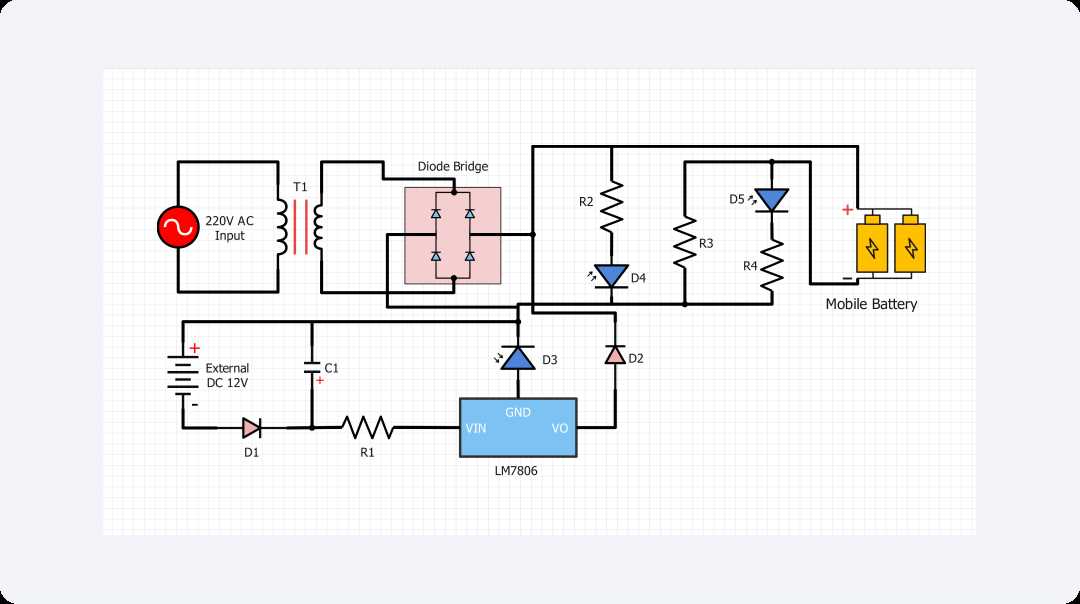
When temperature rises, resistance of the NTC element decreases. Divider voltage then increases at the comparator input. Once this voltage exceeds the reference level set by the potentiometer, the comparator output switches from low to high. This change drives a transistor stage that powers the alarm device.
For example, with a 10k NTC rated at 25°C and a divider using another 10k resistor, the midpoint voltage may rise from about 2.1V at 25°C to nearly 3.2V near 70°C on a 5V supply. Setting the comparator reference near 3V causes the alarm output to activate around that temperature level.
Heat Sensor Circuit Diagram Components and Their Roles in Temperature Detection
Select a temperature-responsive element that converts thermal change into a measurable electrical signal. NTC thermistors and LM35 analog modules are common choices. An NTC type rated at 10kΩ at 25°C drops to roughly 3kΩ near 70°C, creating a voltage change that control electronics can monitor.
Use a voltage divider to translate resistance variation into voltage variation. One branch contains the thermistor while the second branch contains a fixed resistor with the same nominal value. The midpoint becomes the signal line that feeds a comparator or microcontroller input.
Main hardware used in this type of temperature detection build includes:
- NTC thermistor 10k or LM35 module
- Fixed resistor 10k for the divider network
- Comparator IC such as LM393 or LM358
- Potentiometer 10k for reference adjustment
- NPN transistor like BC547 or 2N2222
- Indicator device such as LED, buzzer, or relay
- Protection diode for relay coils
The thermistor serves as the temperature-dependent component. Its resistance curve follows an exponential pattern. A typical B-value around 3950 allows predictable response across a wide range between 0°C and 100°C.
The comparator monitors voltage from the divider and compares it with a reference level created by a potentiometer. Once the measured signal rises above that reference, the output switches state. This switching point defines the temperature threshold.
Reference adjustment usually works through a small trimmer connected across the power rails. Rotating the shaft changes the voltage supplied to the comparator input. A midpoint reference near 2.5V on a 5V supply often corresponds to temperatures around 50–70°C depending on thermistor parameters.
Output control normally relies on a transistor stage. The comparator alone cannot drive higher loads such as relays or buzzers. A BC547 transistor connected through a base resistor around 1kΩ amplifies the switching signal and powers the external load.
Additional parts stabilize operation:
- 0.1 µF capacitor between signal line and ground to suppress noise
- Flyback diode across relay coils to absorb inductive spikes
- Short wiring between the temperature-responsive element and divider node
- Stable DC supply between 5V and 12V