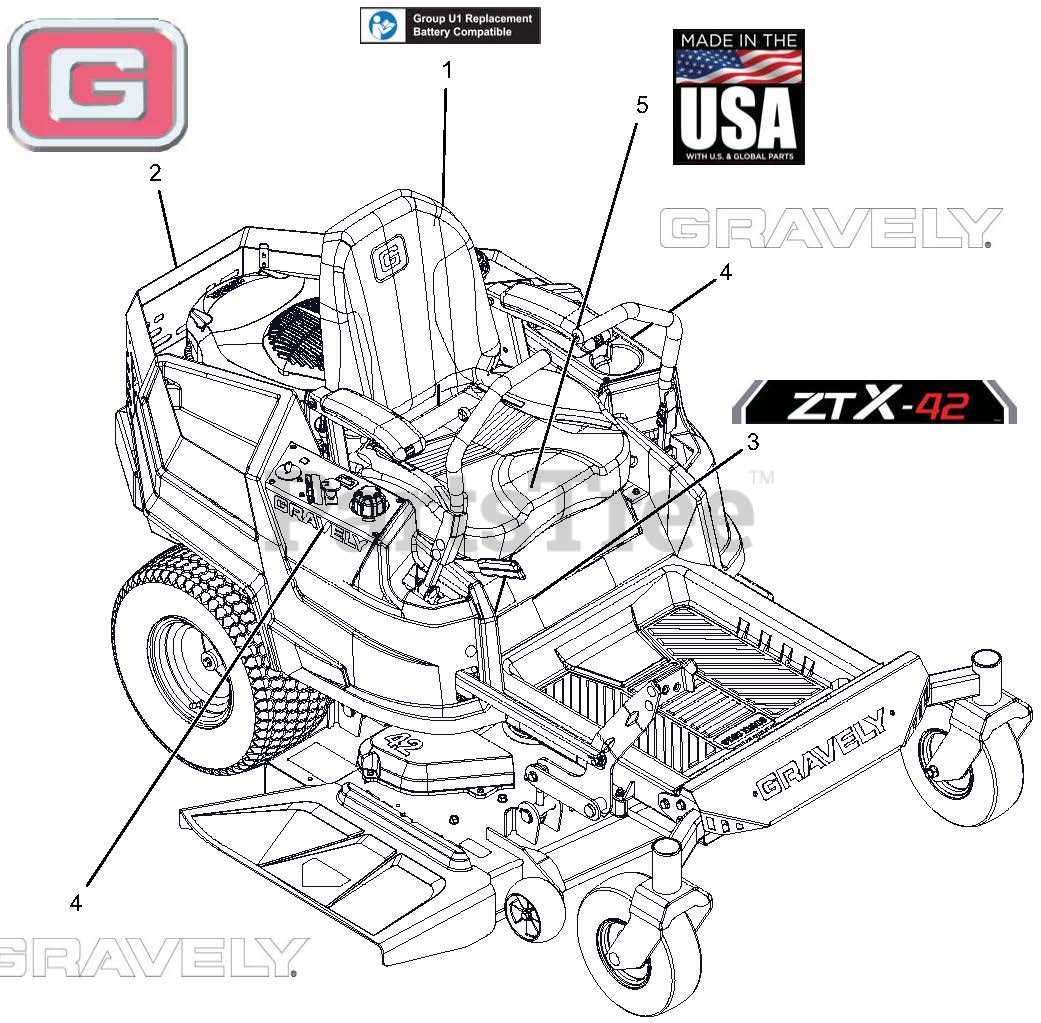
Identify each mower assembly by position on the ZT 42 chassis before any repair or replacement. Matching the visual reference to the actual machine helps confirm belt length, pulley alignment, and fastener placement, reducing installation errors during deck or drive service.
The layout separates the cutting deck, power unit, and frame structure into clear sections. Blade mounts, spindle housings, idler arms, and belt guides are shown with their mounting order, making it easier to verify wear points and compare left and right side differences.
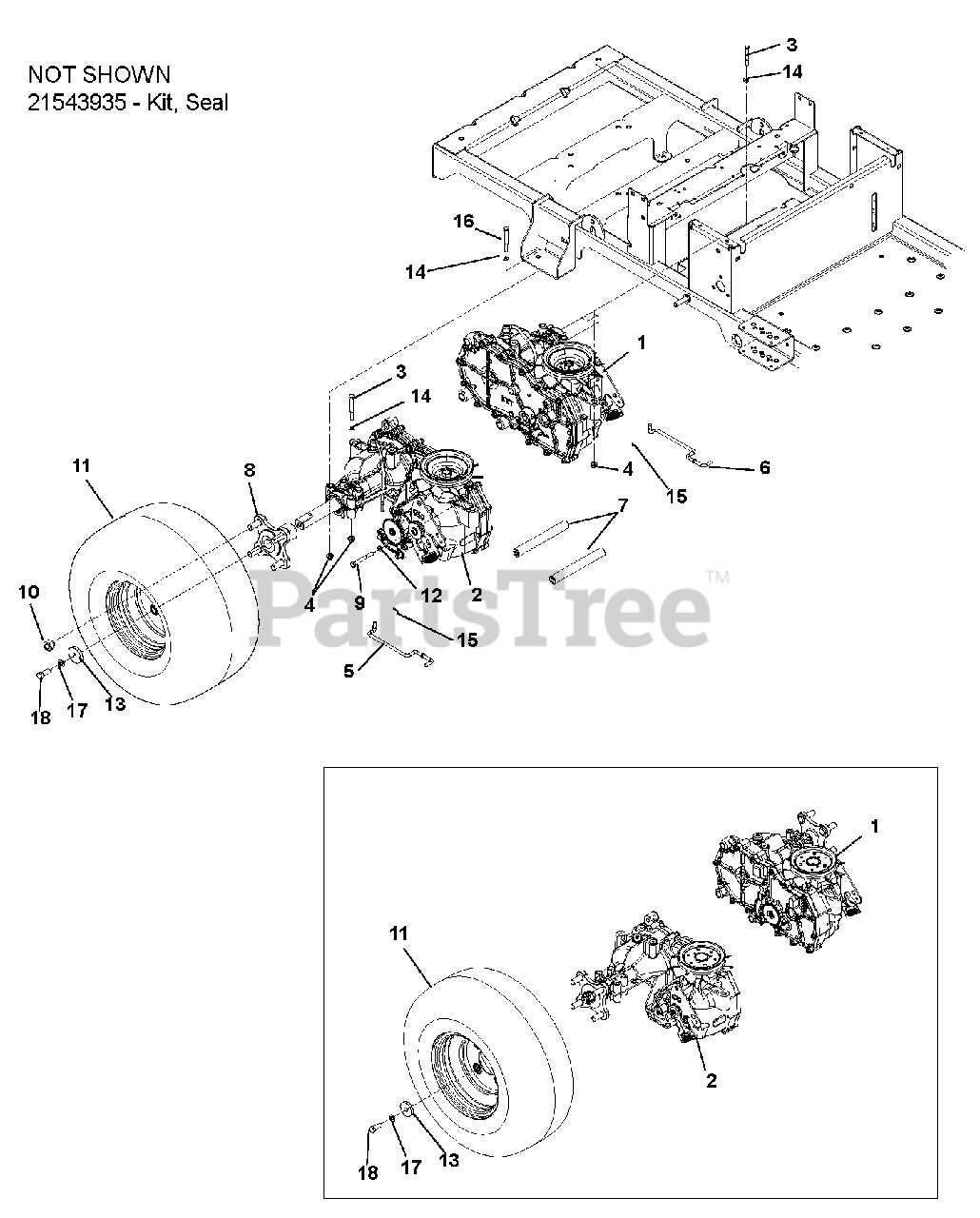
For motion control and steering, the reference shows hydro drives, control levers, link rods, and wheel hubs as installed from the factory. Use this view to trace cable routing, check washer and spacer order, and ensure correct reassembly after maintenance or teardown.
ZT 42 Zero Turn Mower Component Map
Match each assembly on the ZT 42 machine to its position in the factory layout before removing hardware. This step confirms belt routing around idler wheels, pulley stack order on the crankshaft, and spindle orientation under the cutting deck, preventing rework during installation.
The reference view separates the mower into deck structure, power section, and chassis. Under the 42-inch deck, blade carriers mount to vertical shafts secured with keyed pulleys and retaining nuts, while tension arms control belt slack through spring-loaded pivots. Verifying these relationships helps select correct replacements and torque values.
On the drive and control side, the layout shows hydro units aligned with axle hubs, steering levers linked through adjustable rods, and brake arms positioned near the rear frame. Use this map to trace cable paths, check spacer placement, and confirm left and right assemblies before tightening fasteners.
Mower Deck Assembly Layout for Blades Spindles and Belt Routing
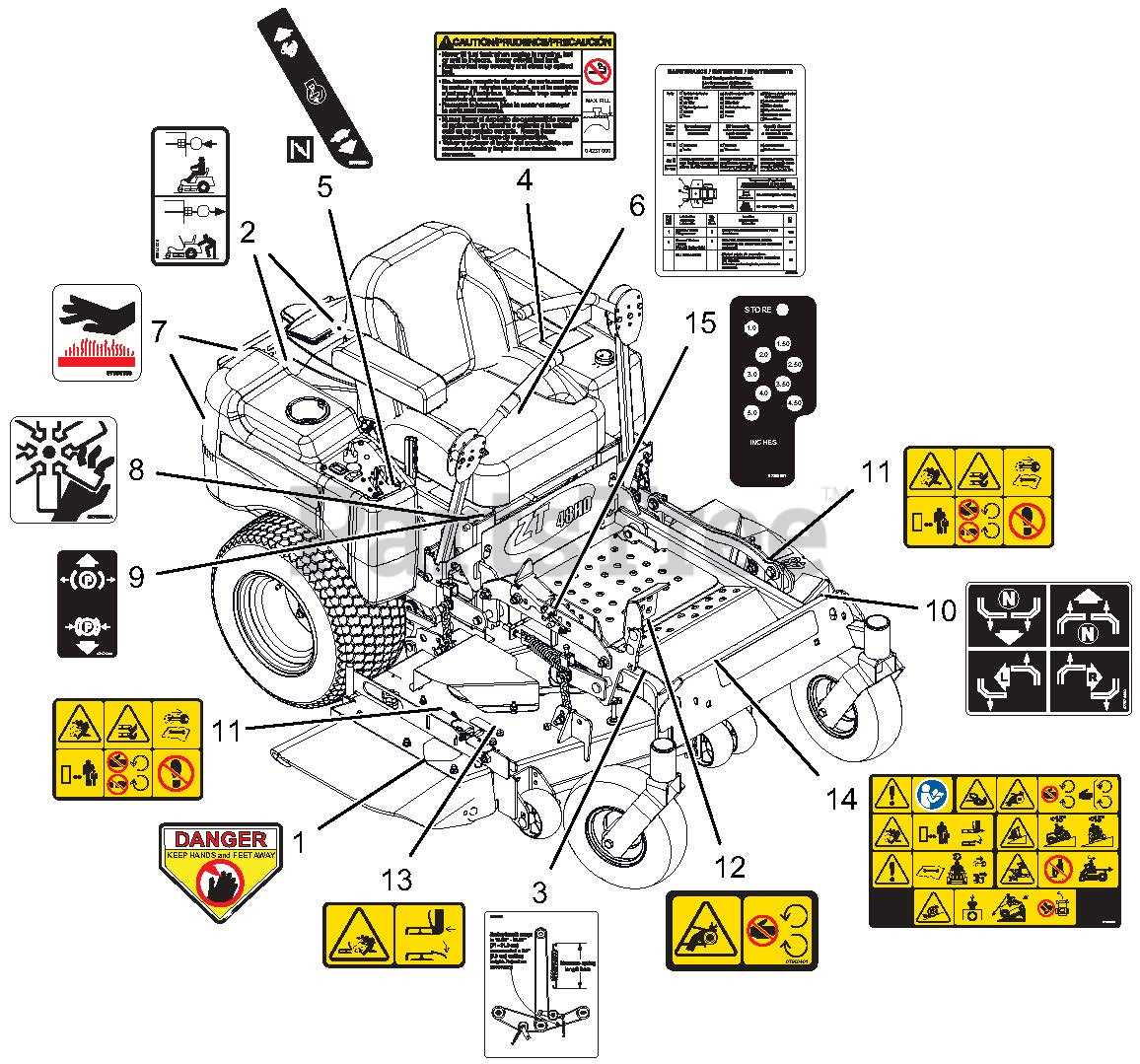
Route the deck drive belt exactly as shown in the factory layout before engaging the tension arm. On the 42-inch cutting unit, the belt wraps the center pulley first, then passes around the outer spindle pulleys, with fixed guides preventing lift during blade engagement.
Each blade attaches to a vertical spindle shaft supported by a sealed housing bolted to the deck shell. The pulley sits above the housing and is keyed to the shaft, while the blade mounts below using a single center bolt tightened to the specified torque to avoid vibration and uneven cut patterns.
Verify the position of keeper rods and idler arms on both sides of the deck. Although the left and right spindle assemblies mirror each other, belt guides differ by location, making visual comparison necessary before final belt tension and deck reinstallation.
Engine and Drive System Layout for Pulleys Idlers and Hydro Units
Confirm pulley alignment on the engine output shaft before installing or tensioning any drive belt. The ZT 42 platform uses a stacked pulley arrangement where the upper groove powers the cutting deck and the lower groove transfers rotation to the rear drive system.
Idler wheels are mounted on pivot arms with spring tension that maintains belt contact under load. Inspect bearing surfaces and arm travel while referencing the layout to verify correct mounting orientation and spacing washers, as reversed idlers cause belt tracking issues.
Hydro drive units sit behind the engine cradle and connect to the wheel hubs through splined axles. Control linkages attach directly to the hydro levers, making precise rod length and neutral position alignment necessary to prevent creeping when the control arms return to center.
Frame Controls and Steering Layout for Levers Cables and Wheels
Set both control levers to neutral and verify linkage symmetry against the chassis layout before adjusting cables or rods. This check prevents uneven tracking and reduces tire scrub on the ZT 42 zero turn platform.
The frame layout shows how steering input transfers from the hand levers to the rear drive units through adjustable connections. Each side operates independently, so left and right components must be compared visually during service.
- Hand levers mount to pivot brackets with nylon bushings that control free play
- Control rods connect levers to hydro input arms using threaded ends for fine adjustment
- Return springs pull the system back to neutral when levers are released
Wheel and brake hardware placement is also defined by the frame view. Rear wheels mount on splined axles secured with axle nuts, while brake arms sit adjacent to the hubs for parking lock engagement.
- Confirm wheel hub seating on the axle spline
- Check cable routing along the frame rails to avoid pinch points
- Adjust lever height and throw equally on both sides