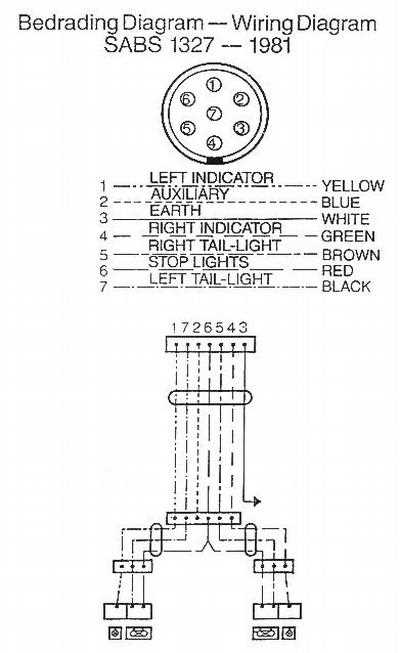
Connect the ground lead first and verify the pin layout of the vehicle plug before attaching any light circuits. A stable ground line prevents most lighting failures on cargo haulers. Use a clean metal contact point on the steel frame and secure the white lead with a corrosion-resistant bolt. Poor grounding often causes dim tail lamps, blinking issues, or brake lights that fail during towing.
Most cargo carriers rely on two common connector formats: a 4-pin flat plug for basic lighting and a 7-pin round plug for additional systems such as electric brake control, reverse lamps, and a 12-volt supply line. Standard color codes simplify installation. Brown normally feeds running lamps, yellow powers the left turn signal and stop lamp, and green supplies the right signal and brake lamp. The white lead links the frame to vehicle ground.
Units equipped with brake controllers require the seven-contact connector. In this setup, the blue conductor transmits the brake controller signal to the axle magnets, while the black lead carries auxiliary 12-volt power for interior lighting or battery charging. Reverse lamps usually connect through a purple or red line depending on manufacturer specifications. Correct routing along the steel frame using clips every 30–40 cm prevents insulation wear.
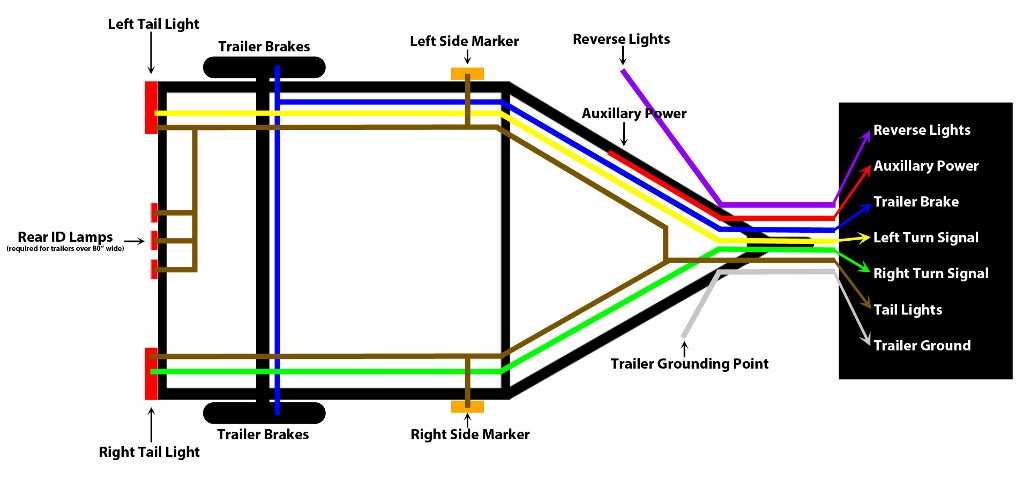
Route all conductors through flexible conduit near moving components such as suspension mounts and coupler joints. Use heat-shrink connectors rather than open crimp terminals. After installation, test each circuit separately with a multimeter or a plug tester: tail lights, left signal, right signal, stop lamps, brake controller output, and auxiliary power line. This step confirms that the vehicle connector and cargo carrier electrical layout match correctly.
Enclosed Trailer Wiring Diagram With 4 Pin and 7 Pin Connector Layouts and Wire Colors
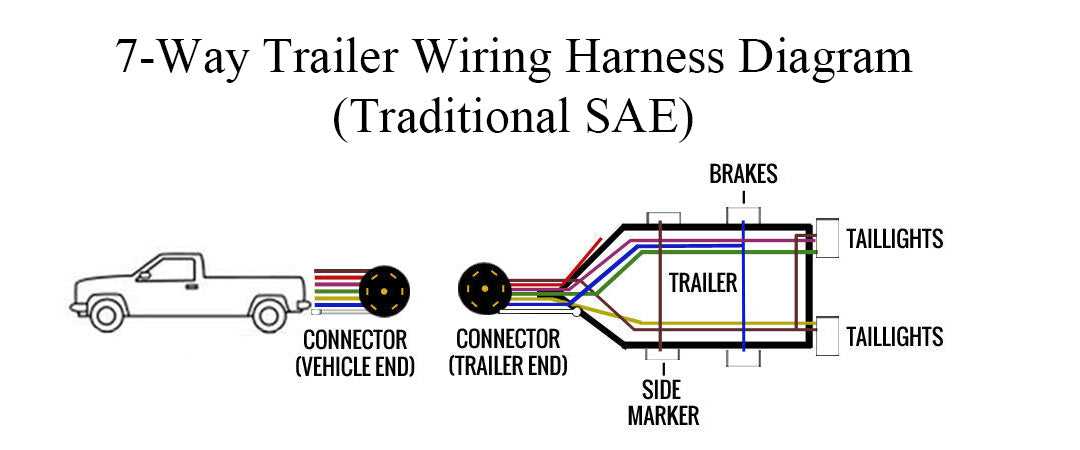
Match the connector type on the tow vehicle with the correct pin layout before attaching any conductors. A 4-pin flat plug supports the lighting group only: tail lamps, brake lamps, and turn signals. The typical color mapping follows a fixed pattern: white for chassis ground, brown for running lights, yellow for left stop and turn, and green for right stop and turn. Route each line along the metal frame rail and secure it every 30–40 cm using insulated clips. This prevents abrasion and voltage drop that can weaken lamp brightness.
A 7-pin round connector supports additional circuits required by many cargo carriers. Along with the lighting lines, it includes a blue conductor that sends brake controller output to electric brake magnets, a black lead supplying 12-volt auxiliary power, and a purple or red line for reverse lamps depending on manufacturer layout. Ground remains the white conductor connected directly to the steel frame. Use sealed crimp terminals or heat-shrink connectors on each joint to prevent corrosion from road moisture and salt exposure.
Check polarity and voltage on every contact using a multimeter before final connection. Tail lamps should receive about 12 V from the brown circuit while the brake line should activate both stop lamps simultaneously. If turn signals flash rapidly or lights appear dim, inspect the ground path between the vehicle plug and the cargo carrier frame; resistance above 0.2 ohms often causes lighting faults. A labeled pin layout chart stored near the tongue of the hauler simplifies future maintenance and lamp replacement.
4 Pin Enclosed Trailer Wiring Diagram With Standard Wire Color Codes
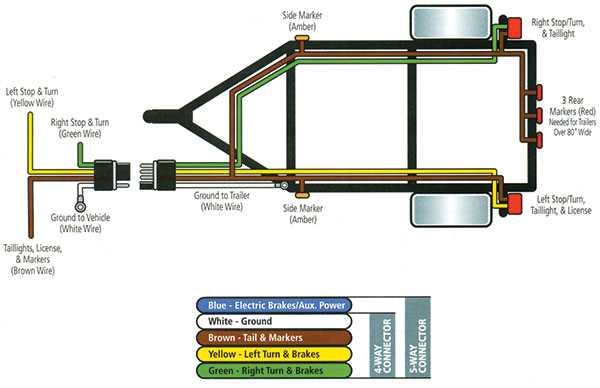
Use the 4-pin flat connector only for lighting circuits and confirm the color mapping before attaching each conductor. This connector supports tail lamps, brake lamps, and turn signals. No electric brake or reverse circuit exists in this configuration. Many light failures on cargo haulers occur because the conductors are connected to the wrong pin.
The flat connector has four contacts arranged in a simple row. Each contact corresponds to a fixed color and lighting function. The layout below reflects the standard configuration used across most North American tow vehicles.
- White – chassis ground connected directly to the steel frame
- Brown – running lights and side marker lamps
- Yellow – left turn signal and left brake lamp
- Green – right turn signal and right brake lamp
Attach the white ground lead first. Scrape paint from the frame surface and fasten the conductor with a stainless bolt and star washer. A weak ground connection causes dim lights, irregular flashing, or brake lamps that fail during towing. Electrical resistance between plug ground and frame should remain below 0.2 ohms when checked with a multimeter.
Route the remaining conductors along the inner side of the steel frame rail. Protect them with split loom conduit near suspension mounts and hinge areas where movement occurs. Secure the loom with insulated clips every 30–40 cm. Loose conductors can rub against metal edges and damage insulation within a few thousand kilometers of travel.
Typical lamp connection order on a cargo carrier follows this sequence:
- Run the brown line to both rear tail lamps and to all side marker lamps
- Connect the yellow conductor to the left rear combination lamp
- Connect the green conductor to the right rear combination lamp
- Join the white ground line to each lamp housing or to a shared grounding stud
Use heat-shrink butt connectors or sealed crimp terminals rather than open splices. Road spray, salt, and dust can enter exposed connectors and cause corrosion within months. Sealed joints extend service life and maintain stable voltage for the lighting system.
Test each circuit with a plug tester or multimeter before road use. Activate tail lights, left signal, right signal, and brake lights individually. Each lamp should illuminate at full brightness with no delay. Uneven brightness between sides usually points to poor grounding or a damaged conductor along the frame rail.