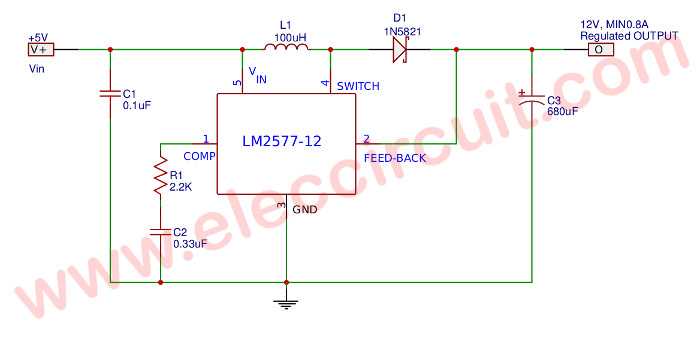
Use high-quality inductors and capacitors rated for the input voltage and current load. Choose components with low equivalent series resistance (ESR) to maintain stable voltage and minimize heat generation under continuous operation.
Position the switching module close to the input source to reduce voltage drops and electromagnetic interference. Short traces between the input terminals and active elements improve overall performance and reduce ripple on the output.
Select a regulator with adjustable output to fine-tune voltage according to the device requirements. Ensure the feedback loop is correctly connected to maintain accurate voltage levels under varying loads.
Apply proper thermal management by adding heat sinks or airflow around power components. Overheating can cause voltage fluctuations, reduce component lifespan, and trigger protective shutdowns.
Verify all connections before powering the assembly. Use a multimeter to check continuity and correct polarity. Misconnections can lead to short circuits or permanent damage to the modules.
Test the output voltage under different loads to ensure the module maintains stability. Connect resistive or electronic loads and monitor voltage and current behavior to detect inconsistencies early.
Label input and output terminals clearly for easy identification during installation or maintenance. Marking positive and negative points reduces setup errors and simplifies troubleshooting when multiple modules are used in series or parallel.
DC to DC Voltage Reduction Guide
Choose an inductor with sufficient current rating to handle the maximum load without saturating. Oversized inductors reduce ripple, while undersized ones can cause voltage spikes and thermal stress on components.
Select capacitors with low ESR at both input and output terminals. Ceramic or electrolytic types rated above the operating voltage ensure stable performance and prevent oscillations under dynamic loads.
Connect the feedback loop correctly to maintain a precise output voltage. Use short, direct traces and minimize interference from nearby high-current paths to ensure the regulator responds quickly to load changes.
Test voltage stability under varying loads using resistive or electronic loads. Monitor temperature and output with a multimeter or oscilloscope to detect ripple or drift, adjusting component values if necessary for consistent performance.
Selecting Components for a Stable DC Voltage Reduction
Choose an inductor rated above the maximum current to prevent core saturation. A higher current rating ensures minimal ripple and improves thermal performance during extended operation.
Use low ESR capacitors at both input and output terminals. Ceramic or electrolytic types with voltage ratings 20-30% above the maximum supply provide stable filtering and reduce voltage spikes under load.
Select a regulator with adjustable output to fine-tune voltage for specific devices. Ensure it supports the expected input range and includes internal thermal and overcurrent protection for reliability.
Include Schottky diodes with fast recovery in the conduction path. Their low forward voltage drop reduces power loss and heat buildup, while rapid switching prevents backflow that can destabilize output voltage.
Verify MOSFET or transistor ratings exceed peak current and voltage requirements. Check Rds(on) values for minimal conduction losses and ensure the switching element can handle thermal load without derating performance.
Consider PCB layout when selecting components. Place high-current devices close to input terminals, keep traces short, and separate analog feedback paths from power lines to maintain voltage stability and reduce electromagnetic interference.
Test selected components together under expected load conditions. Measure output voltage ripple, efficiency, and temperature rise, making adjustments to component values to achieve consistent performance across varying input voltages.