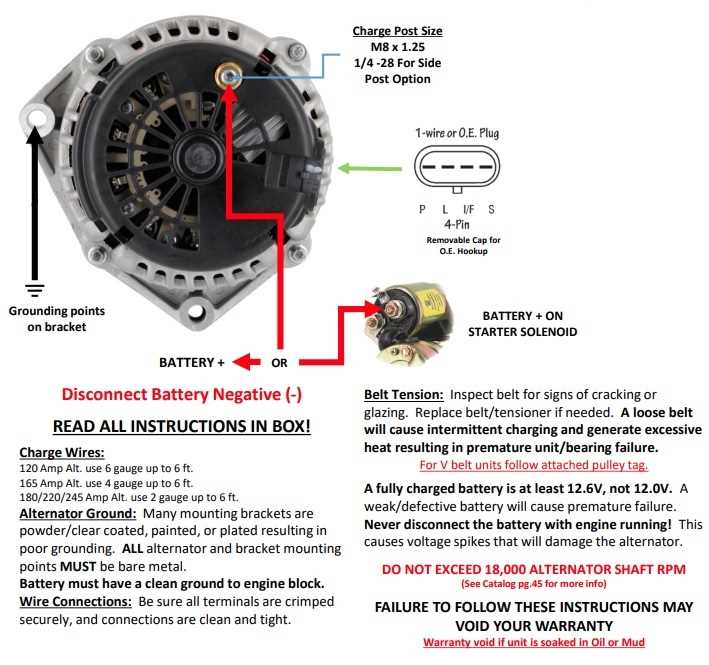
Check the main charge cable and connector terminals before reconnecting the generator unit on any GM vehicle. The heavy output stud normally links directly to the positive post of the vehicle power storage unit through a fusible link or high-amperage fuse. This cable carries the full output current, which can exceed 100–150 amps on many modern models.
The regulator connector usually contains two to four smaller terminals. A common configuration uses L, S, and sometimes F or P. The L terminal connects to the charge indicator lamp on the instrument cluster, allowing the dash light to turn off once voltage rises above the initial level. The S terminal measures system voltage so the internal regulator can maintain around 13.8 to 14.5 volts during engine operation.
The generator housing grounds through the engine block, so a clean mounting surface is required for stable voltage regulation. Corrosion or loose mounting bolts may raise resistance and reduce charging output. A simple voltage check across the storage unit terminals while the engine runs should show roughly 14 V if the generator and regulator operate normally.
A clear connection layout showing the charge cable, ignition feed, sensing lead, and warning lamp path allows quick troubleshooting. Following each path from the generator terminals to the fuse block, ignition switch, and dashboard indicator helps locate faults such as a broken fusible link, disconnected regulator plug, or damaged harness section.
Chevrolet Alternator Wiring Diagram With Terminal Identification and Charge Circuit Layout
Locate the output stud on the generator unit and connect the heavy charge cable directly to the positive terminal of the vehicle power storage unit through a fusible link. This cable carries the full charging current and must use thick gauge wire, usually 6–8 AWG on many GM trucks and passenger cars.
The regulator plug normally contains several smaller terminals that control the generator and monitor voltage. Typical terminal letters include:
- BAT – main output terminal connected to the battery positive cable
- L – charge warning lamp connection on the dashboard
- S – voltage sensing line connected to the power distribution point
- F – field control signal used on some older GM units
- P – pulse output used for tachometer signals on certain models
The sensing line plays a major role in voltage regulation. The S terminal measures system voltage and sends feedback to the internal regulator. If this line disconnects or develops resistance, system voltage may rise above 15 volts or fall below the normal charging range.
The typical charge path can be traced through the following sequence:
- Generator output stud sends current through a fusible link.
- The cable connects to the battery positive terminal or main fuse block.
- Voltage spreads through the vehicle power distribution system.
- The sensing lead monitors this voltage and adjusts field current.
Low charging output often results from loose connections, corroded terminals, or a damaged fusible link in the main cable. Measuring voltage at the battery with the engine running should show roughly 13.8–14.5 volts. Values outside this range indicate problems in the generator unit, regulator, or connection path.
GM alternator terminal connections including BAT L S and F on Chevrolet vehicles
Identify each terminal on the GM generator housing before connecting the harness plug. The large output stud marked BAT carries the main charging current. A thick cable connects this point to the positive post of the vehicle power storage unit or to the main distribution block through a fusible link rated around 80–150 amps depending on vehicle model.
The L terminal links to the charge warning lamp located in the instrument cluster. When the ignition switch turns on and the engine is not running, current flows through the lamp and into the regulator. Once the generator begins producing voltage, the potential difference disappears and the dashboard indicator turns off.
S terminal voltage sensing connection
The S terminal measures system voltage at a distribution point rather than inside the generator housing. This line usually connects to the fuse block or directly to the battery positive node. The regulator uses this signal to maintain charging voltage near 13.8–14.5 volts. A loose or corroded sensing lead can cause unstable voltage levels.
Some older GM designs include an F terminal used for field monitoring. This connection allows diagnostic equipment or engine control modules to observe the field current that controls rotor magnetism. Not every unit uses this pin, and many modern versions rely on internal regulator control without an external field signal.
Typical connection layout on many GM vehicles
The harness plug usually contains two to four small conductors while the heavy charge cable attaches to the BAT stud. The normal layout places the sensing lead and indicator lamp line in the connector while the main output cable routes directly to the battery terminal through a protective fusible link.
Incorrect terminal placement may cause the charge indicator lamp to stay illuminated or produce low charging voltage. Checking each connection against the terminal letters stamped on the generator housing helps restore normal operation.