For reliable network performance, follow the T568B sequence: white-orange, orange, white-green, blue, white-blue, green, white-brown, brown. This arrangement minimizes crosstalk and maintains signal integrity over 100-meter runs.
Twist pairs tightly: each color-coded pair should remain twisted as close to the termination point as possible. Untwisting more than half an inch can increase interference and reduce data throughput.
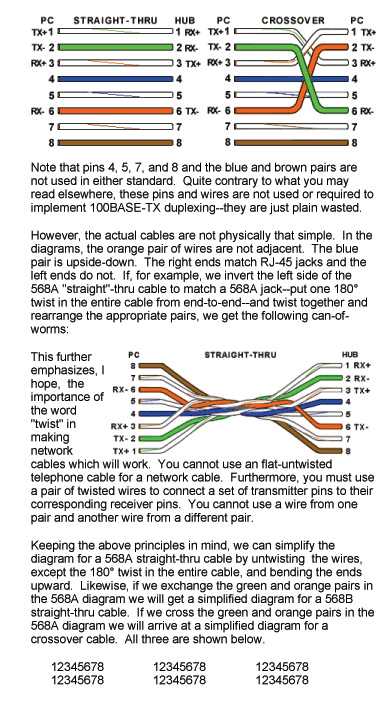
Maintain consistent pin assignments: when terminating connectors on both ends, ensure the same scheme is used. Mixing sequences can lead to connection failures and erratic performance in gigabit systems.
Check continuity and signal quality: using a tester to verify each line after installation prevents troubleshooting headaches. Look for shorts, opens, or misaligned pairs before finalizing wall plates or patch panels.
Keep cable runs separate from electrical lines: electromagnetic interference from power cables can degrade signal quality. Maintain at least a 12-inch separation or use shielded pathways in tight spaces.
Cat 5a Configuration Layout
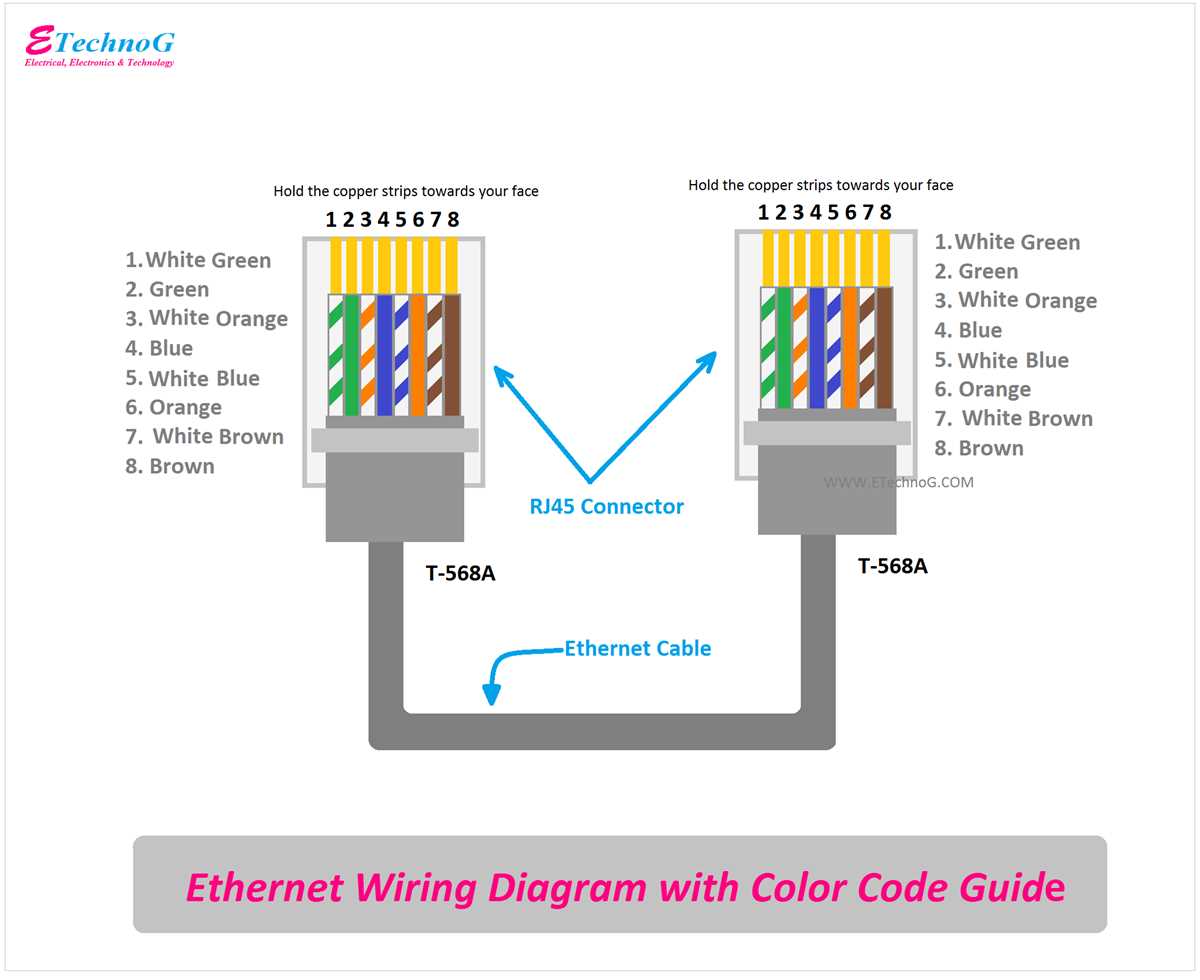
Use the T568B sequence for standard connections: white-orange, orange, white-green, blue, white-blue, green, white-brown, brown. This ensures compatibility with most network equipment.
Maintain consistent twisting of each pair up to the termination point. Excess untwisting beyond 0.5 inches can increase interference and reduce signal quality.
- White-Orange & Orange: transmit data
- White-Green & Green: receive data
- Blue & White-Blue: optional for Power over Ethernet
- White-Brown & Brown: reserved for future use or additional channels
Patch panels should follow the same color scheme on both ends. Label each port to avoid confusion during maintenance or expansion.
Termination Tips
Ensure connectors are fully seated with no copper strands outside the plug. Use a quality crimping tool for reliable contact.
Measure cable length carefully. Exceeding 100 meters can cause packet loss; split longer runs with a switch or repeater.
Test continuity and pair integrity with a cable tester. Identify miswiring, crosstalk, and shorts before installation is finalized.
Step-by-Step Guide to Terminating Cat 5a Cables
Trim the outer jacket with a precision cutter to expose about 1 inch of the inner conductors, ensuring no insulation is nicked. Keep the twist in each pair as tight as possible up to the termination point to reduce interference.
Arrange the eight internal strands according to the T568B standard sequence: white-orange, orange, white-green, blue, white-blue, green, white-brown, brown. Flatten the bundle to make insertion into the connector easier.
Check the connector orientation. Insert the prepared strands fully into an RJ45 plug until each wire reaches the front, confirming no strand is left short. A proper insertion prevents cross-talk and improves signal integrity.
Use a ratcheting crimper to compress the plug firmly. Apply consistent pressure until the locking tab clicks. Inspect visually to ensure metal pins pierce the insulation of each conductor evenly.
Repeat the process on the opposite end if creating a patch cable. Maintain identical pair sequencing to avoid miscommunication between devices and ensure full gigabit speed.
Test the terminated cable with a cable tester to verify continuity, pair alignment, and detect any short circuits. Identify and re-crimp any faulty connections before deployment.
Label each end with a color-coded or numbered tag for quick identification. Proper marking helps prevent network confusion in racks and wall outlets during installation or future maintenance.