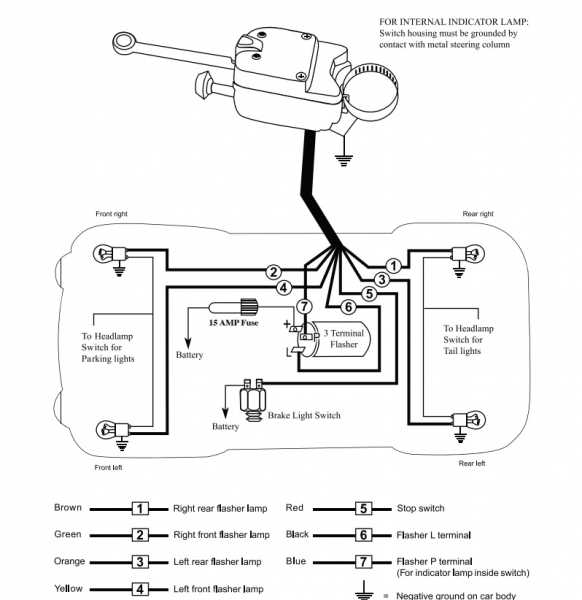
Locate the flasher relay inside the dashboard fuse panel and confirm the 12-volt supply before tracing the signaling system. This relay interrupts power at a steady interval, usually between 60 and 120 flashes per minute, which produces the familiar blinking pattern on the left or right signal lamps.
Trace the power path from the battery through a 10–15 amp fuse toward the steering column control lever. When the lever moves to the left or right position, it directs the pulsed current from the relay toward the selected side lamps. Each side normally feeds two lights: one at the front and another at the rear.
Check grounding points near each lamp housing. A poor ground connection raises resistance and causes dim light output or irregular blinking speed. Attach the ground lead to a clean metal surface on the body frame and verify continuity with a multimeter reading close to 0 ohms.
Observe conductor colors while inspecting the signal system harness. Many manufacturers use green or yellow conductors for left side lamps and light green or brown for the opposite side. Following these color paths helps identify connections between the relay unit, steering column control lever, and the lamp assemblies.
Car Indicator Circuit Diagram Showing Flasher Relay Turn Signal Switch and Lamp Layout
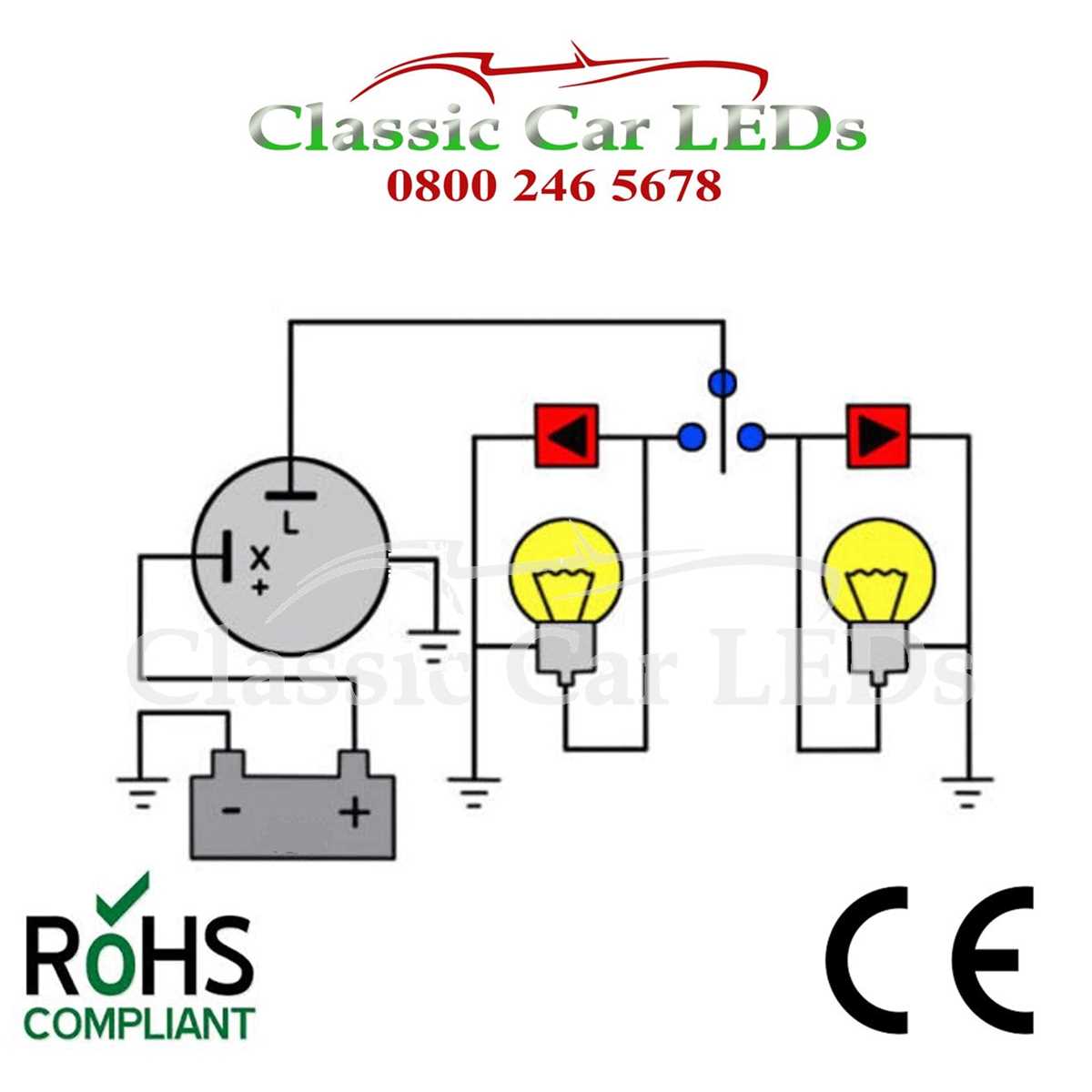
Connect the flasher relay output terminal to the steering column signal lever so that pulsed 12-volt power reaches the selected side lamps. A typical relay unit uses three terminals labeled B (battery feed), L (load output), and E or G (ground). The battery feed receives voltage through a fused line rated around 10–15 amps.
The signal lever distributes the blinking current toward either the left or right lamp group. Inside the steering column assembly, movable contacts redirect the relay output depending on lever position. Each side normally powers two lamps placed at opposite ends of the automobile body.
Relay and signal lever connection order
- Battery positive → fuse → relay terminal B
- Relay terminal L → steering column signal lever input
- Lever left output → front and rear lamps on left side
- Lever right output → front and rear lamps on right side
- Ground leads from lamp housings → metal body frame
Inspect lamp wattage before connecting conductors. Many signal lamps use 21-watt bulbs, which determine the blinking rate produced by the relay unit. If one lamp burns out, the reduced load changes relay timing and causes rapid flashing, a common diagnostic sign during troubleshooting.
Identifying Flasher Relay Terminals and Power Supply Path in Car Indicator Circuit
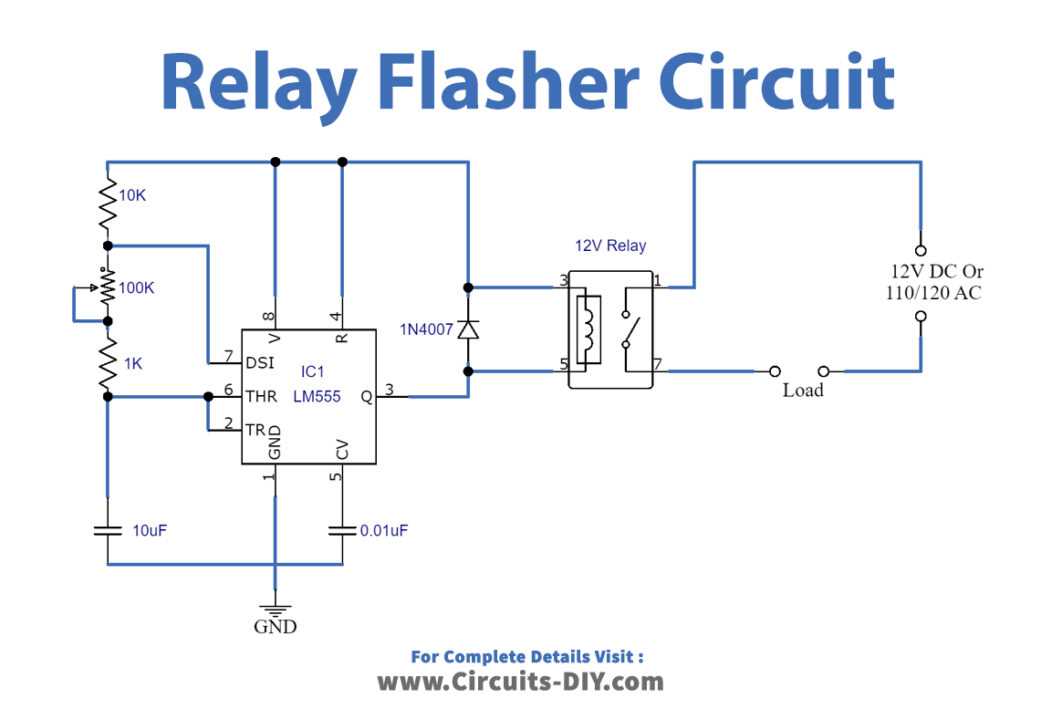
Locate the flasher relay inside the fuse panel and read the terminal markings before tracing the power route. Most relay units include three pins labeled B, L, and E or G. The B terminal receives constant 12-volt supply through a dedicated fuse, the L terminal sends pulsed voltage toward the steering column signal lever, and the E or G terminal connects to chassis ground. Confirm the battery feed with a multimeter; the B pin should show about 12–12.6 volts with ignition power active.
Tracing the supply route
Follow the electrical path beginning at the battery positive terminal, continuing through a 10–15 amp fuse, and then into the relay input pin. From the relay output, the blinking current travels through the steering column control lever and splits toward left or right lamp assemblies. Each lamp housing grounds directly to the metal body structure, completing the electrical loop that produces the flashing signal pattern.