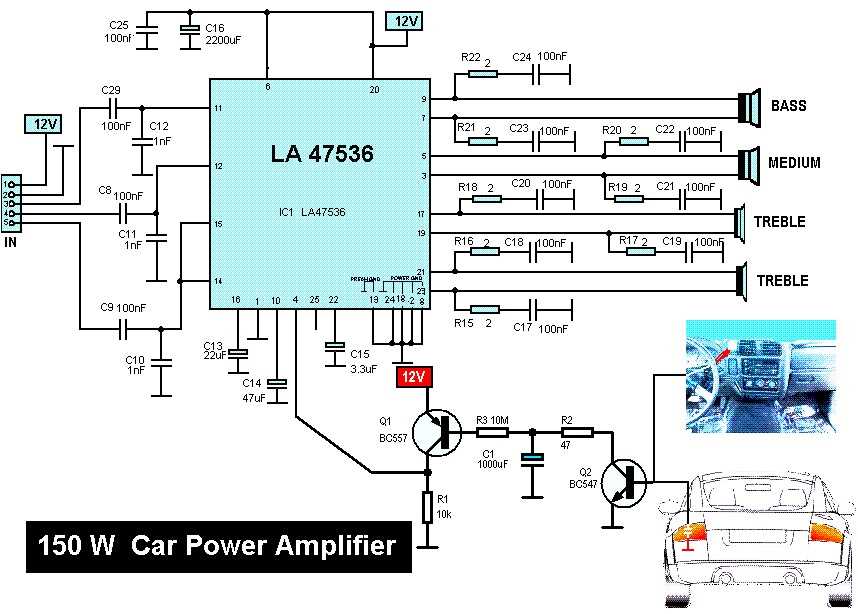
Use low-resistance wiring rated at least 14 AWG for signal and power connections to maintain stable voltage and prevent overheating. Choose capacitors with a voltage rating 25–30% higher than your system’s supply to handle transient spikes without degradation.
Select transistors and MOSFETs with a continuous current rating exceeding the peak output by 20–30%. Heat sinks with thermal conductivity above 150 W/m·K will prevent thermal throttling during extended high-volume playback.
Position the preamp module close to the source unit to reduce signal loss and minimize interference. Twisted-pair wiring for input lines can suppress electromagnetic noise and maintain clarity in bass frequencies below 80 Hz.
Use a regulated DC supply with low ripple voltage, ideally below 50 mV, to ensure steady operation. Fuse both input and output terminals according to the manufacturer’s recommendations to protect sensitive components from overcurrent events.
Test the layout on a breadboard or prototype board before final installation. Measure idle current and thermal drift to verify stability under different ambient temperatures and voltage variations.
Vehicle Sound Booster Layout
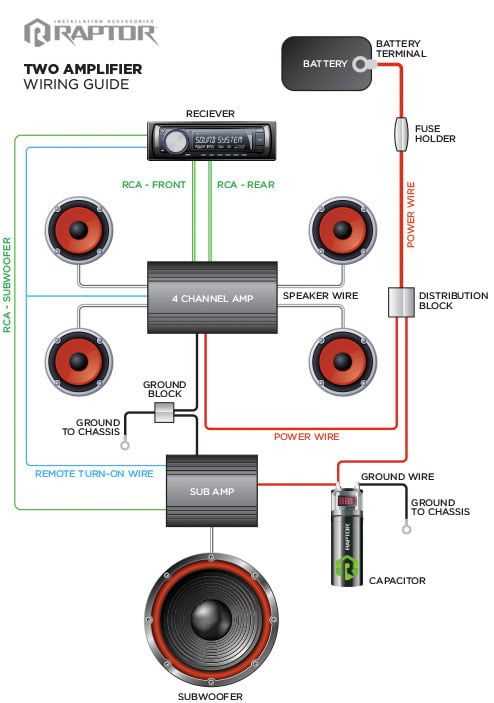
Connect power rails using copper bus bars with a cross-section of at least 10 mm² to minimize voltage drops. Place decoupling capacitors near each active stage: 470 μF electrolytic for low frequencies, 0.1 μF ceramic for high-frequency stabilization. Use shielded input lines to prevent interference from ignition coils or LED lighting.
Follow a modular assembly approach for signal pre-processing and output stages:
- Input filtering using 12 dB/octave RC networks at 20 Hz and 20 kHz.
- Gain adjustment via multi-turn trimmers for precise calibration.
- Output transistors mounted on aluminum heat sinks with thermal paste for optimal dissipation.
- Fuse placement: 10 A on input, 15 A on output rails.
Perform bench testing at 14.4 V with dummy loads to measure idle current, THD under 1%, and verify that thermal rise stays below 60°C after 30 minutes of continuous operation.
Selecting Components for Stable Audio Boosters
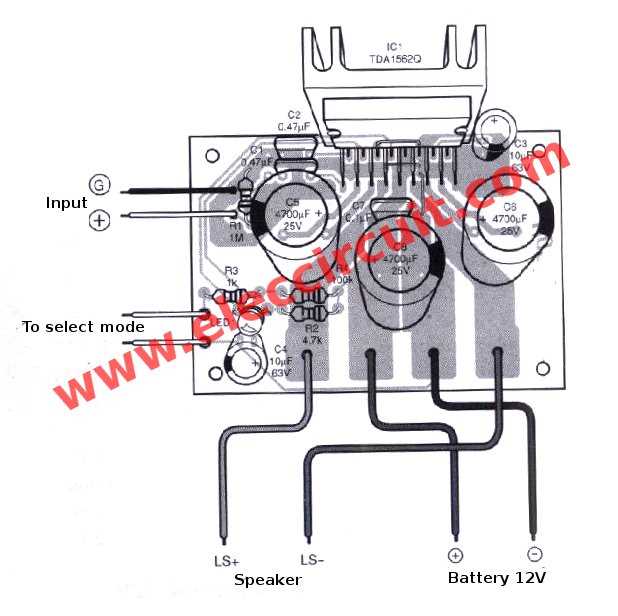
Use MOSFETs with Rds(on) below 20 mΩ and voltage rating at least 30% higher than the supply to reduce conduction losses. Electrolytic capacitors with low ESR under 0.05 Ω improve low-frequency response and prevent voltage sag under heavy load. Resistors should have 1% tolerance to maintain signal accuracy, especially in gain and feedback networks.
Choose toroidal transformers with current capacity exceeding peak demand by 25%, paired with rectifiers rated for 1.5 times maximum output. Film capacitors in input stages reduce high-frequency distortion. Thermal sensors on output transistors allow controlled shutdown if heat exceeds 75°C, ensuring long-term stability and reliability under continuous high-output operation.