Use a lamp indicator symbol to show where visual light output occurs within an electrical schematic. This mark usually appears as a small circle containing a filament shape or a cross, connected between conductive lines that deliver electrical potential. Place it where a lighting element consumes power so readers instantly understand that electrical energy converts into visible radiation at that point.
In practical drawings, the symbol often sits between a power source and a switching component. A common configuration connects the lighting element to a manual switch and a voltage supply line, allowing the glowing element to activate when the contact closes. For example, a 12-volt source paired with a miniature incandescent lamp rated at 0.1–0.3 A helps demonstrate current flow without complex loads.
Technical drafts typically represent the lighting device with a circular outline roughly the same size as other load symbols to maintain visual balance across the schematic. Designers frequently annotate it with parameters such as rated voltage, wattage, or current draw. A small 5 W element connected to a 230 V supply draws about 0.022 A, a figure often written beside the mark to prevent misinterpretation during assembly or troubleshooting.
When multiple lighting elements appear in one schematic, label them sequentially (L1, L2, L3) and align them along the main conductor path. This layout allows technicians to trace energy flow quickly and identify which glowing indicator corresponds to a specific stage of the electrical system.
Lamp Symbol in an Electrical Schematic
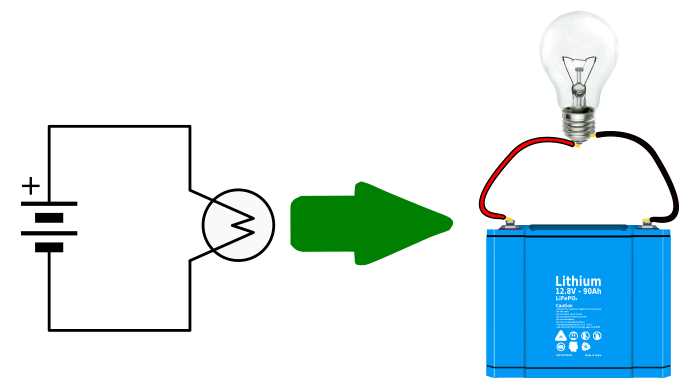
Place the lamp symbol as a load between the power source and the return path, using a circle with a small cross inside to mark the lighting element. Connect one terminal to the positive supply line and the second terminal to the path leading toward ground or the neutral conductor. Label the voltage rating near the symbol (for example 12 V, 24 V, or 230 V) and add the expected current draw when the filament operates at nominal temperature; a common 60 W household lamp connected to 230 V draws roughly 0.26 A.
Use the lighting element marker to represent resistive illumination loads in training schematics, prototyping boards, and troubleshooting sheets. The symbol usually consists of a circle with an “X” indicating a glowing filament; some technical drawings replace the cross with a curved filament line when showing incandescent devices specifically. Position the symbol along the conductive path where energy conversion occurs, not near the supply symbol, to keep the power flow readable. When multiple lamps appear, assign identifiers such as L1, L2, and L3 and show switching components directly before each load so the control logic becomes clear. For example, a simple lighting branch may include a supply node, a single-pole switch, the lamp marker, and the return conductor. In a 12 V automotive layout, a typical dashboard indicator may draw 100–200 mA, while a 21 W signal lamp pulls about 1.75 A; writing these values next to the symbol speeds fault tracing and fuse selection. Consistent spacing, straight conductor lines, and clear node intersections prevent misreading during assembly or diagnostics.
Lamp Symbol in Standard Electrical Schematics: Shape and Identification Tips
Recognize the lamp mark by locating a small circle containing a cross (two thin lines forming an “X”). This graphic sign indicates a light-emitting load connected to a power path. The circle represents the glass envelope, while the crossed lines denote the glowing filament. In most engineering drawings the element appears inline with conductors, showing that current must pass through the light source before continuing to the next component.
Typical Visual Structure
The appearance follows a few consistent drafting rules used across IEC and many educational schematics.
- A perfect circle roughly the same size as nearby component symbols.
- An “X” or crossed pair of straight lines centered inside the circle.
- Two connection points placed opposite each other on the circle’s edge.
- Conductive lines attached directly to those terminals.
- Sometimes a reference label such as L1 or LT1 placed beside the symbol.
Distinguish this mark from similar circular graphics by examining the interior pattern. Motors usually contain the letter “M,” measuring instruments often display letters or needle shapes, while indicator LEDs may include arrows pointing outward. The crossed-line interior remains the fastest visual cue for identifying a classic incandescent light source in technical drawings used in training manuals and industrial documentation.
Practical Recognition Techniques
Scan the schematic page systematically from the power source toward loads and look for circular elements connected directly in the current path. Confirm identification using these checks:
- Verify two terminals only; additional pins suggest another device.
- Look for placement near switches or control relays that activate lighting.
- Check the component label list where entries like “Lamp,” “Indicator,” or “Pilot light” appear.
- Observe whether several identical symbols appear in parallel branches for multiple light points.
Drafting conventions keep this representation stable across textbooks, factory documentation, and training schematics. Once the circle with a centered cross becomes familiar, spotting lighting elements in complex electrical layouts becomes quick and reliable, even within dense multi-page technical drawings.