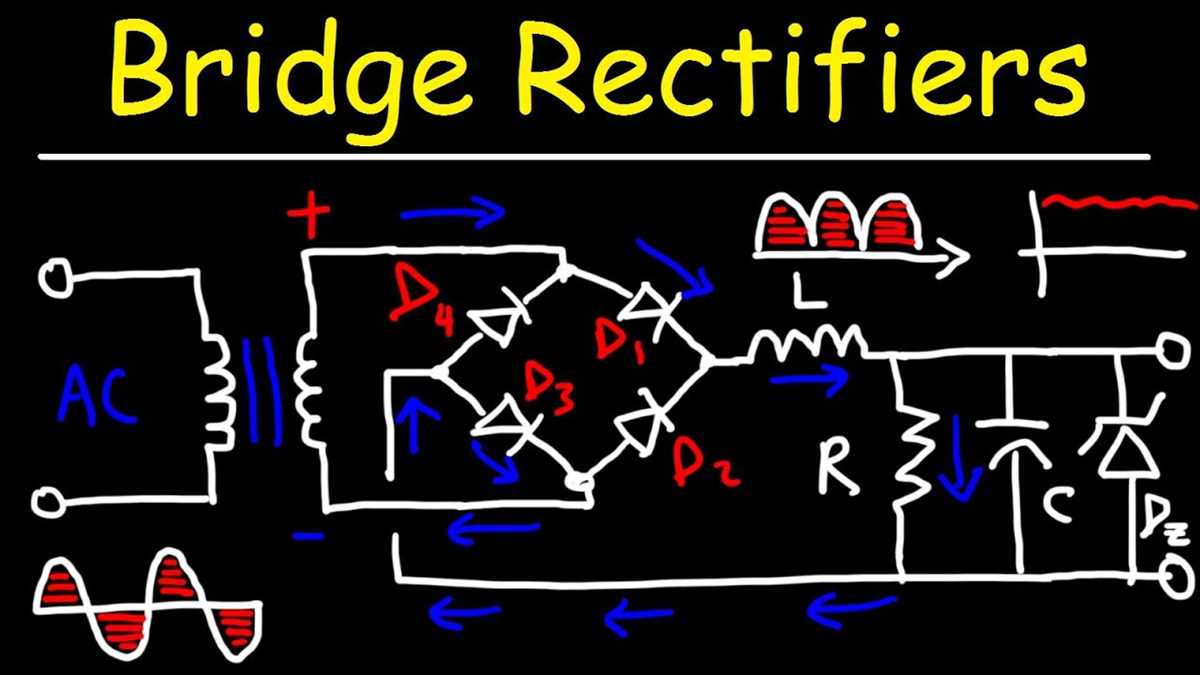
Connect the four diodes in a square configuration to form a full-wave conversion module. Ensure each diode is rated for the maximum input voltage and current expected in the application.
Attach the AC input lines to opposite corners of the module. Double-check polarity markings on the diodes to prevent reverse current and potential damage.
Add a capacitor across the output terminals to smooth voltage fluctuations. Select capacitance according to the load current and desired ripple voltage, typically between 470µF and 4700µF for small to medium projects.
Use insulated wires and secure all connections with solder or screw terminals. Loose contacts can create voltage spikes and inconsistent performance.
Test the module by applying AC supply and measuring DC output with a multimeter. Observe the voltage under no-load and full-load conditions to confirm stability and identify any adjustment needs.
Full-Wave Conversion for Stable DC Power
Connect four diodes in a square formation to convert alternating current into direct current. Verify the voltage and current ratings of each diode to match the input supply and load requirements, preventing overheating or failure.
Smoothing Output with Capacitors
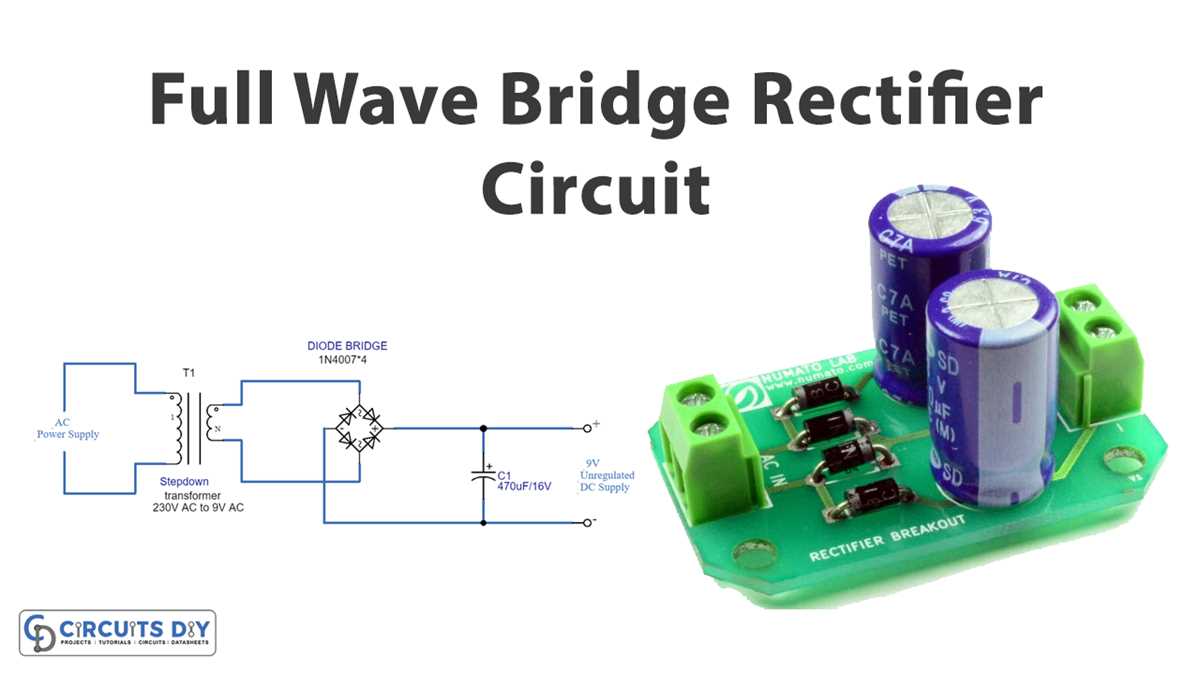
Add an electrolytic capacitor across the output terminals to reduce voltage ripples. Choose capacitance based on load current and acceptable ripple level, generally ranging from 470µF to 4700µF for low to medium power devices.
Test the assembly under actual load conditions. Measure DC voltage at the output using a multimeter and ensure consistent readings. Adjust capacitor values if the voltage shows excessive fluctuation to maintain steady performance.
Selecting Components for the Rectifier and Filter
Choose four diodes rated for at least 1.5 times the peak AC voltage of your power source. Ensure the forward current rating meets or exceeds the maximum load current to avoid overheating and premature failure.
For low-voltage applications, Schottky diodes can be used to minimize voltage drop and increase efficiency. Check reverse voltage ratings carefully to prevent breakdown under high input voltage.
Use an electrolytic capacitor across the output terminals to smooth the DC supply. Select capacitance based on ripple voltage limits; higher capacitance reduces ripple but increases inrush current at startup.
Consider capacitor voltage rating at least 25% above the expected DC output to handle voltage spikes safely. Temperature ratings of 85°C or higher increase longevity in warmer operating conditions.
- For small electronics: 470µF to 1000µF at 25V–50V
- For medium loads: 2200µF to 4700µF at 50V–100V
- For high loads: 6800µF to 10000µF at 100V–200V
Use short, thick wires for connections to reduce resistance and voltage drops. Solder joints should be clean and secure to prevent intermittent connections and sparks.
Consider adding a small ceramic capacitor parallel to the electrolytic to suppress high-frequency noise. Values between 0.01µF and 0.1µF are common for most electronics projects.
Always test each component individually before full assembly. Measure forward voltage drops of diodes and capacitance of smoothing elements to confirm ratings meet design expectations and ensure stable DC output.