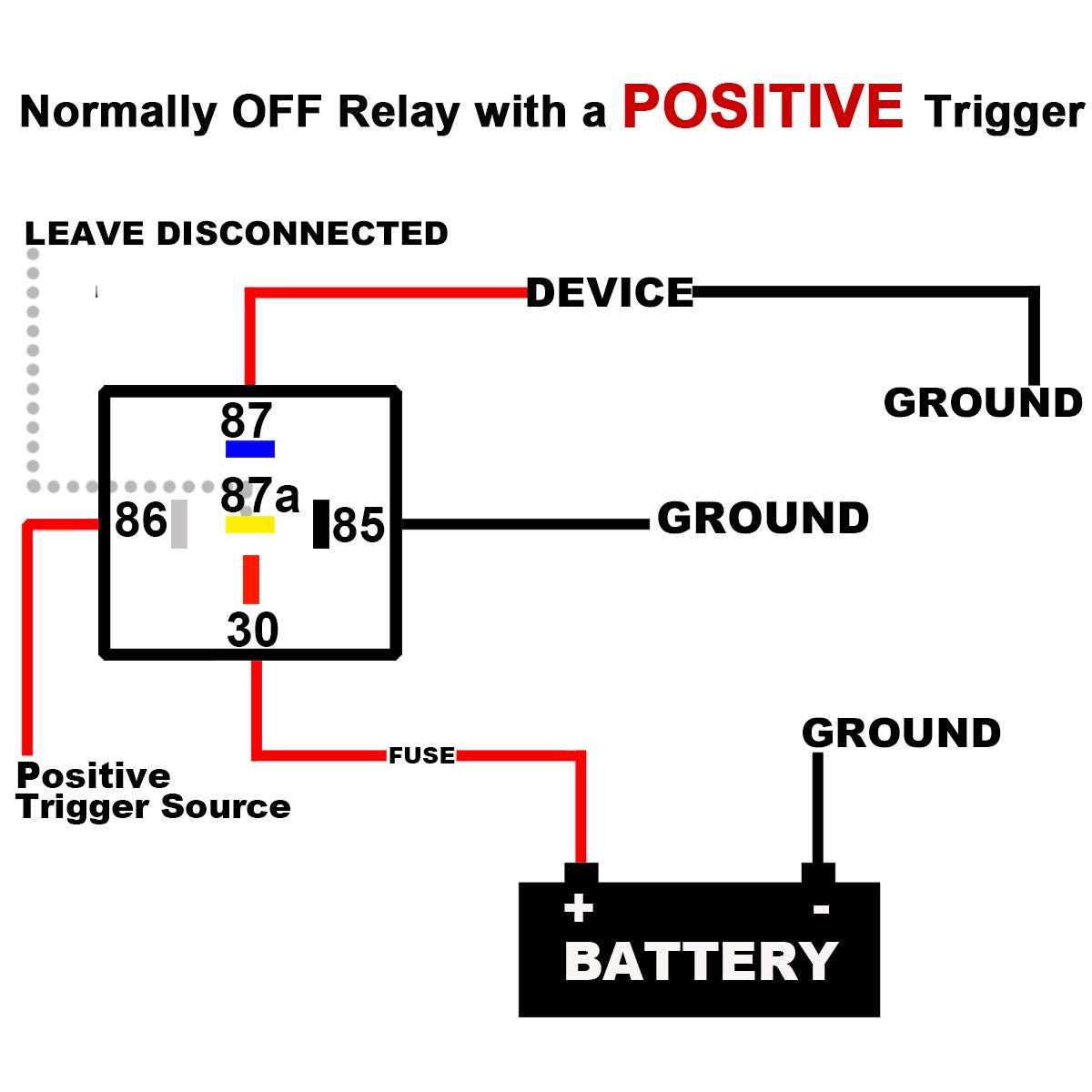
Use a 12-volt control module to handle high-current loads safely and prevent direct strain on manual switches. Connect the coil terminals to a fused power source and a control signal to ensure proper actuation under all conditions.
Identify each terminal by labeling the input, output, and coil sides. Typically, two small pins control the magnetic field while two larger pins manage the current to the device. Misplacing connections can result in blown fuses or unresponsive circuits.
Maintain solid grounding for the return path to stabilize operation. Any resistance in the ground line may cause intermittent engagement or failure of the device. Always test continuity before final installation to avoid troubleshooting after assembly.
Automotive Relay Connection Guide
Connect the control coil directly to a switched 12-volt source and ground. Ensure the positive lead passes through a properly rated fuse to prevent overcurrent damage, while the negative lead maintains a secure connection to the chassis or battery negative terminal.
Identify the load terminals before attaching high-current lines. Typically, these pins handle 20–40 amps and should be connected with appropriately thick cables to avoid voltage drop and heat buildup during operation.
Use a multimeter to verify continuity across coil pins and between the normally open contacts. This check confirms correct orientation and prevents accidental short circuits that could damage electrical components.
Route control and power lines separately to minimize electromagnetic interference. Keep at least 6 inches of separation between coil leads and high-current paths to prevent unintended actuation or signal noise affecting sensitive electronics.
Apply dielectric grease to the terminal ends before insertion. This prevents oxidation and maintains low resistance connections, especially in humid or salty environments that could accelerate corrosion and contact failure.
Secure the module with a mounting bracket or clip to reduce vibration stress. Avoid loose placement near heat sources like the exhaust manifold, as elevated temperatures can degrade internal components and shorten operational lifespan.
Test the circuit by applying the control voltage and monitoring the load device. Confirm that engagement is immediate and that the coil does not heat excessively under continuous operation, adjusting connections or cable gauge if anomalies are detected.
Understanding Terminal Layouts and Coil Activation
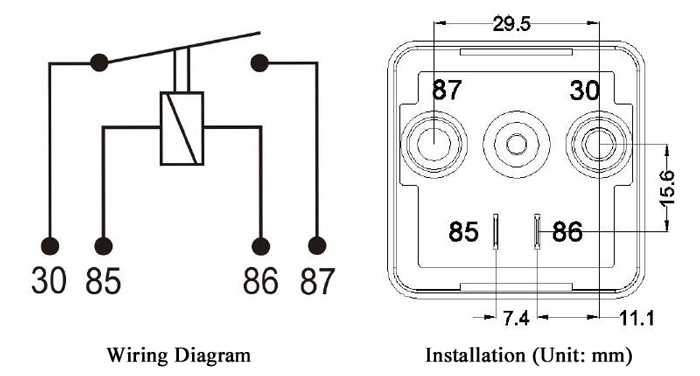
Attach the control pins to a regulated voltage and ground, confirming correct polarity. Incorrect connections can prevent the internal switch from engaging or cause arcing, so test leads with a multimeter before full current application.
Locate the load terminals by their size and markings. Thicker contacts usually indicate higher current capacity, and terminals should be secured with crimped or soldered connections to prevent voltage drops under load.
Trigger the coil briefly to verify mechanical engagement. Listen for the audible click and measure continuity between moving and stationary contacts to confirm that the circuit closes reliably without resistance or delay.
Organize high-current and control circuits separately to avoid interference. Keep terminals insulated and shielded from metal surfaces, and route leads to minimize vibration and accidental shorts, ensuring consistent performance under operating conditions.