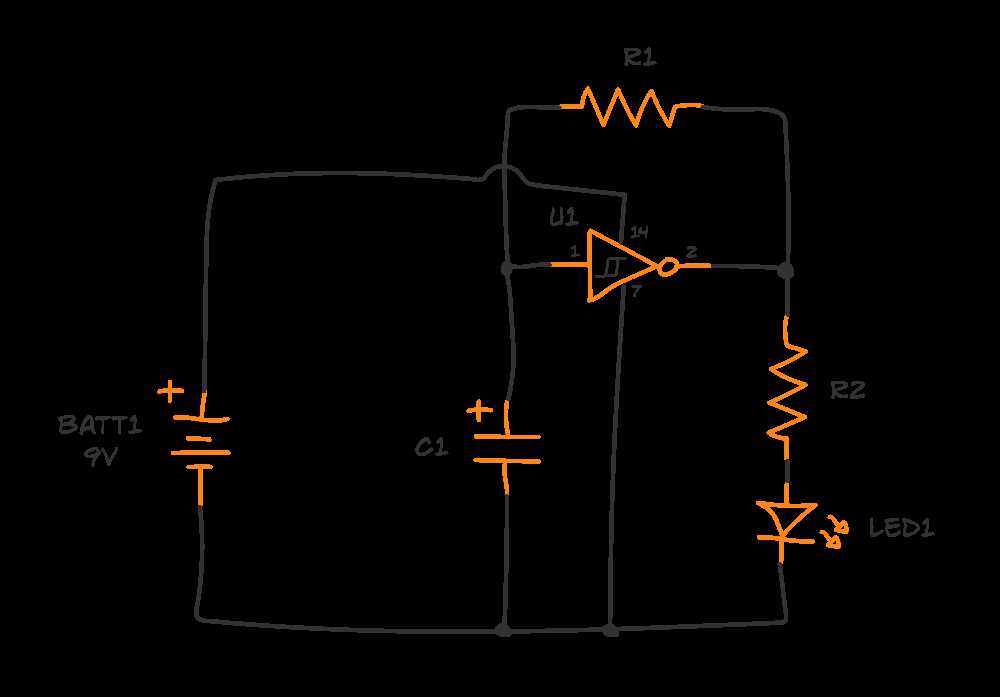
Connect the input signals to the gate terminals according to the truth table required by the logic function. A logic gate that performs conjunction produces a high output only when both input lines carry a high signal. A gate performing disjunction produces a high output whenever at least one input line carries a high signal. Correct placement of each input lead determines the final output state.
In digital electronics, these gates usually operate with standardized voltage levels. In TTL systems, a logical high typically appears near 5 volts while a logical low remains close to 0 volts. CMOS families often operate between 3.3 and 5 volts depending on the device series. Input pins must never remain floating; unused inputs should connect to a defined high or low level through pull-up or pull-down resistors.
A simple logic layout may combine a conjunction gate feeding into a disjunction gate to produce compound Boolean expressions. For example, two sensors may feed the first gate so that both conditions must be true before sending a signal forward. The output from that stage may then join another signal through the second gate. This structure allows multiple conditions to control a single output line.
Stable operation also depends on correct power supply placement. Each integrated gate package requires a Vcc pin connected to the positive supply rail plus a ground pin tied to the reference potential. Short traces between the chip and the power source reduce noise or unintended switching during rapid signal transitions.
AND OR Logic Circuit Diagram With Input Output Connections and Gate Layout
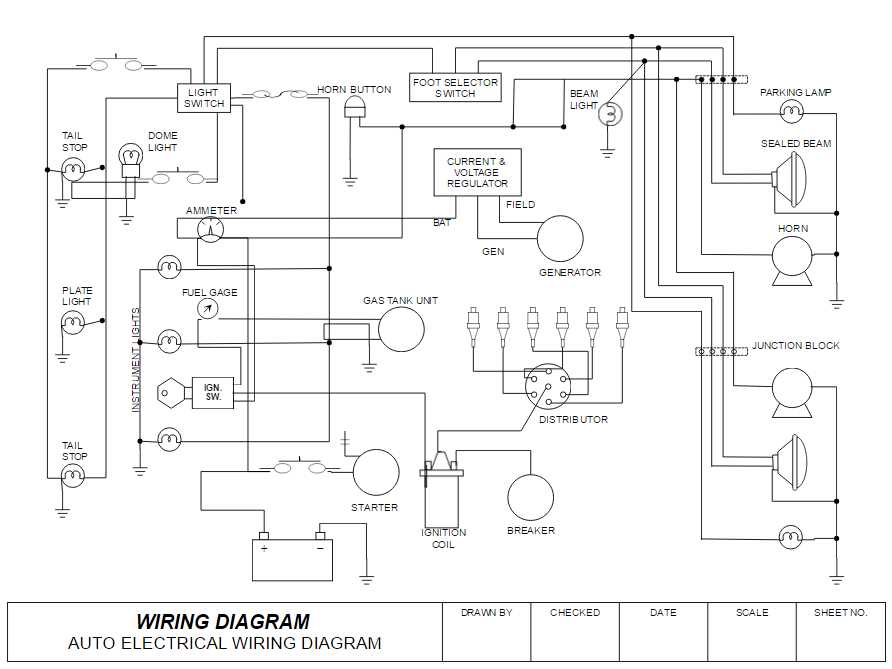
Connect input signal lines to the gate terminals according to the Boolean expression required by the control logic. A conjunction gate produces a high output only when both input lines carry a high state. A disjunction gate produces a high output when at least one input line carries a high state. Output from one gate may feed another stage to create compound logic behavior.
Typical gate connection layout
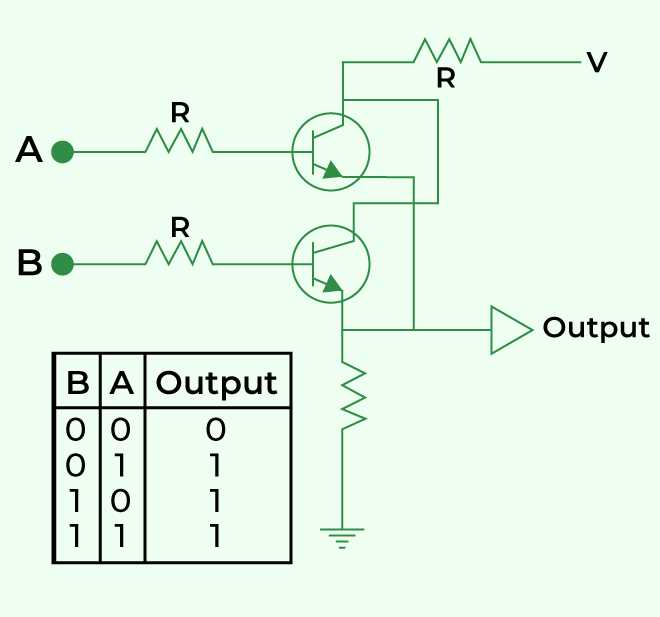
Digital gate packages often contain multiple logic elements within a single integrated chip. For example, a 7408 device contains four conjunction gates while a 7432 device contains four disjunction gates. Each gate contains two input pins plus one output pin. Supply pins must connect to the power rail and ground.
- Input A → first gate input terminal
- Input B → second gate input terminal
- Gate output → next logic stage or indicator device
- Vcc pin → positive supply rail
- Ground pin → reference ground
Signal flow between gates
Multiple logic stages can combine to implement compound Boolean expressions. A common arrangement routes two sensor signals into a conjunction gate, then feeds that output into a disjunction gate together with another signal. This structure produces a high output when the first pair of signals are both high or when the third signal alone becomes high.
- Input signals arrive from switches, sensors, or microcontroller outputs
- First logic stage processes the initial Boolean condition
- Output from that stage feeds the next gate input
- Final output drives an LED indicator, relay driver, or digital input
Short connections between chips reduce noise pickup during rapid switching. Each integrated device should include a small bypass capacitor between the supply rail and ground near the package pins to stabilize voltage during switching transitions.
How to connect AND gate and OR gate in a simple digital logic circuit
Route the input signals from switches or sensors to the input pins of a conjunction gate, then connect the output pin of that gate to one input of a disjunction gate. The remaining input of the disjunction gate receives another signal line. Supply pins on both integrated devices must connect to the positive voltage rail and ground reference so that the logic elements operate with stable voltage levels.
Typical implementation uses TTL devices such as a 7408 chip for the conjunction function and a 7432 chip for the disjunction function. Input lines attach to the gate pins through direct connections or through pull-up or pull-down resistors when signals originate from mechanical switches. The output of the first gate becomes an input to the second gate, allowing two signals to satisfy a combined condition before merging with an additional input signal. The final output line may drive an LED indicator through a current-limiting resistor, feed another logic stage, or connect to a microcontroller input pin for digital monitoring.