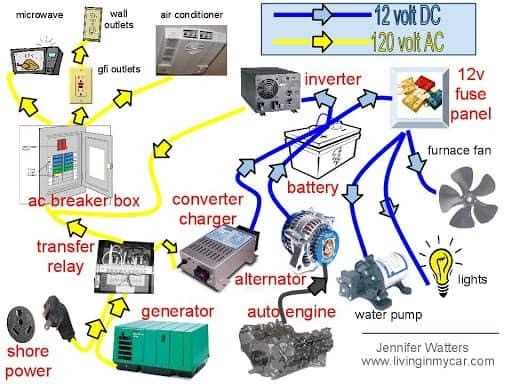
Use a clear connection layout before attaching any conductors to the rooftop cooling unit. A typical vehicle roof climate system runs on 120-volt AC supply delivered through a breaker panel inside the motorhome. Power usually travels through a three-core cable containing a live lead, neutral return, and grounding line. The live lead commonly uses black insulation, neutral appears white, while the protective ground uses green or bare copper. Secure all terminals with ring connectors and tighten screws to manufacturer torque ranges between 12 and 18 in-lb to prevent loose contact and heat buildup.
Thermostat control lines normally carry low voltage signals from the cabin wall controller to the rooftop cooling assembly. Most installations include four to six small-gauge conductors that activate compressor operation, fan speed stages, and temperature sensing. Red typically supplies control power, yellow signals compressor start, and green operates the blower motor. Route these thin conductors separately from high-voltage supply cables; maintain at least 25 mm spacing to reduce electrical interference and simplify troubleshooting.
Compressor startup components require accurate terminal placement. A roof climate module normally uses a run capacitor rated between 35 µF and 55 µF and sometimes a start capacitor paired with a relay. Connect the compressor common terminal to neutral return, attach the run terminal through the capacitor, and link the start terminal through the relay assembly. Misplacing these leads may prevent the motor from rotating or may trigger breaker trips.
Fan motors inside rooftop climate housings usually support two or three speed levels. Each speed tap connects through a selector relay or controller board mounted near the blower housing. Medium and high speed taps must remain isolated from each other; tying them together causes overheating of the motor windings. Label each conductor with heat-resistant markers before closing the shroud so future service work does not require tracing every cable again.
RV Air Conditioner Wiring Diagram for Thermostat Compressor and Fan Connections
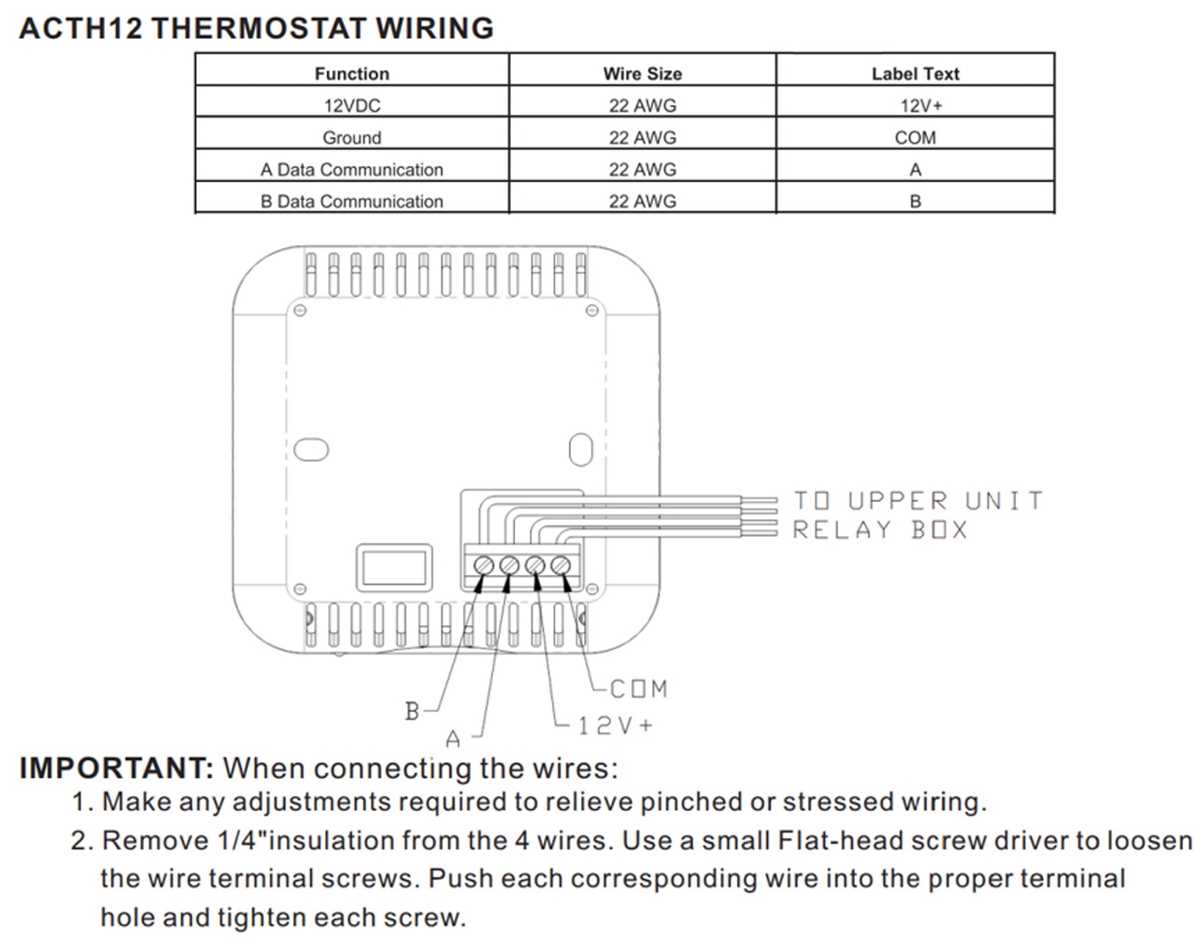
Connect the wall temperature controller to the rooftop cooling assembly using low-voltage control leads with clearly labeled terminals. Most vehicle roof cooling systems operate with a 12-volt control circuit while the compressor and blower rely on 120-volt AC supply. Route the small control conductors through the ceiling chase and attach them to the control board inside the roof unit enclosure. Typical color mapping uses red as control power, yellow as compressor trigger, green as blower activation, and white as furnace or auxiliary signal.
Thermostat Signal Lines
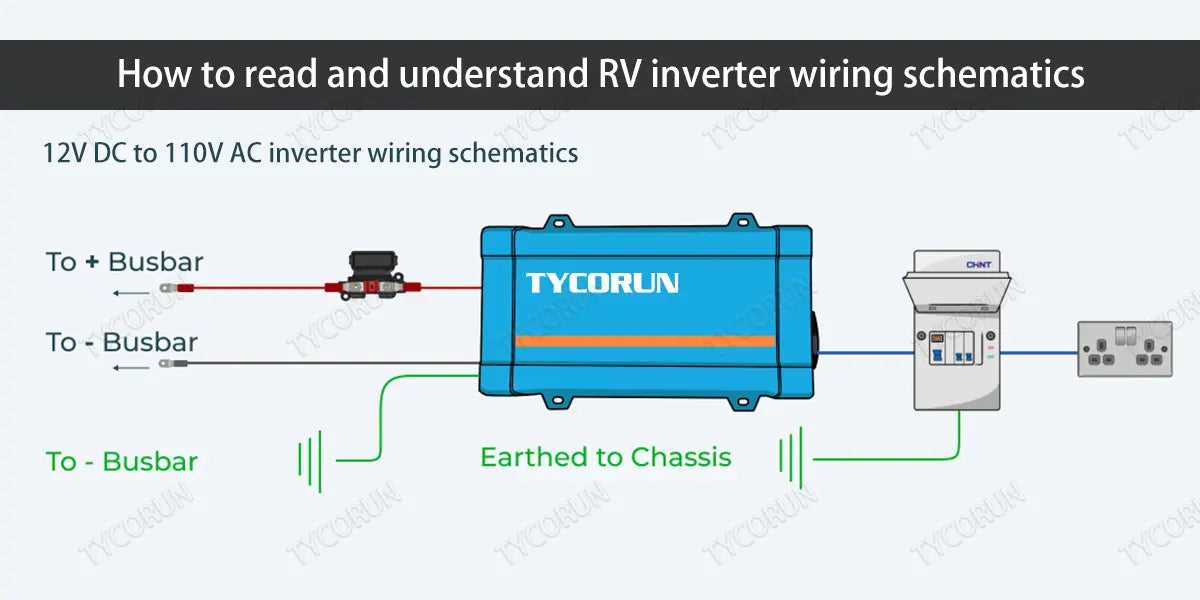
Route each thermostat lead to the correct terminal block inside the rooftop module. Maintain separation between control conductors and high-voltage supply cables by at least 25–30 mm.
- Red lead – 12 V control supply
- Yellow lead – compressor activation
- Green lead – fan motor operation
- Blue or gray – high speed blower selection
- White – heating system signal in combined climate systems
Inside the roof housing, these conductors terminate on a control board that switches relays responsible for starting the compressor and blower motor. Tighten terminal screws between 0.8 and 1.2 Nm. Loose contact produces intermittent compressor cycling and excessive heat at the connection point.
Compressor Electrical Connections
The sealed compressor within the rooftop cooling module uses three terminals labeled common, start, and run. Attach the neutral return line to the common terminal. The run terminal connects through the run capacitor rated typically between 35 µF and 55 µF. The start terminal links through a relay and optional start capacitor ranging from 88 µF to 108 µF. Incorrect placement of these leads prevents proper motor rotation and can trip the breaker inside the vehicle distribution panel.
Install the run capacitor near the compressor bracket using insulated spade connectors. Avoid bending terminals during installation; bent tabs create poor contact surfaces and increased electrical resistance. Mount capacitors vertically so internal dielectric fluid remains distributed across the plates.
The blower assembly usually contains a multi-speed motor with separate taps controlling rotation speed. Each speed tap connects through a relay on the control board.
- Low speed tap connected through blue conductor
- Medium speed tap routed through orange conductor
- High speed tap connected through black conductor
Never combine speed taps together. Doing so causes current feedback through the motor windings and leads to overheating. Verify each conductor path with a multimeter continuity test before restoring power from the vehicle breaker panel.
Secure all harness bundles using nylon clamps along the metal frame of the rooftop housing. Keep conductors away from the rotating blower wheel and compressor shell. Leave at least 20 mm clearance around moving components to prevent insulation abrasion during travel vibration.