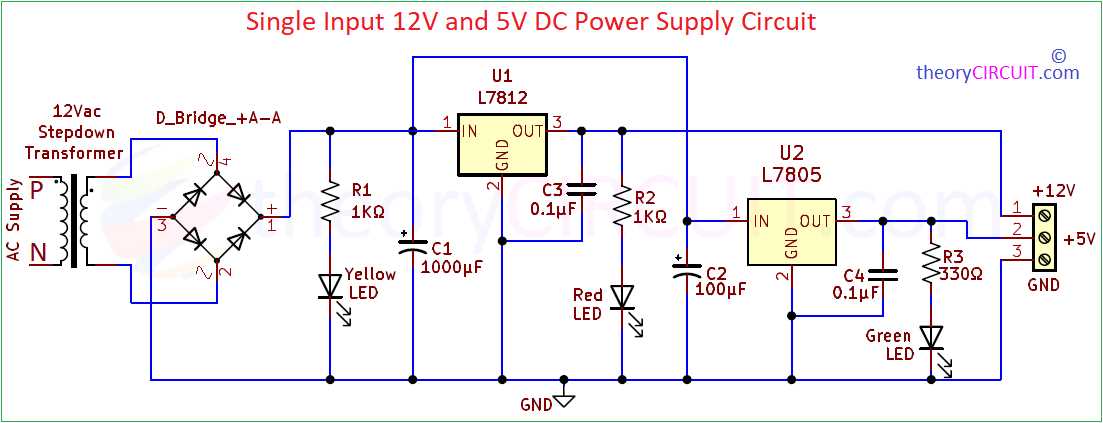
Check the power path first. A low-voltage DC system normally runs from a battery rated around twelve volts, feeding current through a fuse, a control switch, and a load such as an LED lamp, fan, or small motor. Reading the wiring layout becomes much easier once the source, protection element, and return line are identified before examining smaller parts.
Use clear electrical symbols and trace the route of current from the positive terminal through each component and back to the negative terminal. In most small DC setups the flow passes through a fuse rated between 3A and 15A, depending on the device. Lighting lines often draw less than 2A, while compact pumps or automotive accessories may require 5A–10A. Matching wire gauge with expected current prevents overheating; for example, copper wire around 1.0–1.5 mm² suits many light-duty loads.
A clear schematic drawing allows quick identification of switches, resistors, connectors, and grounding points. Parallel connections distribute power to multiple loads such as LED strips, while series placement appears in protection or sensing sections. When troubleshooting, measure voltage between the positive line and ground at each component; a drop that differs from the source rating often indicates a loose connection, damaged conductor, or overloaded device.
Keep layouts simple and labeled. Mark polarity, fuse ratings, and wire colors directly on the drawing. Automotive installations commonly use red for the positive line and black for ground, though color codes may vary. Clear labeling reduces installation errors and speeds up repair work in lighting systems, small solar setups, portable equipment, and vehicle accessories.
12V DC Circuit Diagram with Components Wiring Layout and Practical Examples
Place a fuse directly after the positive terminal of the battery rated near twelve volts. This protective element should match the load current; for LED lighting a 3A fuse often works, while small pumps or automotive accessories may require 7.5A or 10A. Positioning the fuse close to the power source shortens the unprotected wire length and reduces fire risk during a short.
Arrange the wiring layout so the power source connects to a switch before reaching the load. A typical low-voltage system includes a battery, fuse, toggle or rocker switch, copper conductors, and a device such as a fan, LED strip, or small DC motor. Current flows from the positive terminal through protection and control elements, then returns to the negative terminal that acts as ground.
Use copper conductors sized for the expected current. Lighting lines drawing 1–2A usually operate safely with 0.75–1.0 mm² wire. Loads around 8–10A require about 1.5–2.5 mm² conductors. Undersized wiring produces heat and voltage drop, which reduces brightness in lamps or lowers motor speed.
Parallel connections supply multiple devices from the same power source. For example, three LED modules rated at 12 W each can connect to the same positive and ground lines. Each unit receives the same voltage while current divides across branches. Total draw equals the sum of all devices, roughly 3 A for three lamps of that rating.
Series placement appears mostly in control sections. A switch, fuse, and sometimes a relay sit along the main supply line. In automotive lighting setups, the switch activates a relay coil while the relay contacts carry the heavier current toward headlights or auxiliary lamps.
Use a relay rated above the load current when the switch cannot handle high amperage. A small dashboard switch may support only 3A, while a relay with contacts rated at 30A can control larger devices such as compressors or high-power lighting bars without overheating the control switch.
Test each connection with a multimeter. Measure voltage between the positive line and ground at the battery, after the fuse, and at the load terminals. Readings close to the battery value indicate proper wiring, while a drop of more than about 0.5 V across a short run often signals loose connectors or damaged conductors.
Standard Symbols Used in a 12V DC Circuit Diagram for Batteries Switches and Loads
Learn the battery mark first. It appears as two parallel lines of different lengths. The longer line represents the positive terminal, while the shorter line marks the negative side. In low-voltage power drawings this sign identifies the main energy source feeding lights, motors, pumps, and small electronic modules.
Battery and Power Source Marks
Battery representation may include several pairs of long and short lines placed in sequence. Each pair represents a cell of about 2 volts. Six cells connected together produce roughly twelve volts, which explains the stacked appearance used in many technical drawings.
- Single cell mark – one long line and one short line
- Multi-cell battery – repeating long and short lines
- Positive terminal – longer vertical or horizontal line
- Negative terminal – shorter line placed opposite
Ground or return connection appears as three horizontal bars decreasing in width. This symbol marks the point where current returns to the negative side of the battery. Vehicle wiring drawings often connect many devices to a shared ground point attached to the chassis.
Switches and Control Elements
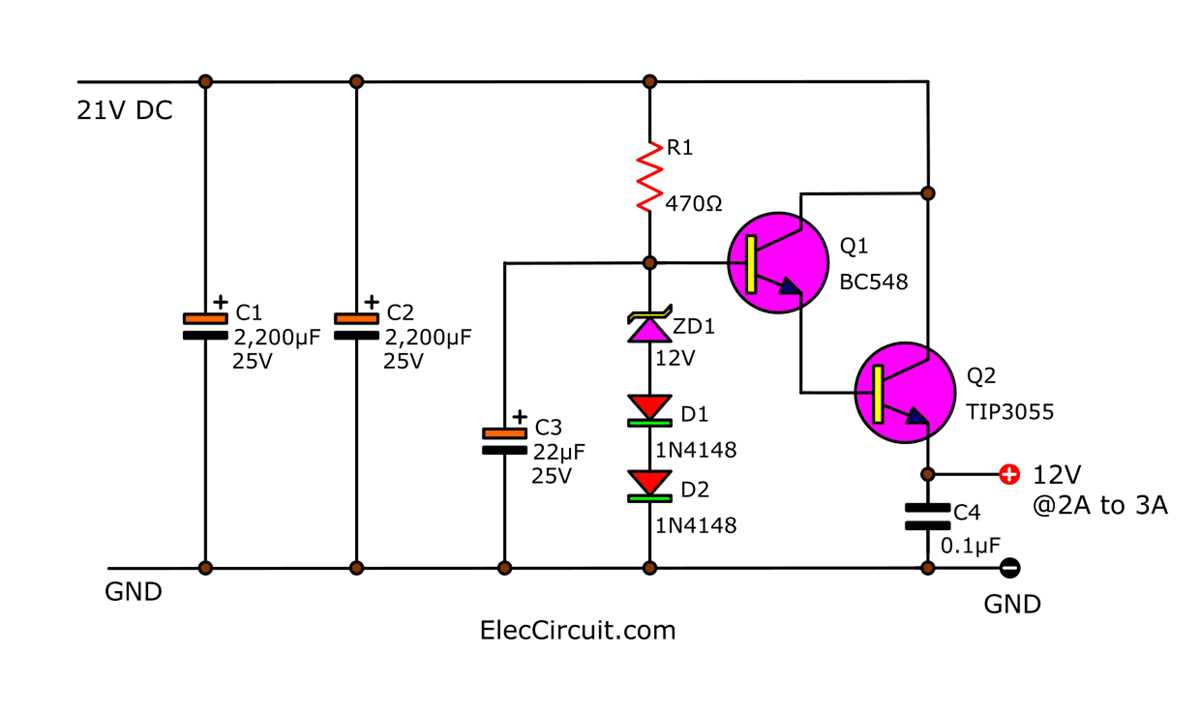
A manual switch appears as a break in the line with a pivoting contact. When the contact touches the opposite node, current flows toward the load. Toggle, push-button, and rocker versions use small variations of this graphic sign.
- Single pole switch – one break and movable contact
- Push button – contact line with spring indication
- Double pole switch – two parallel contacts moving together
Relay graphics combine a coil and switching contacts. The coil appears as a looped wire shape, while contacts appear similar to switch symbols. Control current energizes the coil, which moves the contacts that feed higher-current devices such as cooling fans or auxiliary lamps.
Loads use simple graphical marks that hint at the device type. A lamp often appears as a circle with a small cross inside. A motor shows a circle with the letter M. A resistor appears as a zigzag line, while a fuse appears as a small rectangle placed along the conductor.
- Lamp symbol – circle with cross
- Motor symbol – circle with letter M
- Resistor – zigzag line
- Fuse – narrow rectangle inserted in the conductor
Connector points appear as filled dots where wires meet. Crossing lines without a dot indicate no electrical connection. Correct interpretation of these small marks prevents wiring mistakes during installation or troubleshooting.