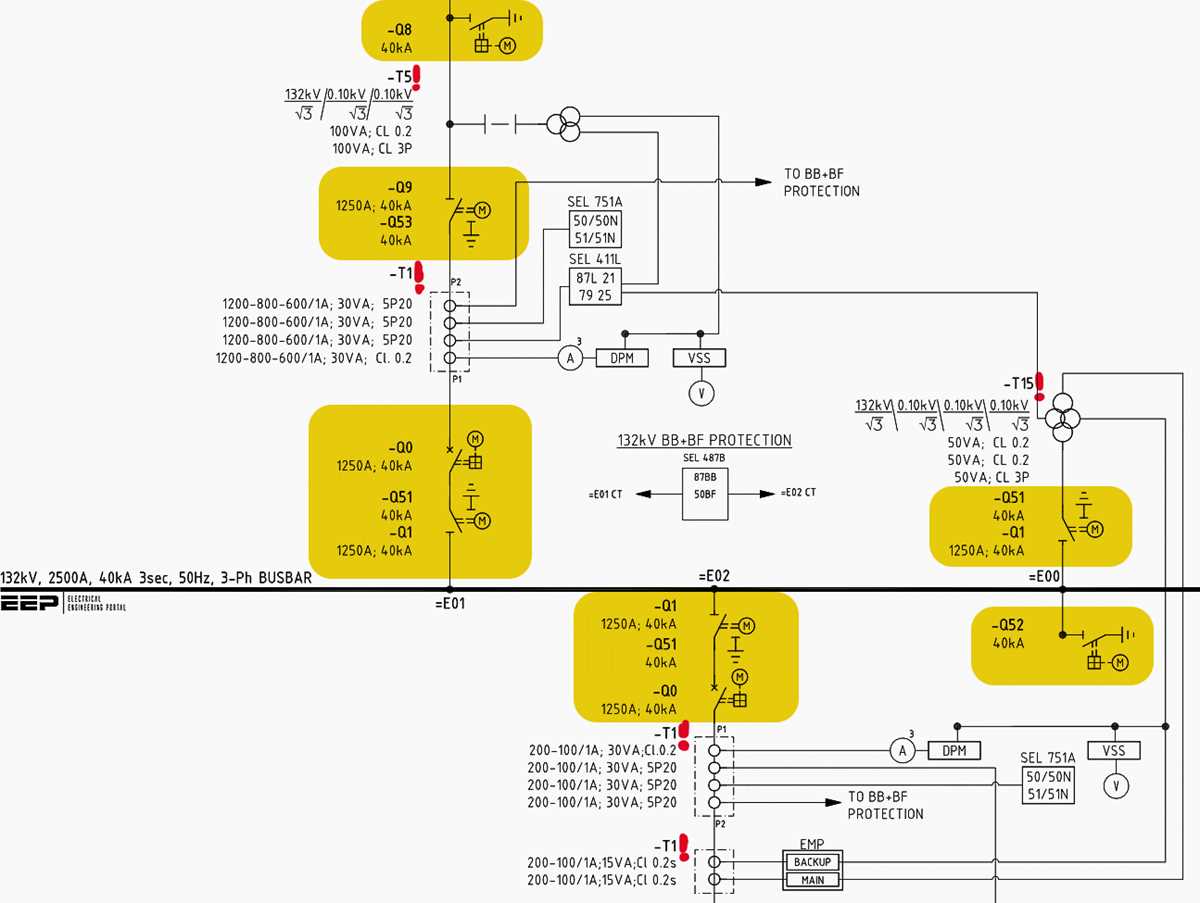
Check the symbol legend before examining any schematic drawing. A single mark may represent a resistor, transistor, or voltage source, and misunderstanding one sign can distort interpretation of the entire system. Standard symbol sets defined by IEC 60617 and ANSI Y32 appear in most technical documentation. Learning these symbols reduces time spent decoding drawings and helps identify component roles within seconds.
Engineers rely on schematic layouts to describe how resistors, capacitors, semiconductors, and power supplies connect inside a device. Each line represents a conductive path, while junction dots mark electrical contact between conductors. Absence of a dot typically means the paths cross without contact. This distinction prevents wiring mistakes during assembly or troubleshooting.
Signal direction is usually arranged from left to right or from top to bottom. Power rails often appear at the top and ground references at the bottom. Such placement allows quick tracing of voltage distribution and signal processing stages. Reading layouts this way reveals amplification blocks, filtering networks, and switching stages without opening the physical device.
Component values printed near symbols carry direct design information. For example, a resistor labeled 10 kΩ sets current limits, while a capacitor marked 100 µF indicates energy storage or filtering capacity. Reference labels such as R1, C3, or Q2 connect each part to a bill of materials, allowing technicians to match drawing elements with real components on a board.
Accurate interpretation of these schematic representations allows technicians to trace faults, redesign sections, and assemble prototypes. Mastering symbol meaning, conductor intersections, reference labels, and value markings forms the foundation for reading technical layouts used in power supplies, audio amplifiers, microcontroller boards, and communication equipment.
Electronic Circuit Diagram Symbols Components and Methods for Reading Schematics
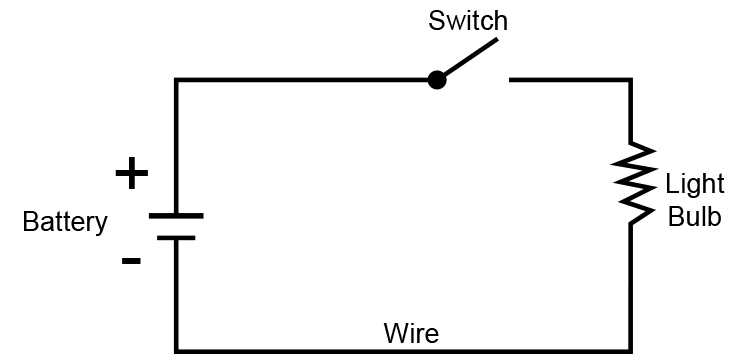
Memorize standard schematic symbols before analyzing any technical drawing. Recognition speed improves dramatically once the main component signs are known. Most documentation follows IEC or ANSI notation, where each mark corresponds to a specific hardware element. Pay attention to shape differences that distinguish active and passive parts.
- Resistor – zigzag or rectangular sign labeled with resistance value such as 1 kΩ or 10 kΩ
- Capacitor – two parallel plates, sometimes one curved plate for polarized types
- Diode – triangle pointing toward a vertical line indicating current direction
- Transistor – three-terminal sign marked B, C, E for bipolar devices
- Ground reference – three descending horizontal lines or a triangle
Trace connections by following conductive lines and node markers. A filled dot indicates electrical contact between intersecting conductors, while crossing lines without a dot represent separate paths. This distinction prevents misreading signal paths and supply routing.
Use reference designators and value labels as navigation markers inside the schematic drawing. Engineers tag each part with identifiers such as:
- R for resistors – R1, R5, R12
- C for capacitors – C2, C10
- D for diodes – D1, D4
- Q for transistor devices – Q1, Q3
- U for integrated modules – U1, U2
Follow signal flow direction to understand system operation. Many schematics place input stages on the left, processing blocks in the center, and output sections on the right. Power rails often appear at the top with ground references below. This layout makes it easier to identify amplification stages, filtering networks, switching sections, and control logic inside the hardware design.
Standard symbols used for resistors capacitors diodes transistors and power sources
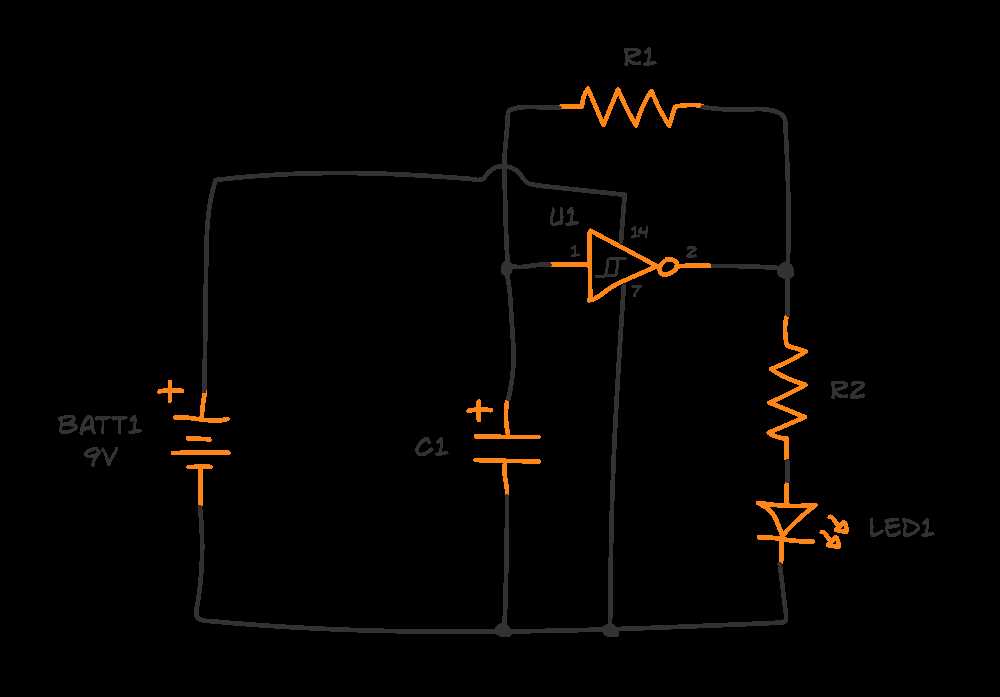
Identify passive and active parts by their graphical marks before interpreting the schematic layout. A resistor appears as a zigzag line in ANSI notation or as a small rectangle in IEC drawings. The component value is printed nearby, for example 4.7 kΩ or 220 Ω, which defines current limitation within the conductive path. Capacitors use two parallel plates; one curved plate usually marks a polarized type such as electrolytic units rated at 10 µF, 47 µF, or higher.
Semiconductor devices use directional symbols that indicate current behavior. A diode is drawn as a triangle pointing toward a vertical bar that represents the cathode; the arrow direction shows permitted current flow. Transistors include three terminals and internal arrows that identify device type. In bipolar parts, terminals are labeled B (base), C (collector), and E (emitter). The arrow orientation on the emitter distinguishes NPN from PNP structures, which directly affects polarity and bias conditions in amplification or switching stages.
Power supply signs define voltage distribution across the schematic layout. A long and short parallel line pair typically represents a battery source, where the longer line marks the positive terminal. Regulated supplies may appear as labeled nodes such as +5 V, +12 V, or −15 V. Ground references appear as three descending lines or a triangle, marking the zero-voltage reference used for measurement and signal return paths.