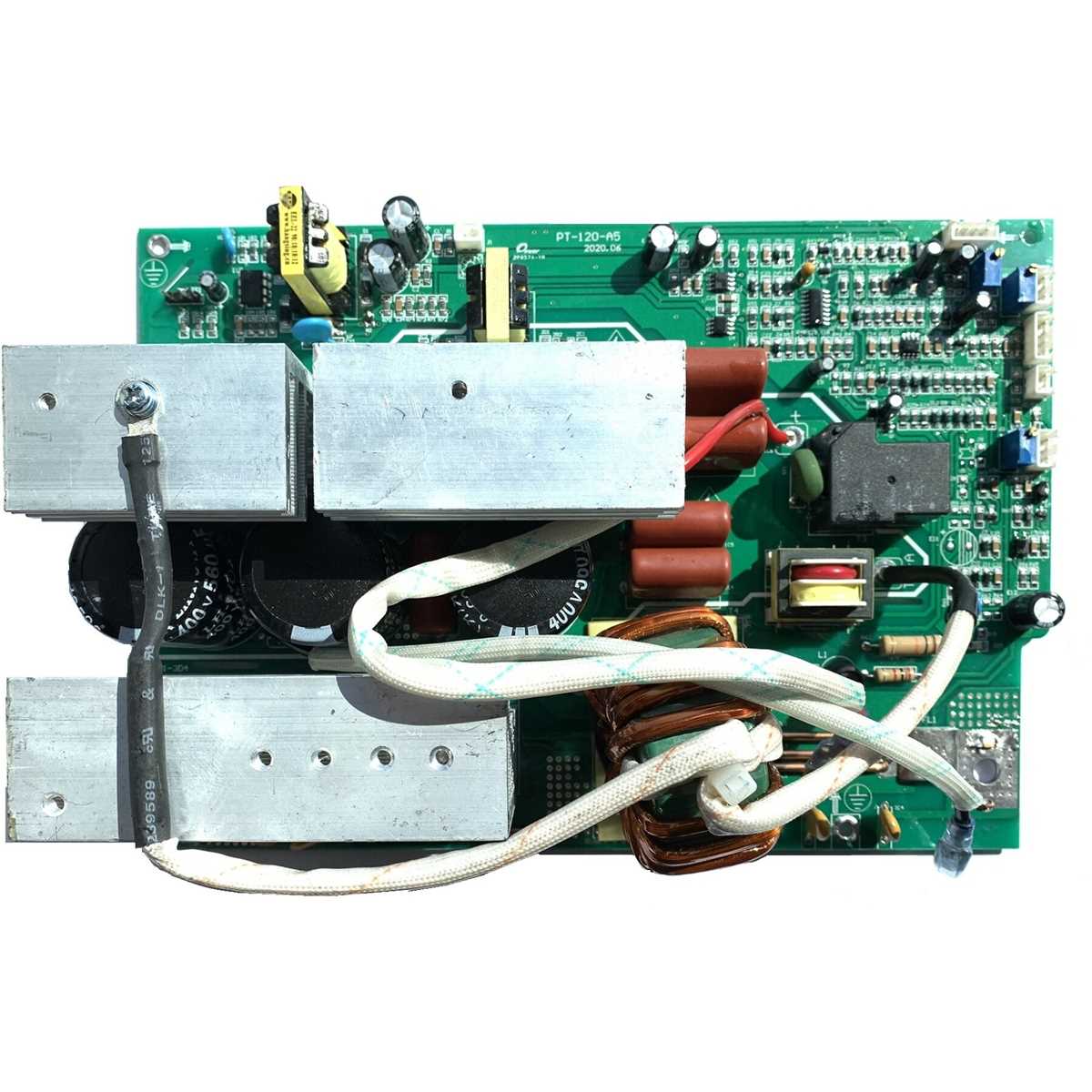
Check the power stage layout before analyzing any arc power supply that uses transistor switching. The input stage usually receives 220–240 V AC, which passes through a bridge rectifier and large electrolytic capacitors rated around 400 V and 470–680 µF. This stage converts alternating input power into high-voltage DC used by the switching transistors.
The switching section uses high-speed power transistors mounted on aluminum heat sinks. These devices chop the high-voltage DC at frequencies between 20 kHz and 60 kHz. High-frequency switching allows the system to use a compact ferrite transformer rather than a large iron core transformer found in older arc power supplies.
After the ferrite transformer reduces voltage and increases current, the output stage uses fast recovery diodes and filter inductors. This stage converts the high-frequency signal back into stable DC suitable for electrode arc processes. Typical output ranges from 20 A to 200 A depending on the model and electrode size.
The control board regulates transistor switching using a PWM controller and gate driver modules. These components monitor temperature sensors, current shunts, and voltage feedback lines. If overheating or overcurrent occurs, the controller shuts down the switching stage to protect the internal components.
IGBT Inverter Welding Machine Circuit Diagram
Check the rectification stage before analyzing the switching section. Alternating input voltage of 220–240 V usually passes through a diode bridge rated around 25–35 A. After rectification, large electrolytic capacitors between 330 µF and 680 µF at 400 V smooth the DC bus that feeds the transistor switching stage mounted on heat sinks.
The switching block converts this high-voltage DC into high-frequency pulses, typically between 25 kHz and 60 kHz. These pulses drive a ferrite-core transformer that reduces voltage while increasing current. Because of the high operating frequency, the transformer core is much smaller than those used in older arc power supplies that rely on mains frequency.
After the transformer, high-speed recovery diodes and an output choke stabilize the current delivered to the electrode holder and work clamp. The control board supervises the process through PWM control, current shunt feedback, and thermal sensors attached to heat sinks. When the measured current exceeds the preset limit or the temperature climbs above roughly 95°C, the controller interrupts transistor switching to protect internal components.
Power Stage Layout With Rectifier IGBT Module and High Frequency Transformer
Verify the AC input rectification stage first. The supply line of 220–240 V normally enters a full bridge rectifier rated between 25 A and 50 A. This block converts alternating current into high-voltage DC. Large electrolytic capacitors rated around 400 V smooth the DC bus before it reaches the switching power transistors.
Rectifier and DC Bus Section
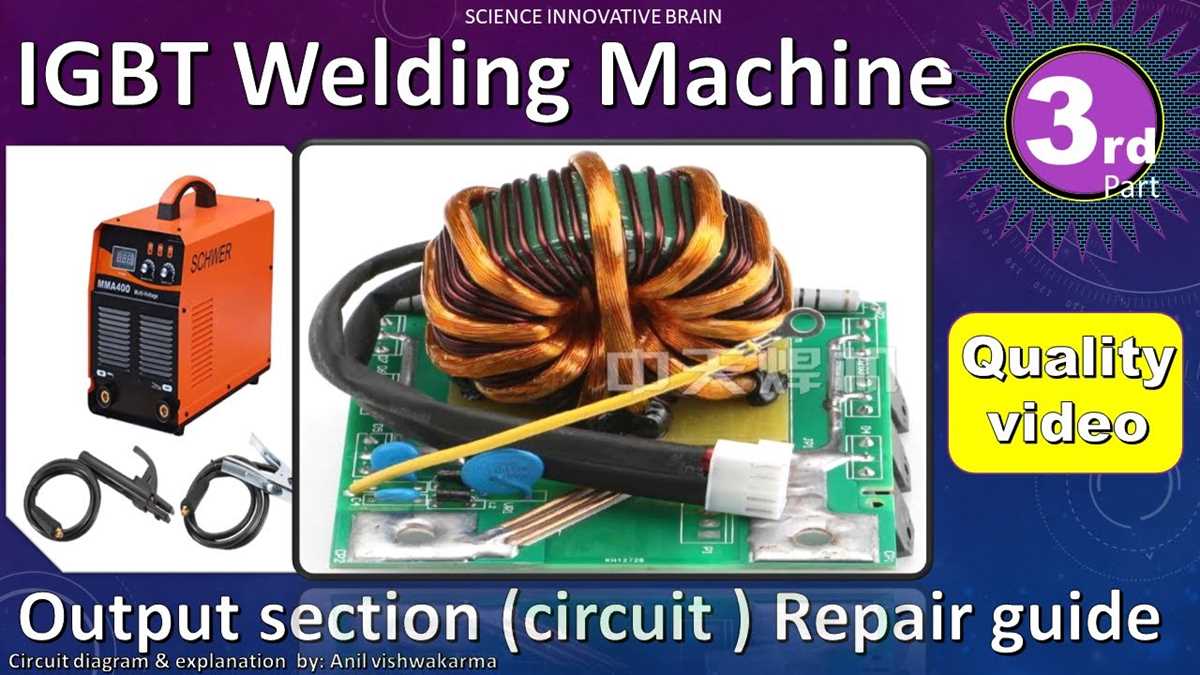
The rectification stage and capacitor bank form the high-voltage DC link that feeds the transistor switching assembly. Typical components used in this stage include:
- Bridge rectifier rated 800–1000 V
- Electrolytic capacitors 330–680 µF at 400 V
- NTC thermistor limiting startup current
- EMI filter suppressing input noise
After rectification and filtering, the DC bus usually reaches 300–325 V. This voltage supplies the switching transistors mounted on aluminum heat sinks with thermal paste and insulated pads.
High Frequency Transformer Stage
The switching transistors convert the DC bus into high-frequency pulses typically between 20 kHz and 60 kHz. These pulses drive a ferrite-core transformer that reduces voltage while increasing current. High operating frequency allows the transformer to remain compact while still delivering high current to the output stage.
The transformer output connects to a secondary rectification stage consisting of fast recovery diodes and a filter choke. Typical output components include:
- Ultra-fast diodes rated 200–300 A
- Output choke reducing current ripple
- Current shunt for feedback monitoring
- Heavy copper terminals for electrode and ground clamp
This arrangement delivers a stable DC arc current typically ranging from 20 A to 200 A, depending on electrode diameter and the rating of the power supply.