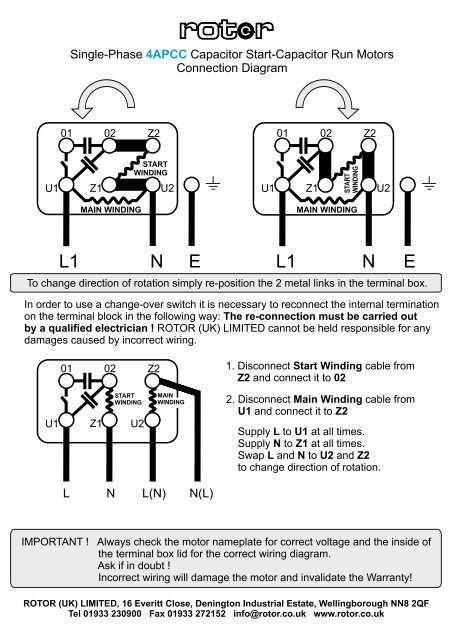
Ensure proper identification of phase leads before linking any rotational drive units. Mislabeling terminals can result in immediate performance loss or permanent equipment damage. Use a digital multimeter to verify continuity and resistance values for each line.
Follow a color-coded scheme when combining power lines with stator inputs. Standardize red for L1, yellow for L2, and blue for L3 to reduce troubleshooting time. Always double-check that the neutral conductor is isolated from high-voltage terminals to prevent short circuits.
Secure all fasteners and clamps to avoid loose contact points. Even minor gaps between connectors and terminals can create excessive heat, leading to insulation breakdown. Apply dielectric grease on exposed metal ends to minimize corrosion in humid environments.
Cross-check the schematic provided by the manufacturer with actual terminal markings. Any deviation in pin alignment or sequence may alter rotation direction or operational speed. Document the verified layout for future maintenance or replication tasks.
Implement protective fuses and circuit breakers in line with the rated amperage of the device. Overcurrent events can not only trip safety devices but also damage winding insulation and bearings. Confirm breaker ratings and response times match the specifications of the equipment being energized.
Motor Wiring Connection Diagram
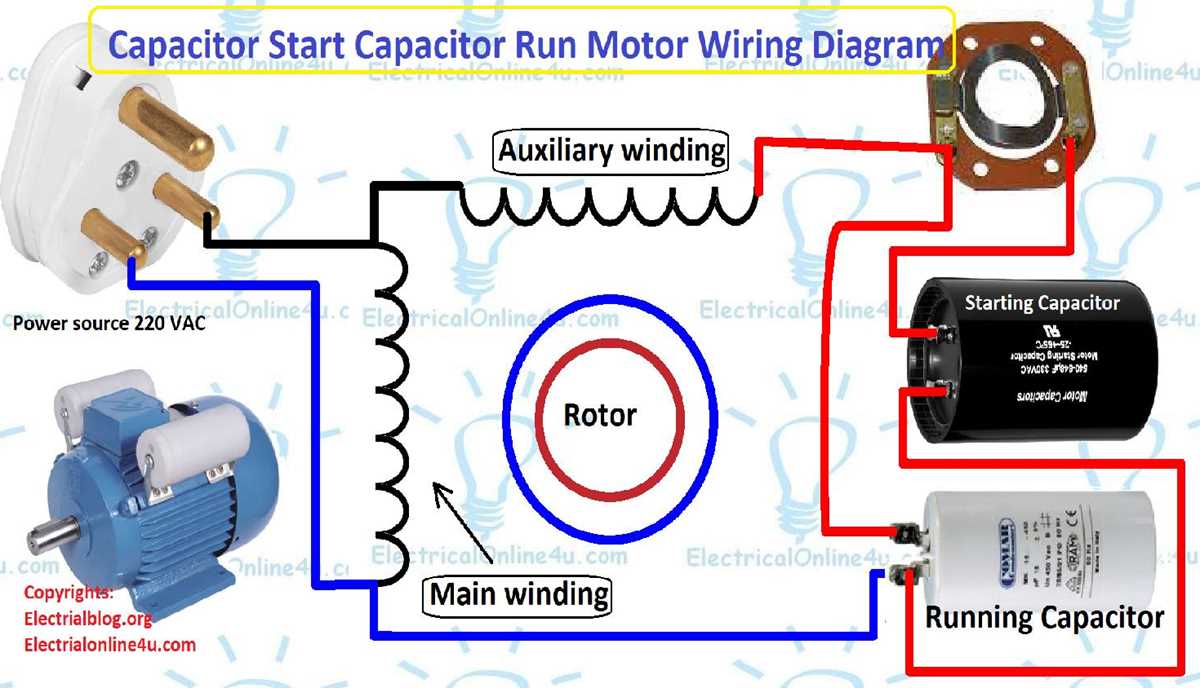
Use color-coded leads to reduce the risk of short circuits; typically, red indicates positive, black negative, and green for grounding in AC applications.
Ensure terminals are tightly fastened; loose terminals can cause sparking and overheating during operation.
When connecting multi-phase units, follow the manufacturer’s sequence: U-V-W for three-phase setups, avoiding cross-phasing that can reverse rotation.
Install protective fuses rated slightly above the operational current to prevent burnout under transient loads.
Shielded cables should be routed separately from high-voltage lines to minimize electromagnetic interference and signal degradation.
Label each lead clearly and use heat-shrink tubing to prevent accidental contact with adjacent metal surfaces.
Check insulation resistance using a megohmmeter; readings below 1 MΩ at 500V indicate potential leakage that must be addressed before energizing.
For reversible units, incorporate a toggle relay or switch to safely alternate polarity without opening terminals manually, reducing mechanical strain.
Identifying Motor Terminals and Color Codes
Check the device label for terminal markings before making any connections. Terminals are usually marked as U, V, W for three-phase, and T1, T2, T3 for single-phase variants.
Color coding provides a reliable way to distinguish leads. Standard insulation colors are:
- Black – Line 1
- Red – Line 2
- Blue – Line 3
- White – Neutral
- Green or Green-Yellow – Ground
Some equipment uses numbered tags instead of colors. Numbers 1 through 6 often correspond to start and run windings. Verify with the manufacturer’s sheet if available.
For single-phase units, the start winding usually connects to terminals marked S or 1-2, while the run winding connects to R or 3-4. Capacitor leads are often brown or orange.
Use a multimeter to test continuity between terminals. This confirms which leads form the same coil and prevents incorrect phase alignment that could damage the device.
High-voltage devices may have additional insulation colors, such as grey for intermediate lines or violet for auxiliary circuits. Document each lead’s function during inspection for future reference.
Label all terminals clearly with adhesive tags or heat-shrink markers after identification. Consistent documentation avoids errors in maintenance and ensures safe operation.