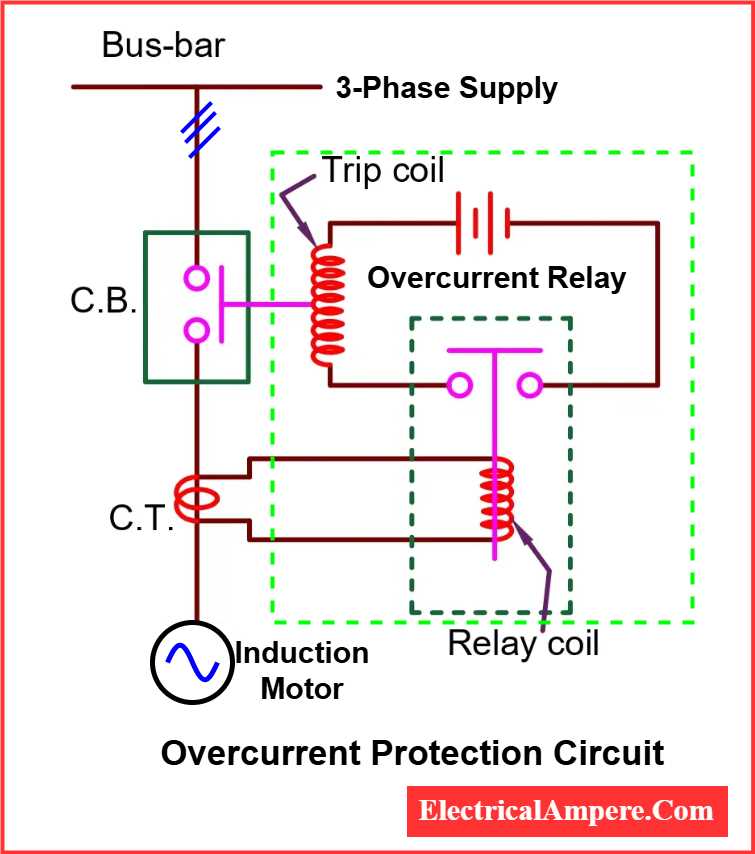
Select a thermal or magnetic switch that matches the load specifications precisely to prevent damage from excessive current flow. Ensure the rating slightly exceeds the normal operating current but remains below the threshold that could harm components.
Use shunt resistors or sensing transformers to monitor real-time current levels, allowing the control mechanism to respond instantly to surges. Proper placement in the supply line improves accuracy and reduces false triggering.
Integrate fast-acting breakers or fuses in parallel with sensitive components to isolate faults quickly. Choose elements with minimal response delay and rated for the system’s voltage and expected peak currents.
Consider combining multiple detection methods, such as electronic sensors with mechanical interrupters, to achieve layered security. Redundancy ensures that a single failure does not compromise the entire load protection strategy.
Regularly inspect and maintain connectors and terminals, as high-resistance points can generate localized heating and unexpected current spikes. Tighten contacts and replace aged conductors to maintain system integrity.
Document the complete layout with annotated ratings for each component, including the threshold currents, tripping characteristics, and response times. Clear schematics help troubleshoot anomalies and guide future upgrades efficiently.
Overcurrent Safeguarding Implementation Practical Guide
Begin by selecting a thermal or magnetic trip module that matches the maximum current rating of your load. Ensure the device tolerates short-term surges without triggering false interruptions while still disconnecting at sustained overloads.
Position the protective element close to the power source to minimize wiring exposure to high currents. Short conductor runs reduce voltage drops and improve the accuracy of the triggering threshold, maintaining system stability.
Integrate a shunt resistor if precise current monitoring is required. Connect it in series with the supply line and calculate the voltage drop to ensure it remains within the operational input range of the monitoring relay or sensing module.
Relay Selection and Testing
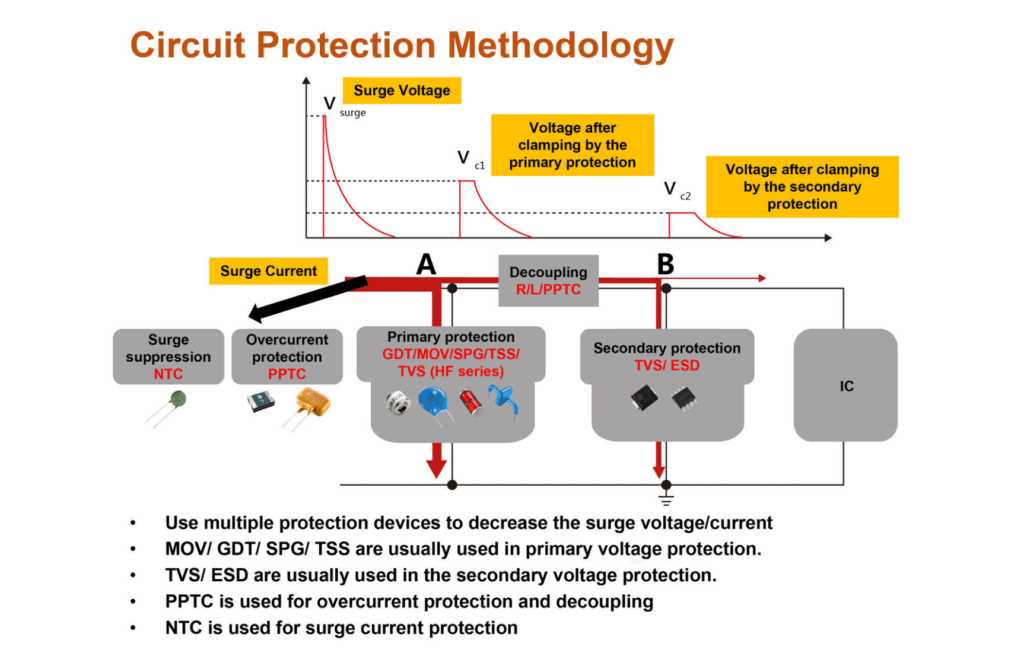
Choose a relay with a defined trip characteristic curve that matches your application. Test the response by applying gradually increasing loads while measuring activation time to verify coordination with other downstream devices.
Include status indicators and reset mechanisms for immediate visual feedback and controlled re-engagement. A manual or electronic reset allows rapid recovery after an overload event without compromising safety.
Document each connection and calibration value meticulously. Maintain a reference log for future adjustments, component replacements, or system upgrades, ensuring consistent performance across operational cycles.
Selecting Components for Overcurrent Protection Applications
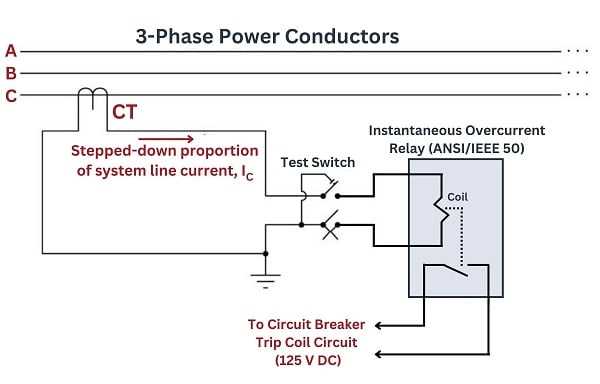
Start with the load requirements and the maximum allowable current. Identify devices that will carry the main current and note their voltage ratings, thermal limits, and switching capacity. A mismatch can lead to nuisance tripping or device failure.
Choose a sensing element based on response speed and current range. Options include shunt resistors, Hall effect sensors, and current transformers. Each offers different linearity and saturation characteristics, so match the sensor to the operational environment.
Consider the trip mechanism carefully:
- Electromechanical breakers respond to thermal or magnetic triggers and are suitable for high surge applications.
- Solid-state switches use semiconductors for rapid cut-off, offering precision for low-voltage electronics.
Resistors in the sensing path must handle power dissipation. Calculate the expected wattage by squaring the maximum current and multiplying by the resistance. Choose resistors with at least a 50% margin above this value.
Diodes and transient suppressors can be placed across inductive loads to prevent voltage spikes. Schottky diodes are preferred for fast switching and low forward voltage, while TVS diodes handle high-energy transients.
Capacitors can smooth out noise and prevent false triggering. Film or ceramic types with low ESR are recommended for high-speed applications, whereas electrolytic capacitors are acceptable for slower response thresholds.
PCB layout affects component performance. Keep sensing traces short, minimize loop areas, and separate high-current paths from control lines. Shielding and grounding reduce electromagnetic interference that could induce false trips.
Verify selected components under realistic load conditions. Use thermal imaging or current probes to monitor hotspots and ensure that the chosen parts maintain their ratings throughout operational cycles. Document any observed deviations for future optimization.