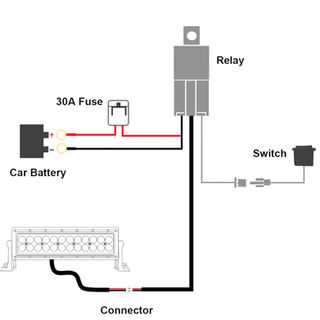
Start by connecting the positive terminal of the power source to a properly rated fuse, then route a heavy-gauge wire to the control switch. This prevents overload and ensures consistent current flow to the assembly during operation.
Secure the negative lead to a solid chassis ground to avoid voltage fluctuations or intermittent lighting. Clean the contact surface and tighten the terminal firmly to maintain a stable connection over time.
Install a relay between the switch and the assembly when controlling higher amperage loads. This reduces strain on the switch and protects internal circuits. Ensure the relay terminals are connected according to their function: coil, common, normally open, and normally closed.
Route the cables carefully along protected channels and use cable ties or sleeves to prevent chafing against metal edges or heat sources. Label connections for future maintenance and test the assembly with a multimeter to verify voltage and continuity before full operation.
Complete Instructions for Connecting a Light Bar to Vehicle Power
Begin by connecting the positive lead from the battery to a fuse rated for the total amperage of the assembly. This protects the circuit from overload and prevents damage to the components. Use a properly insulated terminal to ensure a secure and stable connection.
Install a relay between the switch and the assembly to handle higher currents without stressing the control switch. Connect the coil terminals to the switch output and the common and normally open terminals to the power and assembly lines. This setup allows the switch to control the assembly safely without overheating.
Secure the negative lead to a solid chassis ground to maintain stable voltage and prevent flickering. Clean the contact area and tighten the bolt firmly. A poor ground connection can reduce performance and increase electrical resistance.
Route the conductors along protected paths using clips, cable ties, or sleeves to prevent contact with sharp edges, moving parts, or heat sources. Proper routing minimizes wear and avoids short circuits that could damage the system or vehicle.
Test the assembly before final mounting. Apply power and check that the assembly illuminates correctly and that all switches operate as intended. Measure voltage at key points to confirm no significant drop occurs and verify that all fuses and relays function as expected.
Connecting Power and Ground for Reliable Light Operation
Connect the positive lead directly to a properly rated fuse near the battery. This prevents current surges from damaging the assembly and ensures stable power delivery during operation. Use a thick-gauge wire to handle the maximum expected amperage without overheating.
Attach the negative lead to a clean, solid metal surface on the chassis. Remove paint or rust to create a low-resistance path. A secure ground reduces flickering and voltage drop, providing consistent illumination under all conditions.
Relay Integration for High-Current Loads
Install a relay between the control switch and the assembly to manage higher currents. Connect the coil to the switch output and the common and normally open terminals to the battery and assembly lines. This setup protects the switch and extends the life of all components.
Route the conductors carefully along existing channels to prevent chafing or heat exposure. Use cable ties or protective sleeves to secure wires and maintain separation from moving parts. Proper routing prevents shorts and maintains consistent performance over time.
Testing and Verification
After connections are complete, test the assembly by activating the switch and checking voltage at both terminals. Confirm that the fuse and relay operate correctly and that the negative lead provides a stable ground. Adjust connections if any fluctuation or drop in voltage is observed before final installation.