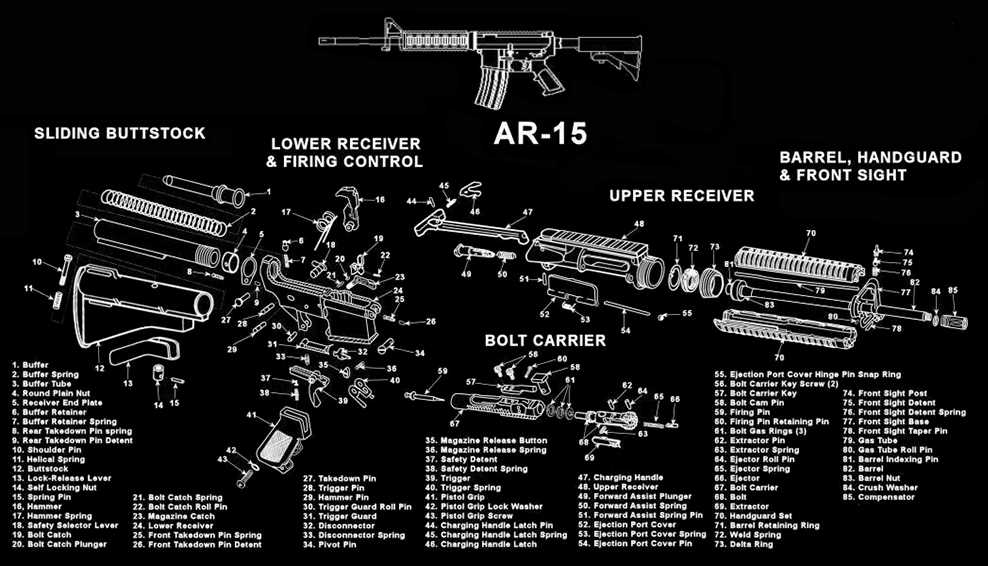
Begin by gathering all necessary tools and components before starting the assembly. This process requires attention to detail, as each piece must be securely fitted to ensure the system functions properly. Begin by identifying the trigger mechanism and safety selector switch, which are vital for the operation of the lower housing. Make sure all pins are in place to avoid misalignment during the assembly process.
The next step involves assembling the bolt catch, which plays a critical role in the proper cycling of rounds. This component is connected to the receiver with a specific pin that must be installed securely. If the bolt catch is not correctly installed, it can cause malfunctioning or misfiring during use.
Following that, install the magazine release button. This component requires precision during installation, as the button must be aligned with the magazine release spring to ensure it functions smoothly. After securing the button, test it several times to confirm its responsiveness.
Finally, the installation of the pistol grip is a simple yet important step. Ensure the grip is aligned correctly and all screws are tightened to avoid any movement or loosening over time. Once assembled, perform a function check to confirm that all mechanisms work as intended and there are no loose parts.
AR15 Receiver Assembly Guide
Start by securing the receiver on a stable work surface. Ensure all components are clean and free of any obstructions. Begin with inserting the trigger group. Align the trigger assembly and hammer, making sure they fit into their respective spaces correctly. Use the provided pins to secure them in place. The hammer spring should be inserted carefully to ensure proper tension is applied.
Next, install the safety selector. Position it in the correct orientation, ensuring it fits properly into the receiver. Attach the selector detent and spring to prevent movement and ensure smooth operation. Be mindful of the spring’s placement as it is a crucial part of the selector’s function.
Proceed with the installation of the bolt catch. Insert it into the designated slot and secure it with the appropriate pin. This part is vital for ensuring the firearm operates as designed, so ensure it is tightly fitted. The spring for the bolt catch must be installed correctly to guarantee its responsiveness during operation.
Now, install the magazine release. Carefully position the release button and spring. Align it with the magazine well and insert the retaining pin. Make sure the magazine release is functioning correctly by pressing it a few times to ensure a smooth and consistent operation.
Finally, attach the pistol grip. Position it onto the receiver and secure it with the necessary screws. Tighten the screws firmly to prevent any wobbling or loosening over time. Perform a final check of all components, ensuring everything is tightly secured and functions smoothly. Test all mechanisms to verify proper operation before finishing the assembly.
Step-by-Step Process for Assembling AR15 Lower Components
Begin by placing the receiver on a flat, stable surface. Ensure all components are ready and organized for easy access. Start by inserting the trigger group, ensuring the hammer and trigger fit into their designated positions. Use the hammer pin to secure them in place. Make sure the hammer spring is properly installed to maintain correct tension.
Next, install the safety selector. Slide the selector into the receiver and make sure it fits snugly. Insert the safety detent and spring to prevent it from moving too freely. The spring needs to be positioned correctly to ensure proper functionality of the safety mechanism.
Proceed with attaching the bolt catch. Insert the bolt catch into its designated slot and secure it with the retaining pin. It’s important that the spring for the bolt catch is placed properly, ensuring it engages correctly during operation.
Move on to the magazine release installation. Place the release button and its spring into the magazine well. Secure the release by inserting the retaining pin. Test the release by pressing it a few times to ensure it operates smoothly and without resistance.
Finally, attach the pistol grip. Slide the grip onto the receiver and secure it with screws. Tighten them securely to avoid any looseness. Once everything is in place, do a final check of all components to make sure each part functions correctly. Test the selector, magazine release, and other mechanisms to ensure smooth operation.
Common Mistakes to Avoid When Assembling AR15 Lower Receiver

One of the most frequent errors is not properly aligning the trigger and hammer assembly. Ensure both components fit precisely into their respective slots. If misaligned, the weapon might malfunction, leading to a safety hazard.
Another common mistake is improperly installing the safety selector. It’s crucial to position the detent spring and safety selector pin correctly to avoid it getting stuck or not engaging the safety mechanism properly.
Don’t overlook the importance of securing the bolt catch correctly. Using the wrong pin or failing to tighten it can cause the catch to fail during operation. Make sure the retaining pin goes through both the catch and the receiver without obstruction.
Skipping the testing of each part after installation is also a mistake. After installing the magazine release, trigger mechanism, and safety selector, manually check that each component functions smoothly. A component that sticks or doesn’t operate correctly can cause issues later on.
Finally, over-tightening or under-tightening screws, especially on the pistol grip, can lead to an unstable receiver. Tighten all screws to the manufacturer’s recommended torque settings to avoid damaging the threads or compromising the overall integrity of the build.