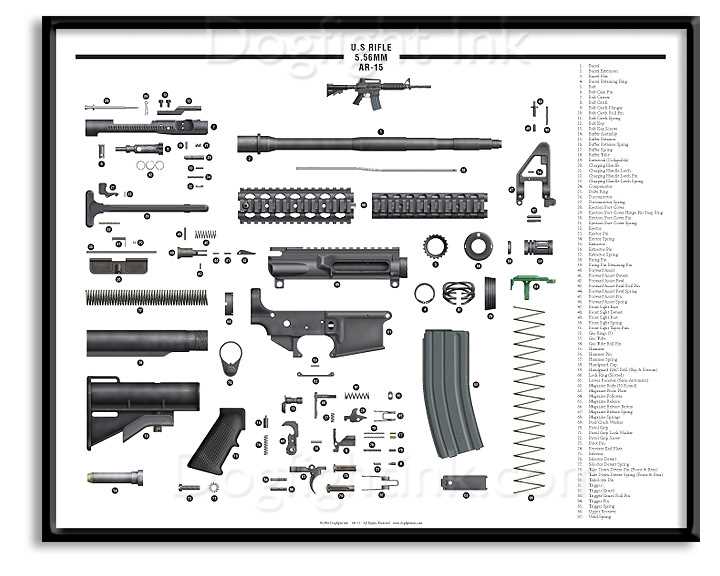
For any enthusiast looking to assemble or maintain their firearm, understanding the specific components and how they fit together is crucial. The first step is familiarizing yourself with each element of the rifle to ensure you can easily identify any worn-out or malfunctioning parts during maintenance. This guide offers a clear, step-by-step breakdown of the rifle’s structure, enabling smoother repairs and customization.
Start by learning the core segments that make up the weapon’s functioning system, such as the upper receiver, barrel, bolt carrier group, and lower receiver. Knowing these will help when you need to troubleshoot issues or replace damaged pieces. You can also see how each component works in tandem for overall performance and accuracy.
Once you have a solid grasp of the system’s parts, you can move on to more advanced tasks, such as fine-tuning the rifle’s firing mechanism and replacing springs or pins. Whether you’re aiming for minor adjustments or complete assembly from scratch, recognizing the exact fit of every component is key to ensuring reliability and safety in your weapon.
AR-15 Parts Breakdown and Assembly Guide
Start by identifying the key sections of your firearm: the upper receiver, lower receiver, and the bolt carrier group. Understanding how these primary components fit together will help streamline the assembly process.
The upper receiver contains the barrel, bolt carrier group, and gas system. Ensure that each part is properly aligned to ensure smooth operation. Pay close attention to the gas tube and gas key alignment, as this affects cycling efficiency.
The lower receiver is the backbone of your firearm, housing the trigger mechanism, buffer tube, and magazine well. Proper installation of the fire control group is critical for a functional and reliable trigger pull.
The next step involves installing the buffer tube, which holds the buffer spring and buffer. Ensure it is securely fastened to prevent malfunctions during operation. Additionally, check the stock’s attachment to ensure a stable and comfortable fit.
Finally, assemble the bolt carrier group. The firing pin, extractor, and bolt assembly should be cleaned and inspected before insertion. Ensure the group is properly lubricated to minimize wear and tear over time.
After assembly, perform a function check to ensure everything operates smoothly. Test for proper bolt movement, trigger function, and safety operation. This step ensures that all components work together as intended and the system is safe to use.
Understanding the Key Components of an AR-15 Rifle
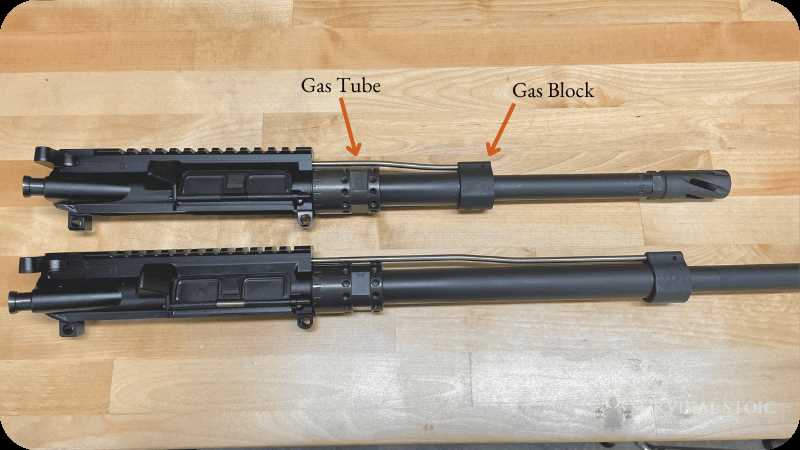
Begin with the upper receiver, which houses critical elements like the barrel, bolt carrier group, and gas system. Ensure proper alignment of the gas key with the gas tube to maintain reliable cycling and prevent malfunction.
The lower receiver contains the trigger mechanism and fire control group. Correct installation of these components ensures proper trigger response and safe operation. Pay close attention to the placement of the disconnector, hammer, and sear to ensure smooth function.
Next, the buffer tube and stock assembly hold the buffer and recoil spring. Check that the buffer tube is securely attached to prevent any movement during firing. The stock should also fit comfortably to provide stability when aiming and shooting.
The bolt carrier group (BCG) is a critical component for the firearm’s cycling. Clean and lubricate the firing pin, extractor, and bolt before inserting them into the BCG. Improper lubrication can cause sluggish performance and excessive wear.
Finally, the magazine well and trigger guard should be free from debris and properly aligned. The magazine well ensures smooth feeding of ammunition, while the trigger guard helps maintain the overall safety of the firearm when handling.
Step-by-Step Guide to Assembling AR-15 Parts
Start by inserting the trigger mechanism into the lower receiver. Place the hammer, disconnector, and sear in their respective positions, ensuring that the disconnector’s hook catches the hammer. Secure them with the proper pins to keep everything aligned.
Next, install the magazine catch into the lower receiver. This will hold the magazine securely in place during operation. Ensure that the catch spring is correctly positioned to avoid any feeding issues.
Assemble the bolt carrier group by placing the firing pin, cam pin, and extractor into the bolt. Insert the bolt into the carrier, ensuring that it moves freely. Check for proper lubrication on all moving parts to ensure smooth operation.
Attach the buffer tube to the lower receiver, ensuring that the buffer spring and buffer are properly positioned. This assembly will help absorb the recoil during firing, and its secure attachment is necessary for reliable function.
Install the upper receiver by aligning the barrel with the receiver, ensuring a tight fit. Attach the gas block to the barrel, and secure the gas tube to the receiver. Ensure that the gas system is correctly aligned to prevent any cycling issues.
Attach the handguard to the upper receiver, ensuring that it is properly torqued down and securely in place. This will provide a stable grip for aiming and handling.
Finally, mount the stock to the buffer tube. Check for stability and ensure that the stock extends and collapses smoothly if it’s a collapsible model. After all parts are assembled, conduct a function check to ensure everything operates as intended.
Troubleshooting Common Issues with AR-15 Components
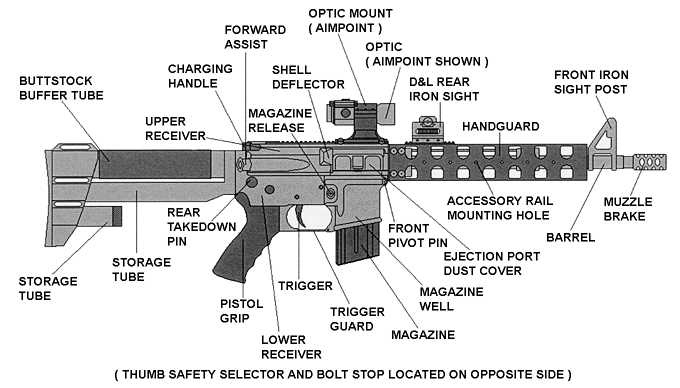
If you experience failure to fire, check the firing pin and ensure it’s properly seated within the bolt carrier group. A stuck or damaged firing pin may prevent the hammer from striking the primer. Also, inspect the disconnector for wear that could cause it to malfunction.
For failure to feed, verify that the magazine catch is properly securing the magazine. Examine the feed lips on the magazine for any signs of damage or bending, as these can impede the smooth feeding of rounds. Additionally, inspect the gas tube and gas block for obstructions that could disrupt the cycling process.
If the rifle is not cycling correctly, ensure the buffer tube, buffer spring, and buffer are correctly installed and free from any debris. A misaligned or damaged buffer system can prevent the rifle from cycling reliably. Also, check the gas system for leaks or blockages that may impede proper functioning.
In the case of inaccurate shots, inspect the barrel for any obstructions or damage. Ensure the barrel nut is torqued correctly and that the barrel is seated securely in the upper receiver. Additionally, check the handguard to ensure it does not interfere with the gas system or barrel alignment.
For issues with the stock, verify that it is securely mounted to the buffer tube. A loose stock can lead to instability during firing and discomfort while aiming. If the stock is adjustable, ensure that the mechanism operates smoothly without obstruction.
If you encounter ejection problems, inspect the extractor for any signs of wear or damage. Ensure the ejector is functioning properly and that the extractor is not binding. Clean the chamber and bolt face to remove any debris that might prevent the smooth extraction and ejection of spent casings.